
- English
- Español
- Português
- русский
- Français
- 日本語
- Deutsch
- tiếng Việt
- Italiano
- Nederlands
- ภาษาไทย
- Polski
- 한국어
- Svenska
- magyar
- Malay
- বাংলা ভাষার
- Dansk
- Suomi
- हिन्दी
- Pilipino
- Türkçe
- Gaeilge
- العربية
- Indonesia
- Norsk
- تمل
- český
- ελληνικά
- український
- Javanese
- فارسی
- தமிழ்
- తెలుగు
- नेपाली
- Burmese
- български
- ລາວ
- Latine
- Қазақша
- Euskal
- Azərbaycan
- Slovenský jazyk
- Македонски
- Lietuvos
- Eesti Keel
- Română
- Slovenski
- मराठी
- Srpski језик
- Esperanto
- Afrikaans
- Català
- שפה עברית
- Cymraeg
- Galego
- Latviešu
- icelandic
- ייִדיש
- беларускі
- Hrvatski
- Kreyòl ayisyen
- Shqiptar
- Malti
- lugha ya Kiswahili
- አማርኛ
- Bosanski
- Frysk
- ភាសាខ្មែរ
- ქართული
- ગુજરાતી
- Hausa
- Кыргыз тили
- ಕನ್ನಡ
- Corsa
- Kurdî
- മലയാളം
- Maori
- Монгол хэл
- Hmong
- IsiXhosa
- Zulu
- Yoruba
- অসমীয়া
- ଓଡିଆ
- Punjabi
- پښتو
- Chichewa
- Samoa
- Sesotho
- සිංහල
- Gàidhlig
- Cebuano
- Somali
- Тоҷикӣ
- O'zbek
- Hawaiian
- سنڌي
- Shinra
- Հայերեն
- Igbo
- Sundanese
- Lëtzebuergesch
- Malagasy
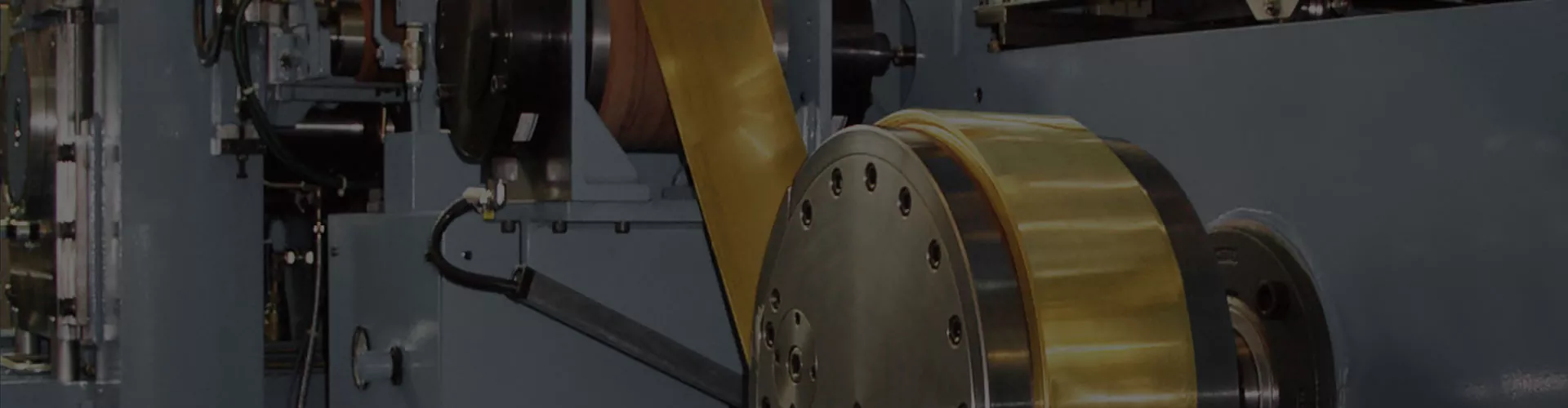
Precision Reducing Mills
GRM Rolling Mill manufactures high-quality precision reducing mills specifically designed for high-precision micro-tension reducing forming. These mills are developed for producing round wires, bars, and tubes of various high-value alloys, including copper, iron, titanium-based, and aluminum-based materials. Order now!
1. High-precision dimensional control
2. Efficient and high-quality production
3. Excellent finished product consistency
Product Introduction
GRM Rolling Mill's durable Precision Reducing Mills are built upon GRM's mature metal precision forming technology. They feature a compact single-stand structure and a 25-groove multi-slot roll configuration, eliminating the pain points of traditional rolling processes such as high stress, poor precision, and cumbersome changeovers. The equipment is suitable for processing metal billets with lengths of Φ30mm and 200mm, accurately reducing the diameter of raw materials to finished specifications of Φ1–9mm. Utilizing a proprietary micro-tension reduction process, a single stand achieves a controllable reduction rate of 3%–15%, avoiding material stretching deformation and residual internal stress throughout the process.
The equipment features an adjustable rolling speed of 0.5–3 m/s, allowing for flexible matching of process parameters based on different materials and reduction rates. Finished products exhibit a smooth, flat surface free of waviness or defects. Equipped with a stable precision control system, it balances the high precision requirements of scientific research with the stability of small-batch production. Suitable for processing ferrous and non-ferrous metals and various high-end alloy materials, it is a core piece of equipment for precision metal reduction forming.
Product Features
- High-precision micro-tension reduction process effectively relieves internal material stress, significantly improving finished product dimensional consistency and material stability.
- 25-groove multi-slot roll design supports rapid changeover for various product specifications, eliminating the need for frequent roll changes and providing exceptional production flexibility.
- Adjustable speed of Precision Reducing Mills: Rolling speeds of 0.5–3 m/s are adaptable to the rolling needs of different materials such as soft copper and hard alloys.
- Compact single-stand structure: Small footprint, allowing for rapid integration into laboratories, pilot lines, and small-scale production lines.
- Precision closed-loop dimensional control: Stable finished product tolerance of ±0.05 mm, meeting the precision forming standards for special alloys.
Product Advantages
- High-precision forming quality: Micro-tension controllable reduction technology eliminates excessive stretching and deformation, resulting in a smooth, flawless finished product surface with dimensional accuracy far exceeding conventional reduction equipment.
- Full material compatibility: Compatible with over 20 metal materials including copper, iron, iron-based, titanium-based, and aluminum-based alloys, covering most special metal reduction processing scenarios.
- Dual-purpose for research and production: Capable of meeting both laboratory material performance testing and new process trials, as well as supporting small-batch mass production of high-end alloys, adaptable to various scenarios.
- Stable and reliable operation: A robust roller system combined with a self-developed PLC control system ensures precise parameter control, long-term continuous operation without deviation, and a low failure rate.
Product Applications
Precision Reducing Mills are widely used in research institutes for material experiments, precision machining of special alloys, high-end alloy round wire trials, and precision metal rod and tube forming. They are suitable for scenarios with stringent requirements for wire dimensional accuracy and material consistency, such as electronics, precision instruments, and new material research and development.
What We Offer
- Customized precision reduction processes and equipment parameter solutions based on user material characteristics, target reduction rate, and finished product precision requirements.
- Pre-sales 3D modeling, process simulation, and sample making services are provided to verify molding accuracy and material properties in advance.
- ISO-standardized manufacturing, relying on precision CNC machining and a QC laboratory, ensures equipment accuracy and factory quality.
- Global 48-hour rapid after-sales response, providing lifetime equipment maintenance, process optimization, and technology upgrade services.
- Equipment integration and debugging, and operator technical training services are provided for laboratory scenarios.
FAQ
Q1: What is the maximum reduction rate achievable by this equipment?
A: The Precision Reducing Mills uses a micro-tension reduction process. The controllable reduction rate per frame is 3%–15%, which can be flexibly adjusted according to material hardness and molding requirements.
Q2: What special alloy materials can the equipment process?
A: It supports copper, iron and iron-based, titanium-based, aluminum-based, and other alloy materials, and is suitable for most high-end special metal reduction machining.
Q3: Can the equipment's precision meet the needs of new material research experiments?
A: The finished product dimensional tolerance can reach ±0.05mm, with high molding stability, fully meeting the high-precision standards for laboratory new material testing and process development.
Related Products
Hot Products
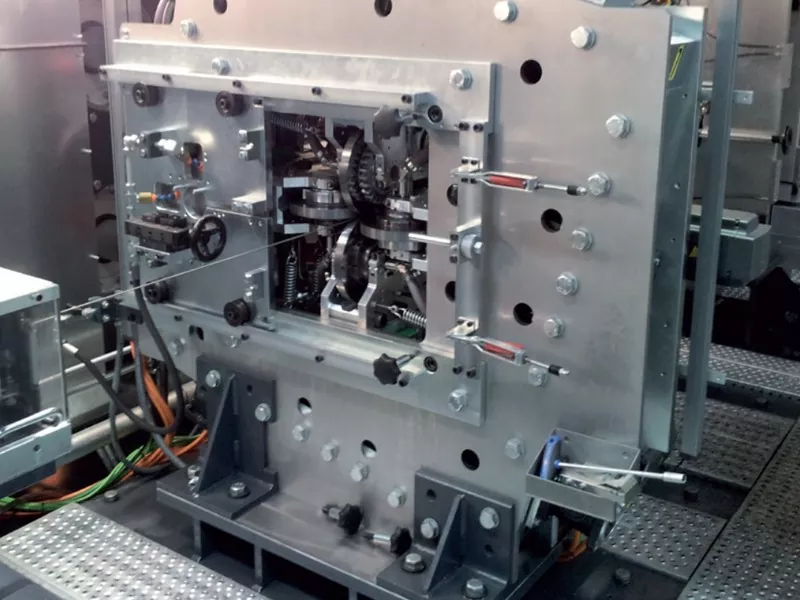
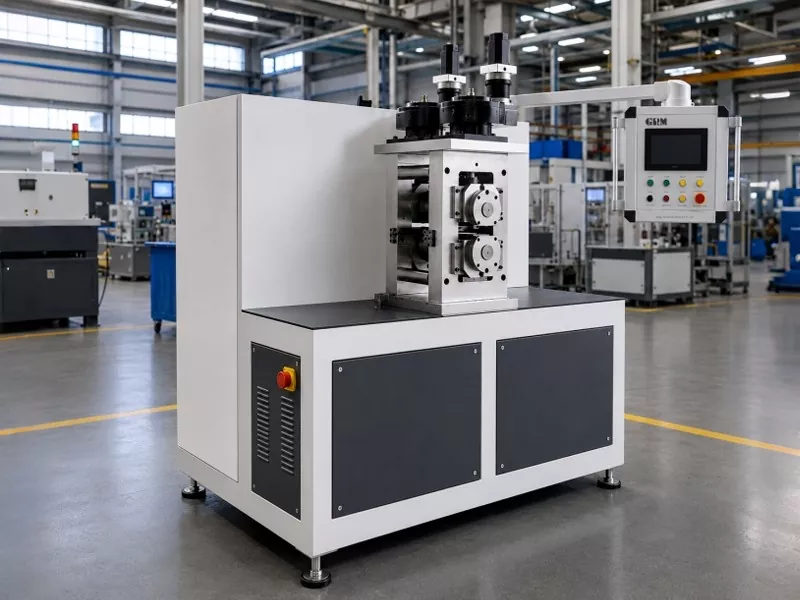
Profile Rolling Machine
Manufactured by the GRM Rolling Mill factory, the GRM-X Series Profile Rolling Machine is an advanced piece of rolling equipment characterized by its high precision and exceptional flexibility. Boasting key advantages such as precise positioning via servo motors, one-touch automatic roll gap calibration, and a modular design featuring both universal and specialized rolls, this machine is ideally suited for diverse sectors—including construction and shipbuilding. It is engineered to meet the rigorous demands of high-end profile manufacturing and supports the customization of profiles with specialized cross-sections.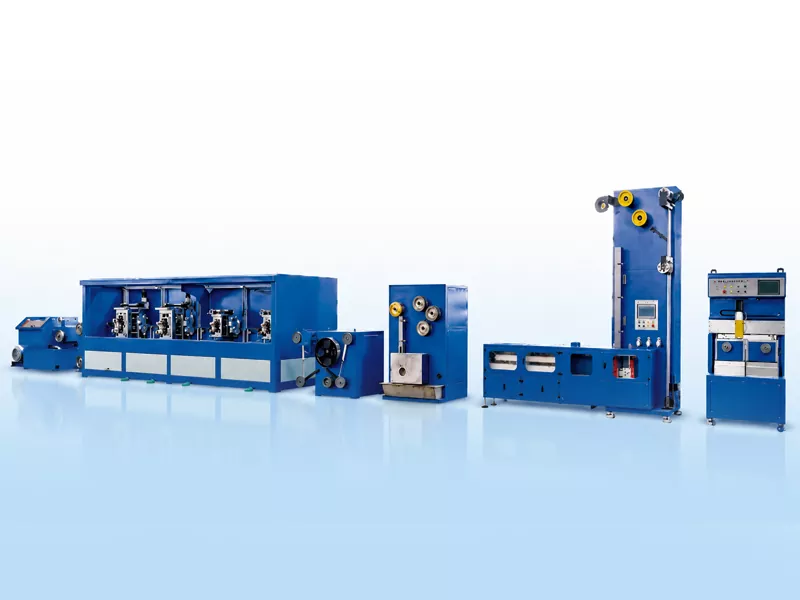
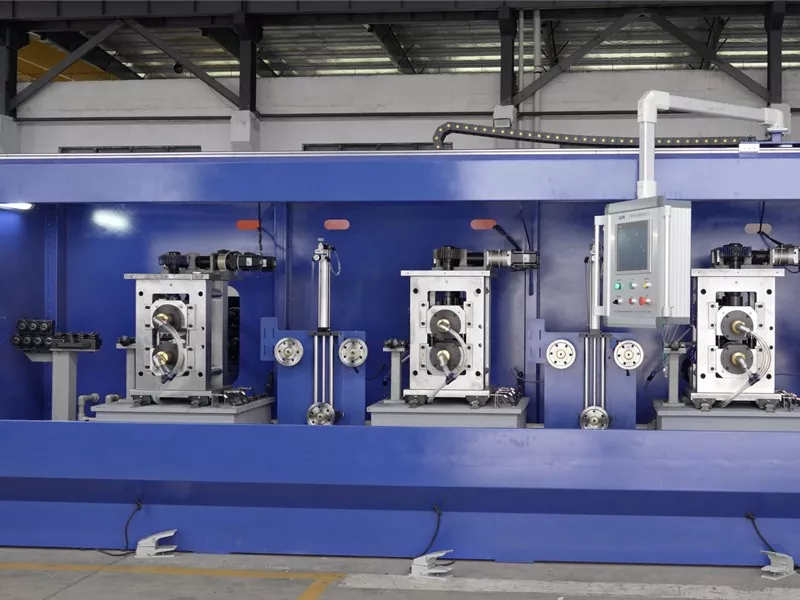
PV Busbar Ribbon Production Line
GRM PV Busbar Ribbon Production Line are designed to continuously process TU1 oxygen-free copper round wire into high-precision tin-coated flat conductive ribbon. The line is suitable for PV interconnection ribbon, busbar ribbon, and reflective busbar ribbon production. The complete line integrates wire drawing, precision rolling, continuous annealing, flux treatment, hot-dip tin coating, and automatic take-up. It helps PV ribbon manufacturers control width and thickness accuracy, tin coating quality, strip straightness, and winding consistency. The GRM busbar ribbon production line is approximately 26 m long and 3 m wide, with a total line weight of about 14 tons. The design speed can reach up to 150 m/min, depending on copper wire size, finished ribbon dimensions, tinning speed, and take-up method. Under typical production conditions, the monthly output can reach approximately 60-80 tons.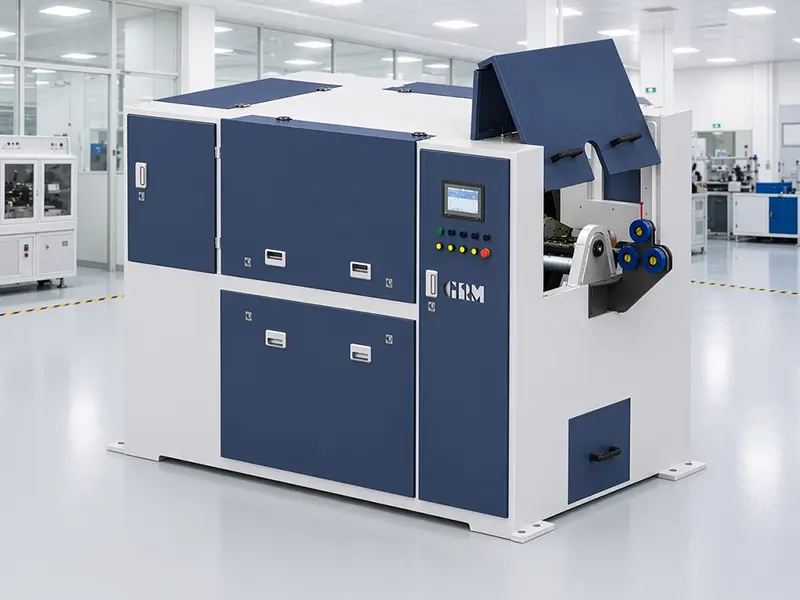
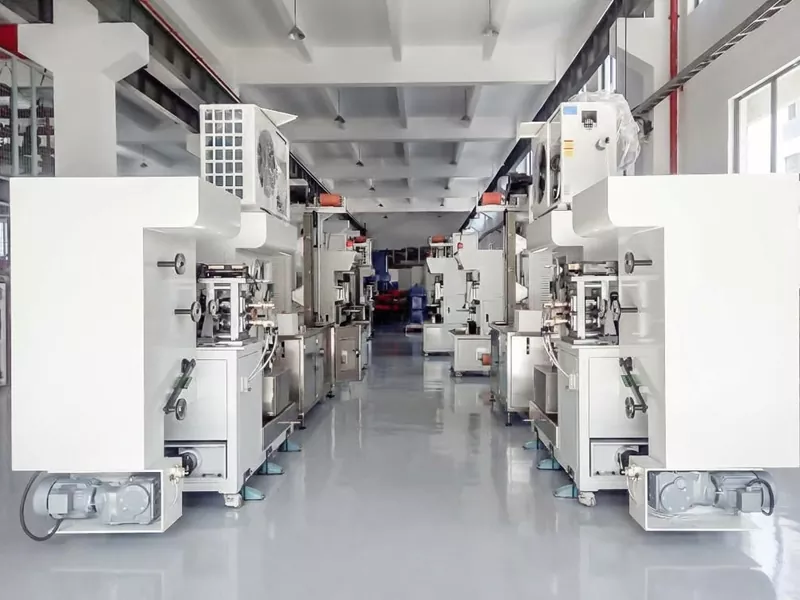
Belt Wire Descaling Machine
GRM Acid-Free Abrasive Belt Descaling Unit is designed for wire surface pretreatment before drawing, rolling, plating or further processing. The Belt Wire Descaling Machine removes rust, oxide scale and surface impurities through high-speed abrasive belt grinding. Compared with traditional acid pickling, it provides a cleaner and more environmentally friendly surface preparation method, helping reduce acid wastewater, chemical treatment costs and workshop pollution.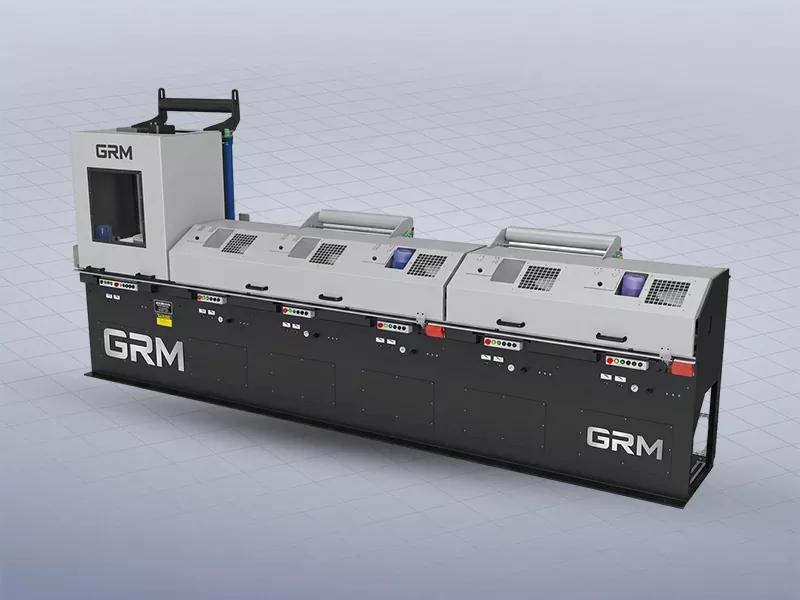
High-Speed Precision Wire Drawing Machine
This China High-Speed Precision Wire Drawing Machine from GRM Rolling Mill transcends traditional diameter-reduction capabilities, integrating a precision servo drive and a closed-loop tension control system to simultaneously preserve both wire surface finish and original mechanical properties. The equipment combines multi-pass drawing, tension control, and spooling/unspooling functions, featuring a diameter tolerance of ±0.03 mm, a maximum speed of 25 m/s, and a noise level of ≤82 dB. Contact us today!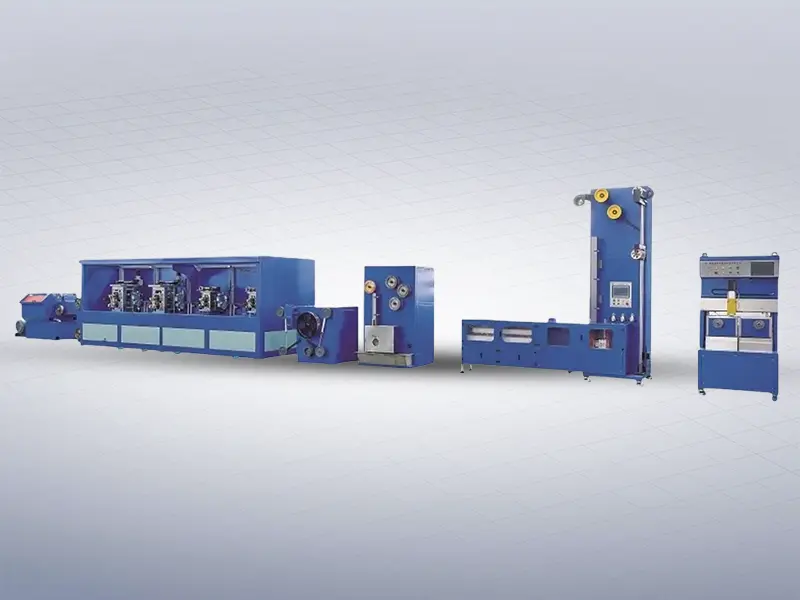
Photovoltaic Welding Strip Rolling Mill
The China photovoltaic welding strip rolling mill produced by GRM Rolling Mill factory is a special flat wire product used to connect solar cells in photovoltaic modules. It is composed of copper substrate and surface coating. Copper substrate is usually high-purity oxygen free copper or T2 red copper, with copper content ≥ 99.99% and conductivity ≥ 98%. It has good conductivity and certain strength, which can ensure efficient current transmission.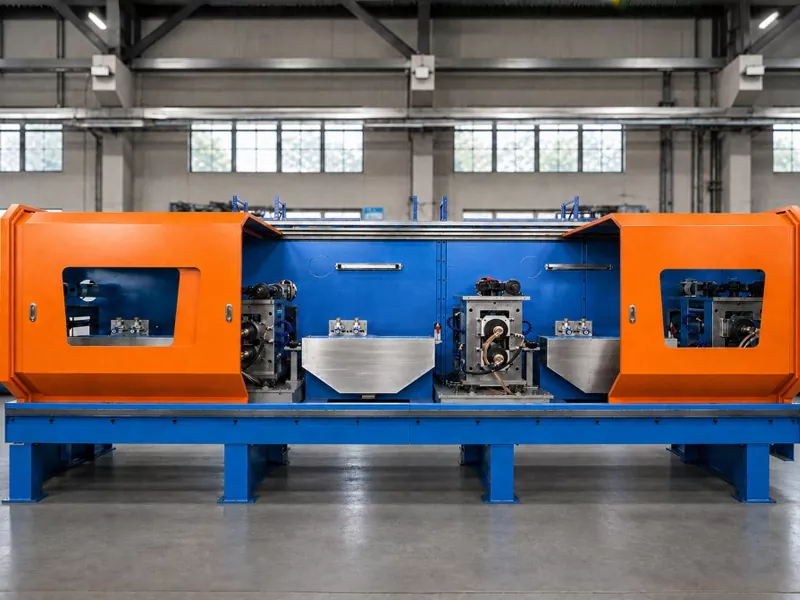
Integrated Drawing and Rolling Line for Precision Copper Flat Wire
GRM's Integrated Drawing and Rolling Line for Precision Copper Flat Wire is a customized copper flat wire production solution integrating wire drawing, precision rolling, online measurement, and automatic take-up in one continuous process. Designed for transformer conductors, CTC conductor manufacturing, enameled rectangular wire, and EV motor flat wire production, the line achieves speeds up to 400 m/min. This integrated system improves efficiency and reduces material handling.
- Related Blog
- Reviews