
- English
- Español
- Português
- русский
- Français
- 日本語
- Deutsch
- tiếng Việt
- Italiano
- Nederlands
- ภาษาไทย
- Polski
- 한국어
- Svenska
- magyar
- Malay
- বাংলা ভাষার
- Dansk
- Suomi
- हिन्दी
- Pilipino
- Türkçe
- Gaeilge
- العربية
- Indonesia
- Norsk
- تمل
- český
- ελληνικά
- український
- Javanese
- فارسی
- தமிழ்
- తెలుగు
- नेपाली
- Burmese
- български
- ລາວ
- Latine
- Қазақша
- Euskal
- Azərbaycan
- Slovenský jazyk
- Македонски
- Lietuvos
- Eesti Keel
- Română
- Slovenski
- मराठी
- Srpski језик
- Esperanto
- Afrikaans
- Català
- שפה עברית
- Cymraeg
- Galego
- Latviešu
- icelandic
- ייִדיש
- беларускі
- Hrvatski
- Kreyòl ayisyen
- Shqiptar
- Malti
- lugha ya Kiswahili
- አማርኛ
- Bosanski
- Frysk
- ភាសាខ្មែរ
- ქართული
- ગુજરાતી
- Hausa
- Кыргыз тили
- ಕನ್ನಡ
- Corsa
- Kurdî
- മലയാളം
- Maori
- Монгол хэл
- Hmong
- IsiXhosa
- Zulu
- Yoruba
- অসমীয়া
- ଓଡିଆ
- Punjabi
- پښتو
- Chichewa
- Samoa
- Sesotho
- සිංහල
- Gàidhlig
- Cebuano
- Somali
- Тоҷикӣ
- O'zbek
- Hawaiian
- سنڌي
- Shinra
- Հայերեն
- Igbo
- Sundanese
- Lëtzebuergesch
- Malagasy

Can PV Ribbon Rolling Mills Deliver the Precision and Productivity Needed for Next-Generation Solar Manufacturing
Article Summary: As photovoltaic technology moves toward thinner, higher-efficiency cells and lower material consumption, manufacturers need increasingly precise equipment for producing conductive ribbon. PV Ribbon Rolling Mills from GRM are designed to transform oxygen-free copper wire into high-precision photovoltaic ribbon with controlled thickness, width, surface quality, and production stability. This guide explains how the technology works, its specifications, applications, key advantages, and what manufacturers should consider when selecting a rolling mill for PV ribbon production.
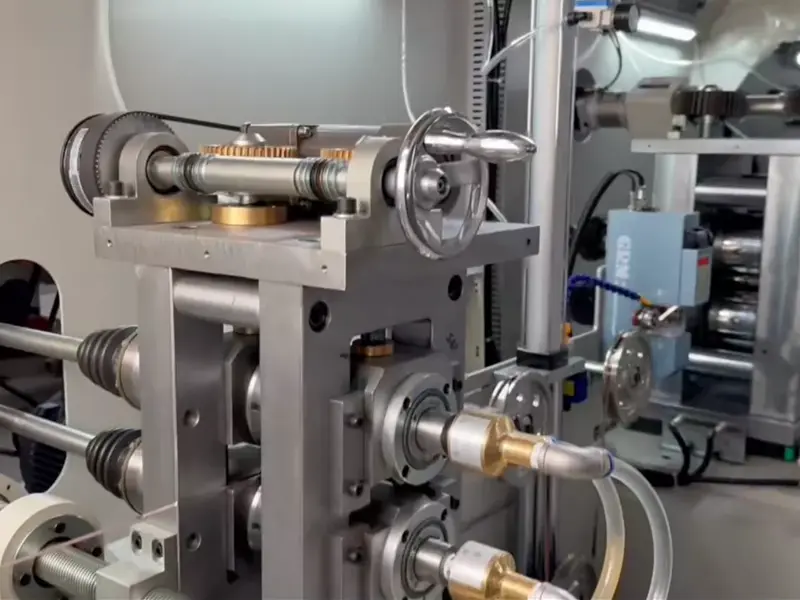
Table of Contents
- Why Are PV Ribbon Rolling Mills Important for Solar Manufacturing?
- How Do PV Ribbon Rolling Mills Work?
- What Specifications Define a High-Precision PV Ribbon Rolling Mill?
- What Are the Main Advantages of PV Ribbon Rolling Mills?
- Where Are PV Ribbon Rolling Mills Used?
- Which Optional Configurations Can Improve Production?
- How Should Manufacturers Select the Right PV Ribbon Rolling Mill?
- Why Is Ultra-Thin PV Ribbon Becoming More Important?
- FAQ About PV Ribbon Rolling Mills
- Conclusion
Why Are PV Ribbon Rolling Mills Important for Solar Manufacturing?
In a photovoltaic module, ribbon is not simply a metal strip. It serves as an electrical conductor that helps connect solar cells and collect current. Consequently, dimensional consistency, surface quality, mechanical reliability, and process stability can directly influence downstream manufacturing performance.
GRM Rolling Mill's PV Ribbon Rolling Mills are specifically developed for photovoltaic applications. The equipment precision-rolls oxygen-free copper wire into ultra-thin flat ribbon suitable for PV interconnection, busbar, and high-efficiency solar module applications.
According to GRM's product specifications, the system is designed for a maximum line speed of 120 m/min, while thickness tolerance can reach ±0.004 mm. These capabilities make precision rolling particularly valuable when manufacturers need repeatable ribbon dimensions across long production runs.
For buyers evaluating a PV ribbon rolling mill, the key consideration should therefore be more than nominal production speed. The complete process must provide stable dimensional control, suitable material handling, reliable adjustment, and the flexibility required by modern PV ribbon specifications.
How Do PV Ribbon Rolling Mills Work?
The basic manufacturing principle is based on controlled metal deformation. Oxygen-free copper wire enters the rolling system and passes through precision-configured rolls. Progressive reduction changes the round wire into a flat ribbon with the required width and thickness.
A typical production process can be understood through the following stages:
- Material feeding: Oxygen-free copper wire is supplied continuously to the rolling section.
- Precision reduction: The rolls gradually reduce the material cross-section while controlling deformation.
- Width and thickness forming: Roll configuration determines the final ribbon geometry.
- Dimensional control: Thickness and width are monitored and adjusted according to production requirements.
- Surface inspection: The finished ribbon can be checked for surface defects and edge quality.
- Downstream processing: Depending on the production line, the ribbon can proceed to additional treatment or tin-coating processes.
This controlled process is especially important for thin ribbon because small dimensional deviations can become more significant as material thickness decreases.
What Specifications Define a High-Precision PV Ribbon Rolling Mill?
When comparing equipment from different manufacturers, buyers should examine material compatibility, dimensional range, tolerance, production speed, and process flexibility together rather than focusing on only one specification.
| Parameter | GRM PV Ribbon Rolling Mill Specification | Production Significance |
|---|---|---|
| Incoming Material | Oxygen-Free Copper Wire | Suitable for precision conductive ribbon production |
| Input Diameter | φ2.6–φ3.5 mm | Defines the compatible incoming wire range |
| Ribbon Width | 3–8 mm | Supports multiple PV ribbon specifications |
| Thickness Range | 0.05–0.45 mm | Supports thin and ultra-thin ribbon applications |
| Thickness Tolerance | ±0.004 mm | Helps maintain dimensional consistency |
| Width Tolerance | ±0.03 mm | Supports stable ribbon geometry |
| Width/Thickness Ratio | ≤160 | Provides a reference for ribbon geometry |
| Maximum Line Speed | 120 m/min | Supports high-throughput production |
These specifications show why precision engineering matters in photovoltaic ribbon production. A machine must maintain dimensional stability while operating at commercially useful speeds, particularly when producing thin conductive strips for modern PV modules.
What Are the Main Advantages of PV Ribbon Rolling Mills?
1. High-Precision Rolling
Precision rolling helps manufacturers achieve tight thickness and width tolerances. GRM specifies a thickness tolerance of ±0.004 mm, supporting applications where consistent ribbon geometry is essential.
2. Stable Surface and Edge Quality
Stable rolling conditions can help produce uniform surfaces and controlled edges. This is important because burrs, irregular edges, or inconsistent surfaces may create challenges during subsequent processing and cell interconnection.
3. Flexible Product Specifications
With a specified ribbon width range of 3–8 mm and thickness range of 0.05–0.45 mm, the equipment provides a relatively broad process window for different photovoltaic ribbon requirements.
4. High Production Efficiency
A maximum line speed of 120 m/min gives manufacturers the potential to increase output while maintaining a continuous rolling process. Higher productivity can help reduce the equipment and labor cost allocated to each unit of ribbon.
5. Digital Upgrade Potential
GRM's system includes reserved interfaces for sensors and control systems. This provides a foundation for integrating measurement, monitoring, and automation technologies as production requirements evolve.
Where Are PV Ribbon Rolling Mills Used?
The primary application is the production of conductive ribbon used in photovoltaic manufacturing. Depending on the finished specification, the rolling process can support several important applications:
- PV interconnection ribbon: Used for electrical interconnection between solar cells.
- Bus ribbon: Used as a current-collection conductor within PV module structures.
- Ultra-thin copper ribbon: Designed for high-efficiency photovoltaic module applications where material dimensions require close control.
- Solar ribbon production lines: Can be integrated with other equipment to create a more complete PV ribbon manufacturing process.
Manufacturers may also combine rolling technology with downstream tin-coating or other processing steps depending on the required ribbon product and production configuration.
Which Optional Configurations Can Improve Production?
Modern PV ribbon production increasingly requires more than mechanical rolling. Measurement, automation, inspection, and process integration can help manufacturers achieve better control over production quality.
| Optional Configuration | Potential Function |
|---|---|
| Automatic Thickness Measurement System | Provides online thickness monitoring for process control |
| Servo Automatic Adjustment System | Supports automated process adjustment |
| Online Surface Inspection | Helps identify surface-related production defects |
| Customized Roll Pass Design | Allows roll configurations to match specific ribbon requirements |
| Tin-Coating Process Integration | Supports integration with downstream ribbon coating processes |
For manufacturers planning long-term production expansion, these options can be especially useful because they provide additional process-control capabilities without changing the fundamental rolling principle.
How Should Manufacturers Select the Right PV Ribbon Rolling Mill?
Selecting a machine should begin with the target ribbon specification rather than simply comparing machine prices. A practical purchasing evaluation should consider:
- Incoming material: Confirm that the mill is compatible with the required copper material and input diameter.
- Target dimensions: Verify the required ribbon width and thickness against the machine's operating range.
- Tolerance requirements: Evaluate thickness and width tolerances based on downstream PV manufacturing needs.
- Production capacity: Compare maximum line speed with actual planned production volume.
- Automation: Determine whether automatic measurement and servo adjustment are necessary.
- Inspection: Consider online surface inspection when product quality requirements are stringent.
- Future expansion: Choose equipment that can accommodate evolving ultra-thin ribbon requirements.
- Supplier capability: Evaluate technical support, customization capabilities, commissioning, spare parts, and after-sales service.
For international buyers looking for a China manufacturer, these criteria are particularly important because the right supplier should be capable of discussing the complete production requirement rather than simply supplying a standalone machine.
Why Is Ultra-Thin PV Ribbon Becoming More Important?
The photovoltaic industry continues to pursue higher conversion efficiency and lower material consumption. As a result, the production of thinner conductive ribbon has become an important direction for PV manufacturing technology.
Producing thinner ribbon creates stricter requirements for rolling accuracy and dimensional stability. The smaller the final thickness, the more carefully manufacturers need to control roll configuration, material deformation, tension, surface condition, and process parameters.
GRM's stated thickness range of 0.05–0.45 mm positions its PV ribbon rolling equipment for applications requiring thin and ultra-thin copper ribbon. The machine's intelligent interfaces and optional automatic measurement capabilities can also provide a foundation for future process automation.
For manufacturers planning to upgrade their solar ribbon production capacity, selecting a precision rolling system with sufficient process flexibility can therefore be a strategic investment rather than simply a capacity purchase.
FAQ About PV Ribbon Rolling Mills
What material is processed by a PV Ribbon Rolling Mill?
GRM's PV Ribbon Rolling Mills are mainly designed to process oxygen-free copper wire and precision conductive copper materials used in photovoltaic ribbon manufacturing.
What thickness can the GRM PV Ribbon Rolling Mill produce?
The specified finished ribbon thickness range is 0.05–0.45 mm, depending on production requirements and process configuration.
What is the maximum line speed?
The maximum stated line speed is 120 m/min, providing a high-throughput production capability for photovoltaic ribbon manufacturing.
Can the mill produce ultra-thin PV ribbon?
Yes. The system is designed for high-precision thin ribbon rolling and supports a thickness range down to 0.05 mm, while its design also considers future requirements for thinner photovoltaic ribbon applications.
Can PV Ribbon Rolling Mills be customized?
GRM offers optional configurations including customized roll pass design, automatic thickness measurement, servo automatic adjustment, online surface inspection, and tin-coating process integration. The appropriate configuration can be selected according to the customer's production requirements.
Conclusion
PV Ribbon Rolling Mills are essential equipment for manufacturers seeking accurate, stable, and efficient production of photovoltaic conductive ribbon. With a maximum line speed of 120 m/min, thickness tolerance of ±0.004 mm, a 0.05–0.45 mm thickness range, and optional automation and inspection technologies, GRM's solution is designed around the precision requirements of modern solar ribbon manufacturing. If you are evaluating a reliable China supplier or planning a new PV ribbon production line, contact us to discuss your material, ribbon dimensions, production capacity, and customized equipment requirements with the GRM technical team.