- English
- Español
- Português
- русский
- Français
- 日本語
- Deutsch
- tiếng Việt
- Italiano
- Nederlands
- ภาษาไทย
- Polski
- 한국어
- Svenska
- magyar
- Malay
- বাংলা ভাষার
- Dansk
- Suomi
- हिन्दी
- Pilipino
- Türkçe
- Gaeilge
- العربية
- Indonesia
- Norsk
- تمل
- český
- ελληνικά
- український
- Javanese
- فارسی
- தமிழ்
- తెలుగు
- नेपाली
- Burmese
- български
- ລາວ
- Latine
- Қазақша
- Euskal
- Azərbaycan
- Slovenský jazyk
- Македонски
- Lietuvos
- Eesti Keel
- Română
- Slovenski
- मराठी
- Srpski језик
- Esperanto
- Afrikaans
- Català
- שפה עברית
- Cymraeg
- Galego
- Latviešu
- icelandic
- ייִדיש
- беларускі
- Hrvatski
- Kreyòl ayisyen
- Shqiptar
- Malti
- lugha ya Kiswahili
- አማርኛ
- Bosanski
- Frysk
- ភាសាខ្មែរ
- ქართული
- ગુજરાતી
- Hausa
- Кыргыз тили
- ಕನ್ನಡ
- Corsa
- Kurdî
- മലയാളം
- Maori
- Монгол хэл
- Hmong
- IsiXhosa
- Zulu
- Yoruba
- অসমীয়া
- ଓଡିଆ
- Punjabi
- پښتو
- Chichewa
- Samoa
- Sesotho
- සිංහල
- Gàidhlig
- Cebuano
- Somali
- Тоҷикӣ
- O'zbek
- Hawaiian
- سنڌي
- Shinra
- Հայերեն
- Igbo
- Sundanese
- Lëtzebuergesch
- Malagasy
Two High Rolling Machine
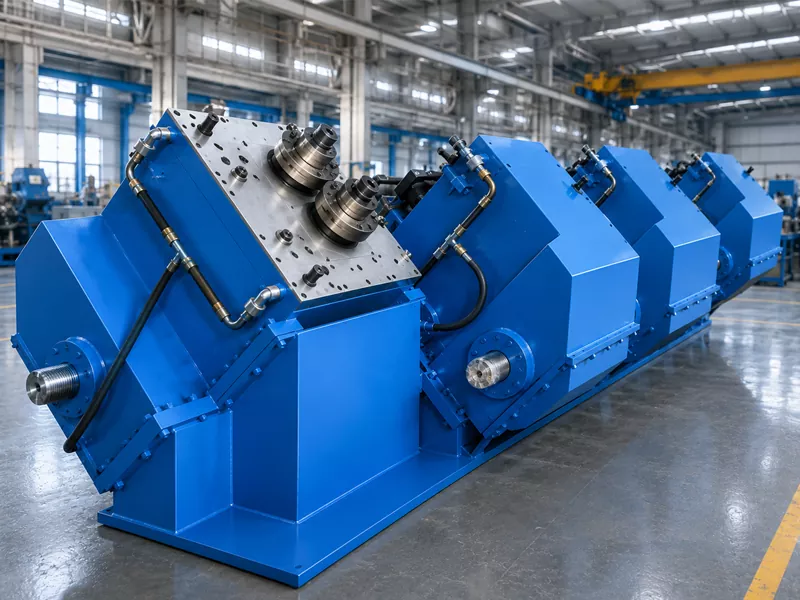
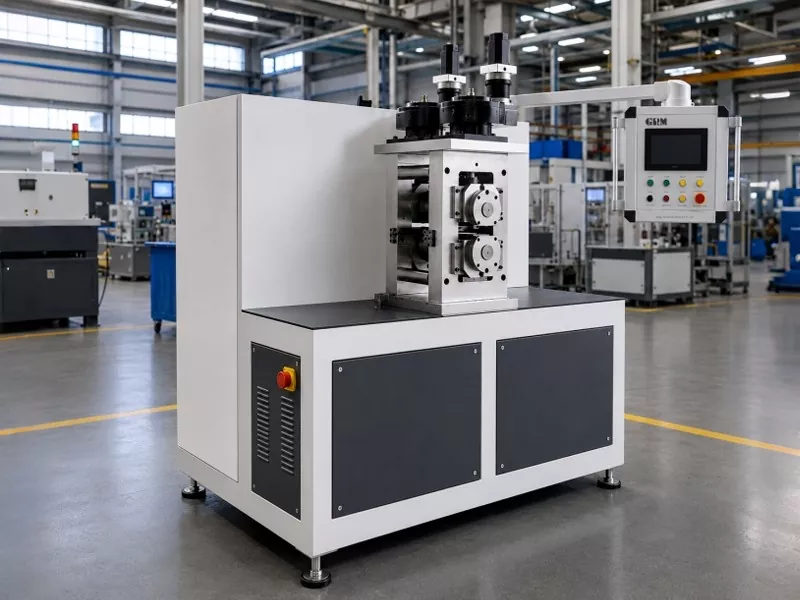
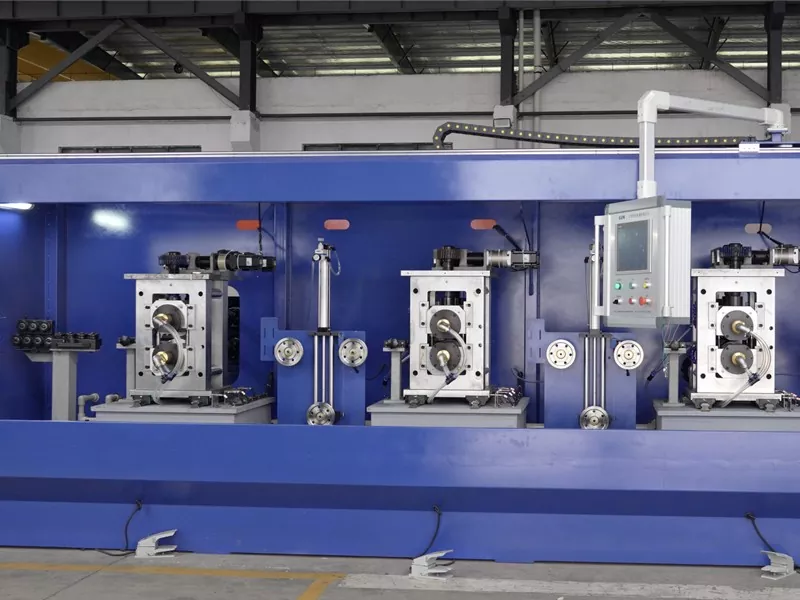
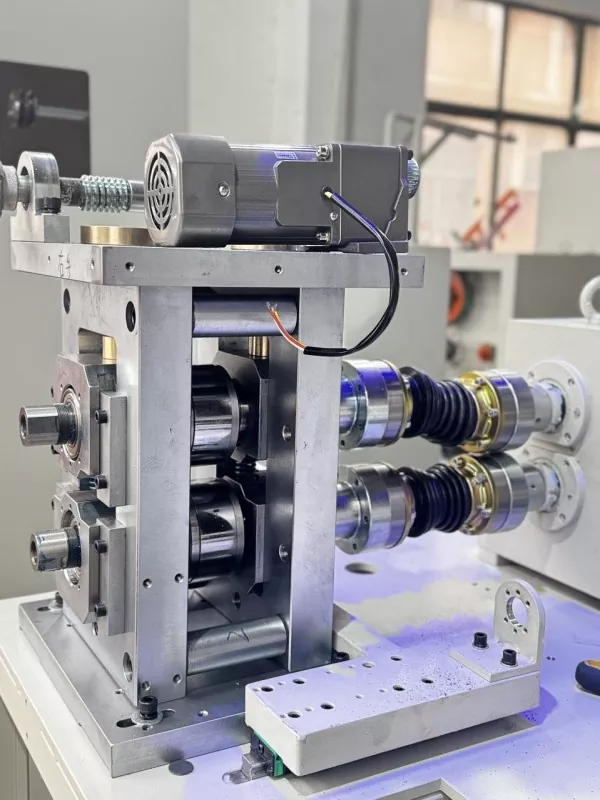
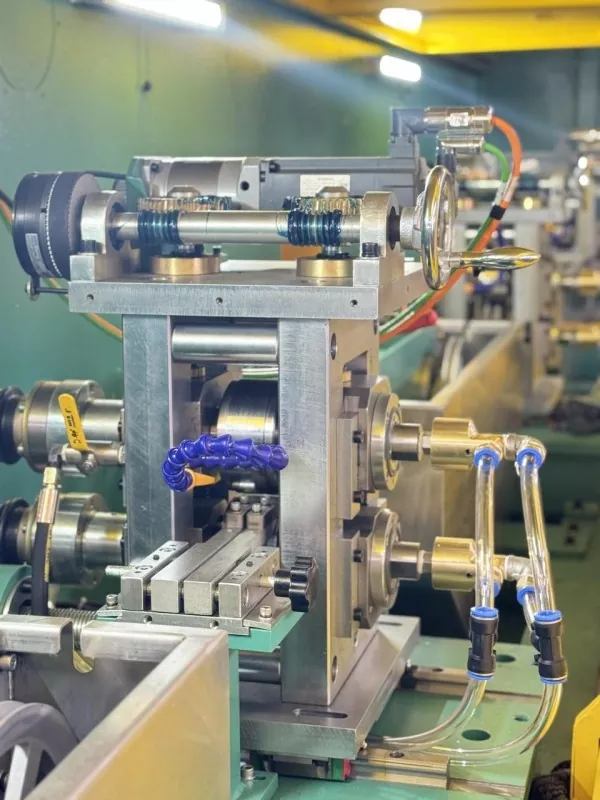
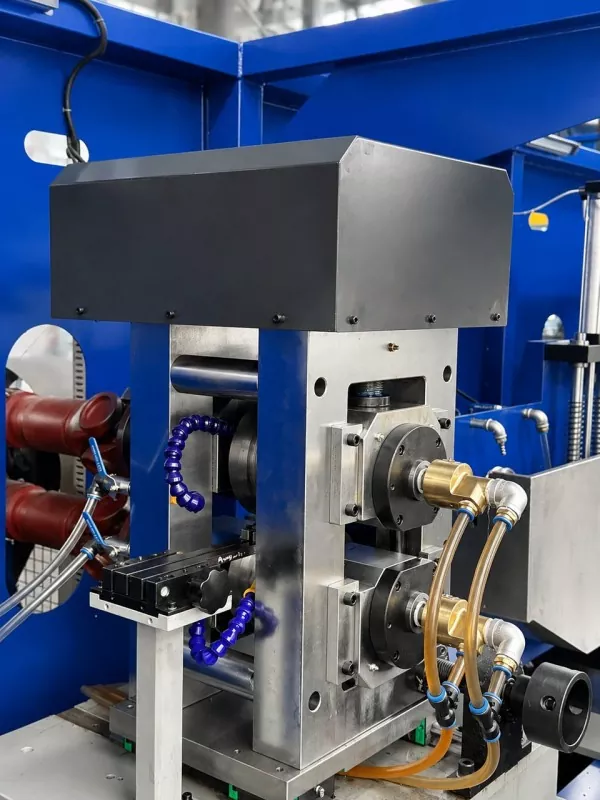
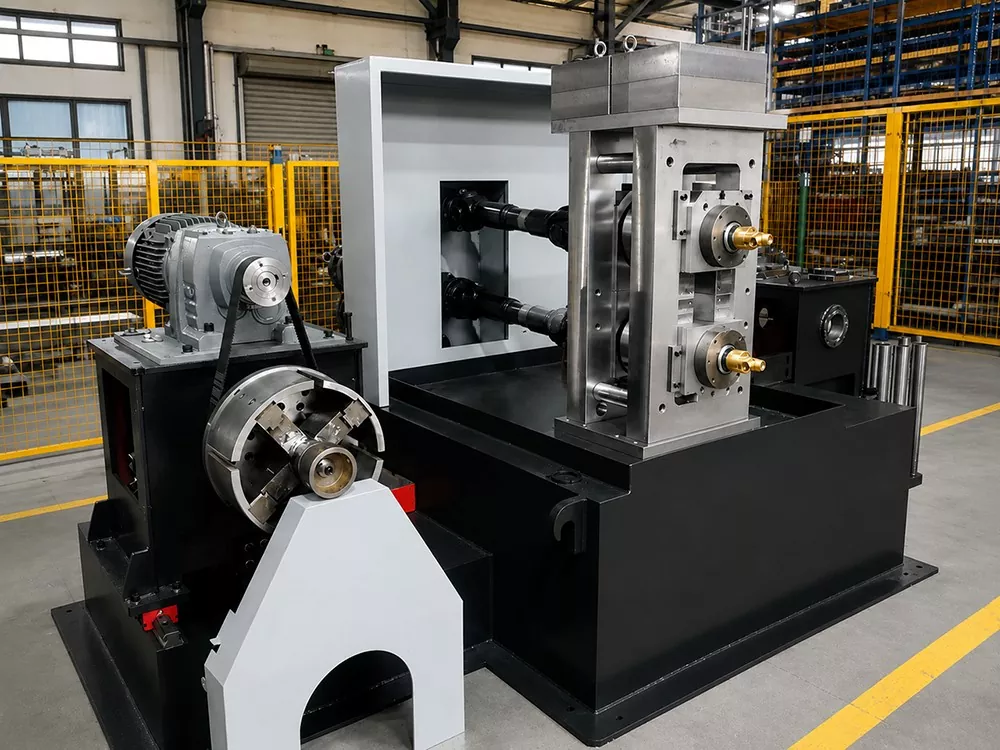
GRM Two High Rolling Machine is a compact and versatile metal forming machine designed for reducing thickness, adjusting cross-sectional dimensions, and shaping various metal wires, strips, and profiles.
The machine consists of two horizontally arranged work rolls. During operation, the material passes through the roll gap and undergoes controlled plastic deformation under rolling pressure, achieving the required thickness reduction, width adjustment, or profile forming.
The Two High Rolling Mill can be used as a standalone rolling unit for material development and small-batch production, or integrated into GRM continuous rolling lines according to specific production requirements.
Send Inquiry
Product Description
Working Principle
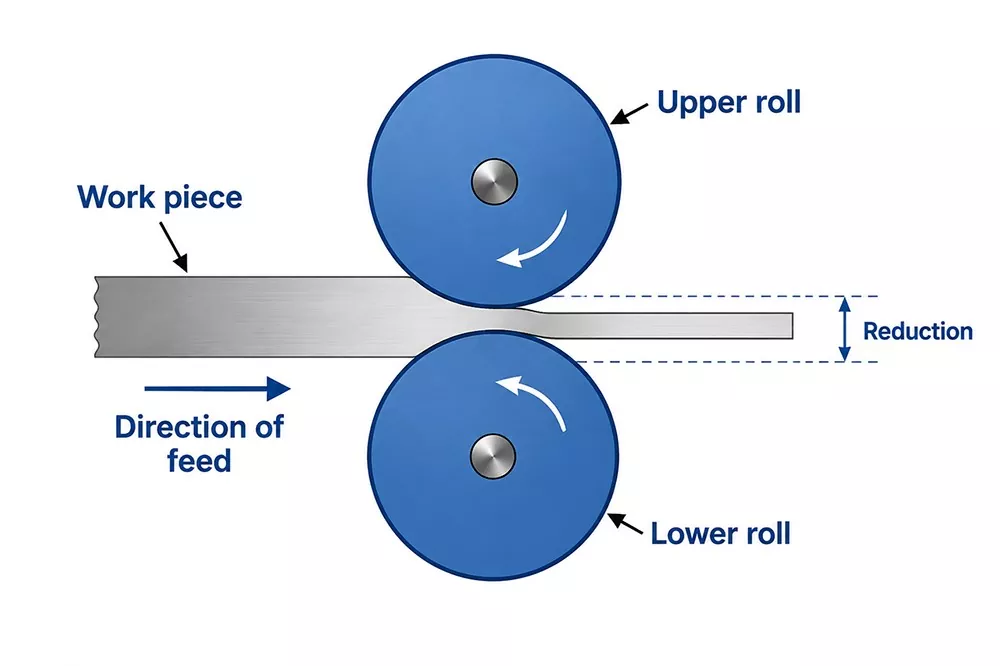
A Two High Rolling Mill performs material reduction through the rotation of two opposing work rolls.
The upper and lower rolls rotate in opposite directions, drawing the material into the roll gap and applying compressive force to achieve plastic deformation.
By precisely adjusting the roll gap, the reduction amount and final product dimensions can be controlled.
Key Features
- Simple and robust structure with easy operation and maintenance.
- Flexible application for wire, strip, and profile rolling processes.
- Suitable for single-pass rolling, material trials, and small-batch production.
- Can be used as an independent rolling machine or integrated into GRM continuous production lines.
Technical Specifications
| Model | Roll Diameter × Roll Width (mm) | Rolling Force (kN) |
| GRM-2H60 | Φ60x30 | 15 kN |
| GRM-2H80 | Φ80x40 | 30 kN |
| GRM-2H106 | Φ106x40 | 50 kN |
| GRM-2H120 | Φ120x40 | 70 kN |
| GRM-2H160 | Φ160x80 | 160 kN |
| GRM-2H180 | Φ180x80 | 220 kN |
| GRM-2H200 | Φ200x80 | 280 kN |
| GRM-2H400 | Φ400x80 | 700 kN |
Applications
GRM Two High Rolling Machine can be applied in various metal forming processes, including:
- Round wire flattening
- Metal strip thickness reduction
- Flat wire, half-round wire, and simple profile wire forming
- Laboratory research and material development
- Small-batch production
- Single rolling units integrated into continuous production lines
Typical materials include:
- Copper
- Aluminum
- Stainless steel
- Other non-ferrous and ferrous metal materials
Frequently Asked Questions
A Two High Rolling Mill is mainly used for wire flattening, strip reduction, and simple profile forming. It is suitable for material trials, small-batch production, and single-pass rolling applications.
A Two High Rolling Mill has a simple structure and is suitable for general rolling and forming processes. A Four High Rolling Mill provides higher rigidity and precision, making it suitable for thin strip rolling and applications with higher accuracy requirements.
The mill can be designed for various metals, including copper, aluminum, stainless steel, and other alloys. The final configuration depends on material properties and product requirements.
A typical process includes:
Pay-off → Guiding → Two High Rolling → Inspection → Take-up
The process can be customized according to production requirements.
Yes. GRM provides customized roll designs based on product shape, material characteristics, surface requirements, and production capacity.
Hot Tags: Two High Rolling Machine
Product Tag
Related Category
Flat Wire Rolling Mills
Wire Reducing Mill
Profile Wire Rolling Mills
Round Wire Rolling Mills
Solar PV Ribbon Machine
Strip Wire Rolling Mill
Auxiliary Equipment
Rolling Mill Components
Rolling Mill
Rolling Mill Production Line
Precision Strip Rolling Mills
Reduction Rolling Mills
Send Inquiry
Please Feel free to give your inquiry in the form below. We will reply you in 24 hours.