
- English
- Español
- Português
- русский
- Français
- 日本語
- Deutsch
- tiếng Việt
- Italiano
- Nederlands
- ภาษาไทย
- Polski
- 한국어
- Svenska
- magyar
- Malay
- বাংলা ভাষার
- Dansk
- Suomi
- हिन्दी
- Pilipino
- Türkçe
- Gaeilge
- العربية
- Indonesia
- Norsk
- تمل
- český
- ελληνικά
- український
- Javanese
- فارسی
- தமிழ்
- తెలుగు
- नेपाली
- Burmese
- български
- ລາວ
- Latine
- Қазақша
- Euskal
- Azərbaycan
- Slovenský jazyk
- Македонски
- Lietuvos
- Eesti Keel
- Română
- Slovenski
- मराठी
- Srpski језик
- Esperanto
- Afrikaans
- Català
- שפה עברית
- Cymraeg
- Galego
- Latviešu
- icelandic
- ייִדיש
- беларускі
- Hrvatski
- Kreyòl ayisyen
- Shqiptar
- Malti
- lugha ya Kiswahili
- አማርኛ
- Bosanski
- Frysk
- ភាសាខ្មែរ
- ქართული
- ગુજરાતી
- Hausa
- Кыргыз тили
- ಕನ್ನಡ
- Corsa
- Kurdî
- മലയാളം
- Maori
- Монгол хэл
- Hmong
- IsiXhosa
- Zulu
- Yoruba
- অসমীয়া
- ଓଡିଆ
- Punjabi
- پښتو
- Chichewa
- Samoa
- Sesotho
- සිංහල
- Gàidhlig
- Cebuano
- Somali
- Тоҷикӣ
- O'zbek
- Hawaiian
- سنڌي
- Shinra
- Հայերեն
- Igbo
- Sundanese
- Lëtzebuergesch
- Malagasy

What Is PV Ribbon and How Is It Manufactured?
What is PV ribbon, and how is it manufactured?
PV Ribbon is a crucial conductor for current transmission within crystalline silicon photovoltaic modules. It is typically made from a high-conductivity copper base material that undergoes rolling, annealing, and tin-plating processes. Depending on their application, PV ribbons are primarily categorized into interconnection ribbons and busbar ribbons.
Interconnection ribbons connect adjacent solar cells, conducting the current generated by the cells to the cell string. Busbar ribbons, which are generally larger in size, collect current from the cell strings and direct it to the module's output terminals or junction box. Consequently, the ribbon's dimensional accuracy, straightness, coating uniformity, and mechanical properties directly impact the stability of the soldering process and the module's long-term reliability.
Why Copper Wire Must Be Rolled into Flat Ribbon?
Traditional round copper wire cannot be used directly in PV modules; it requires plastic deformation to alter its cross-sectional shape, transforming the material from a round profile into a flat strip with a precise width-to-thickness ratio.
In ribbon production, the core function of the rolling process is not merely to "flatten the copper wire," but to achieve stable width, thickness, edge quality, and flatness through controlled deformation. Fluctuations in width can affect soldering alignment, uneven thickness impacts electrical resistance consistency, and poor straightness can lead to winding irregularities and unstable tin plating in subsequent steps.
Therefore, the PV ribbon rolling process requires simultaneous control over material deformation, tension coordination, dimensional inspection, and surface quality.
PV Ribbon Manufacturing Process
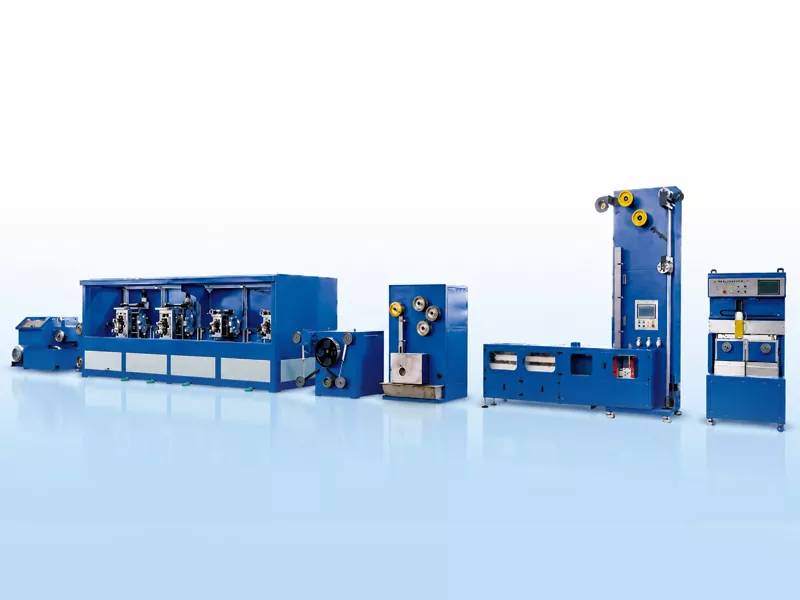
A typical PV ribbon production line uses TU1 oxygen-free copper wire as raw material. Through processes such as multi-stage wire drawing, precision rolling, continuous annealing, flux treatment, hot-dip tin plating, and automatic winding, it achieves the continuous manufacture of flat, tin-plated conductive ribbons from round copper wire.
From Copper Wire to PV Ribbon Manufacturing Process
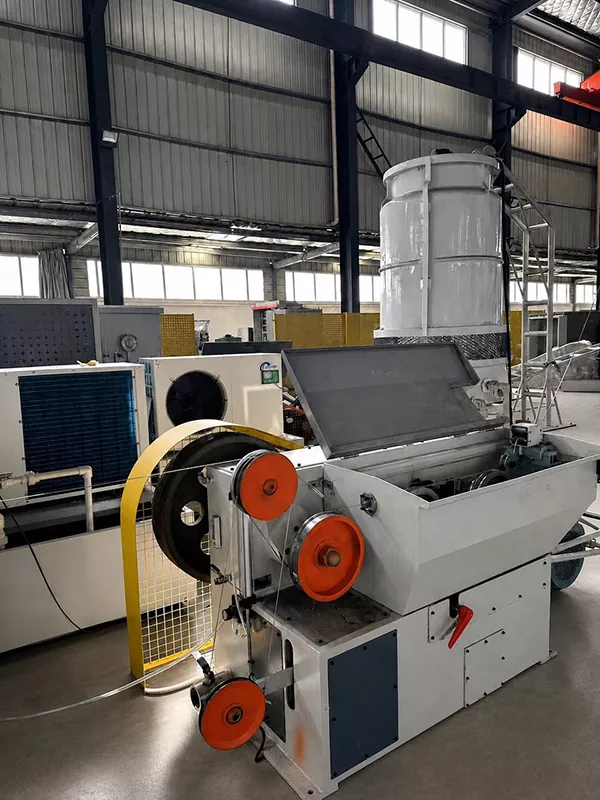
Drawing Machine
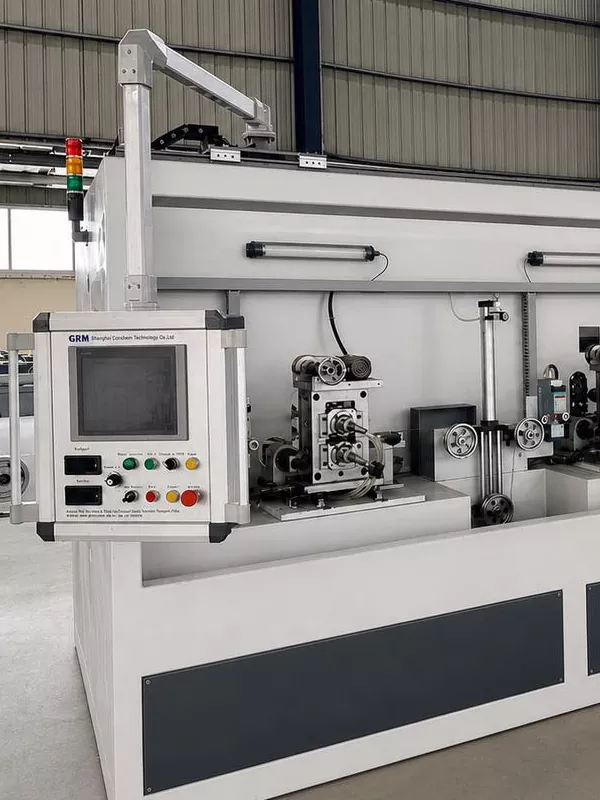
4 Roll Stand
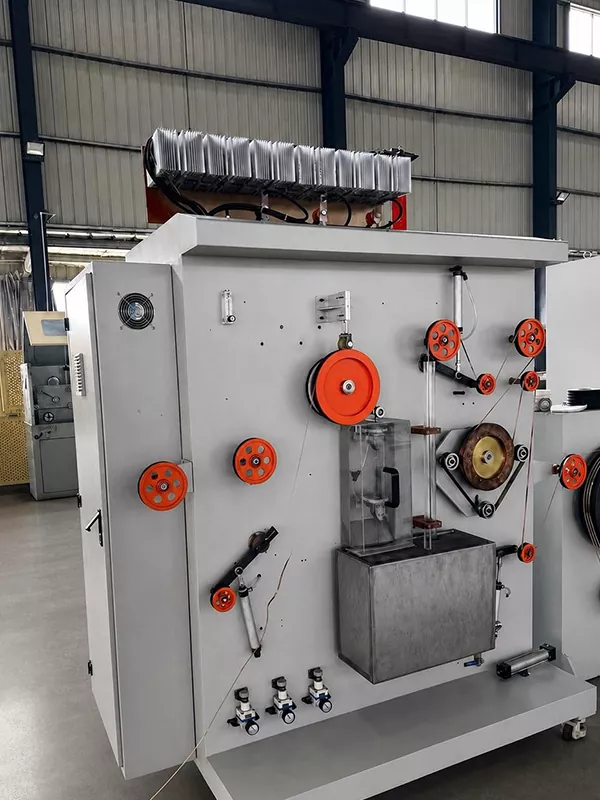
Annealing
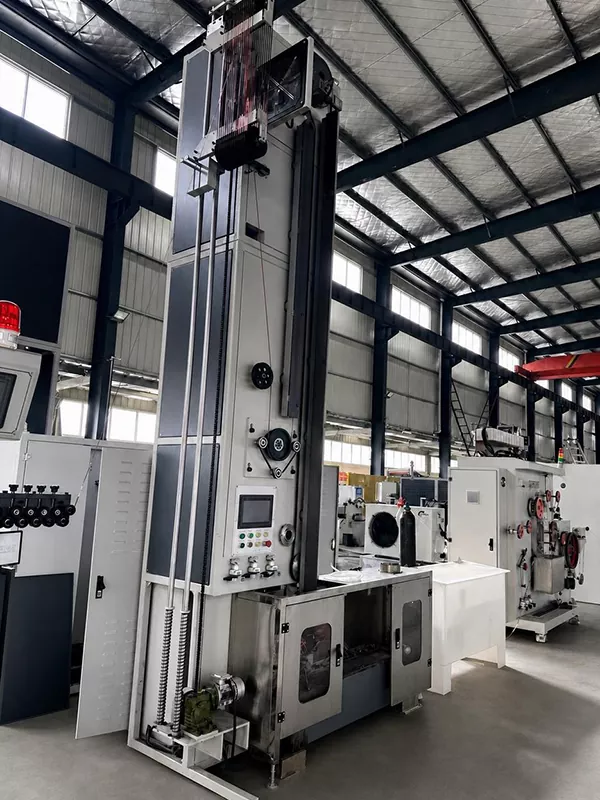
Tin Coating
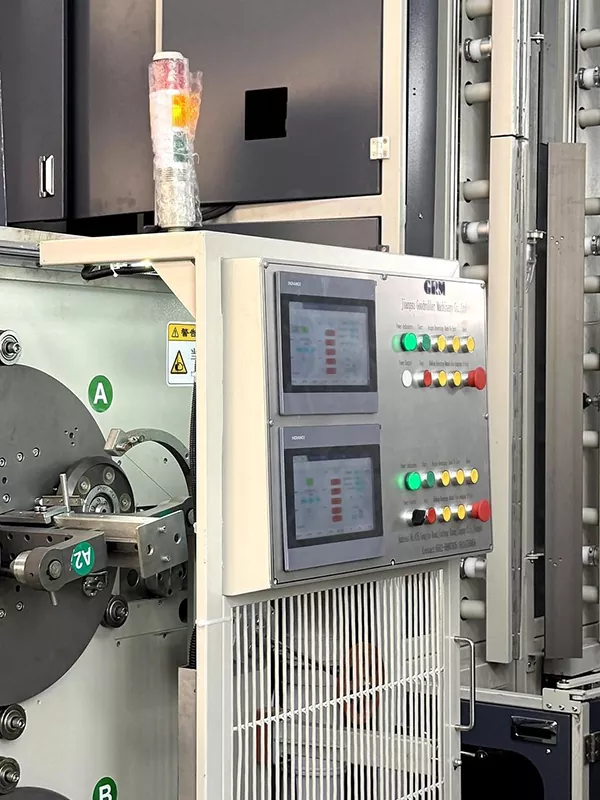
Automatic Coil Chang
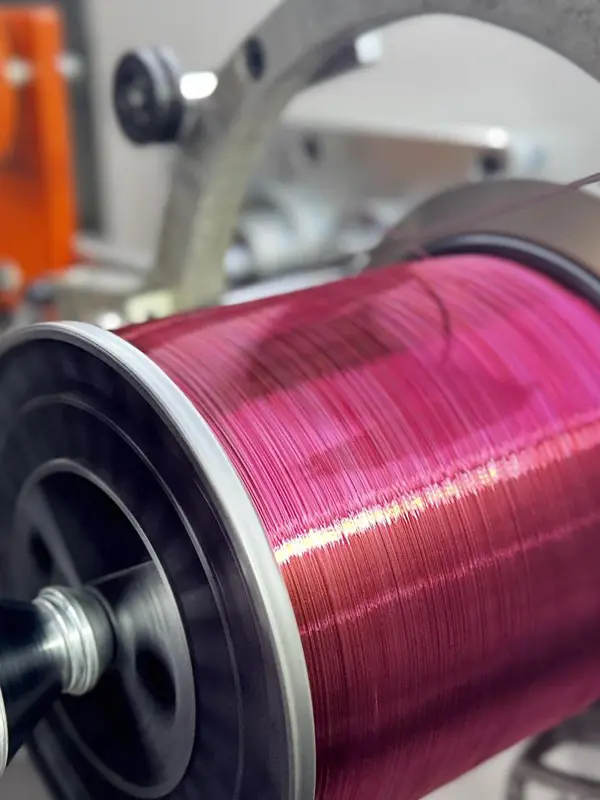
Precision Take-up
Round Copper Wire → Wire Drawing → Precision Rolling → Annealing → Flux Treatment → Hot-dip Tin Plating → Automatic Winding
Key Manufacturing Challenges
1. Width and Thickness Control
The width and thickness of the ribbon determine the soldering contact area, electrical resistance consistency, and the stability of the module layout. For wide, thin busbar products, even minor fluctuations during rolling are amplified in the subsequent tin-plating and winding stages.
2. Strip Flatness and Straightness
Strip flatness and straightness affect the path during tin plating, tension stability, and winding neatness. Poor straightness causes the strip to wander, leading to uneven winding or downtime for adjustments in subsequent processes.
3. Annealing and Mechanical Properties
Rolled copper strips require annealing to adjust their mechanical properties. Insufficient annealing results in excessive hardness, which hinders subsequent soldering and stress relief in the module; conversely, over-annealing can compromise production stability and dimensional consistency.
4. Tin Coating Uniformity
Hot-dip tin plating requires complete coverage of the ribbon's surface and edges. A coating that is too thin impairs solderability, while an excessively thick coating increases material consumption and may affect dimensional consistency.
5. Winding Consistency
Automatic winding affects not only the product's appearance but also its subsequent packaging, transport, and usage. Factors such as tension control, servo-driven traverse mechanisms, and spool-changing methods determine winding tightness and edge alignment.
Why Online Measurement Matters
In continuous production, manual spot checks cannot provide timely feedback on width and thickness variations occurring during the rolling process. Online laser measurement monitors dimensional deviations in real-time and feeds data to the operator interface, enabling operators to adjust process parameters promptly.
For PV ribbon manufacturers, the value of online inspection lies not only in detecting non-conforming products but also in minimizing batch-to-batch variation and enhancing consistency throughout continuous production.
Typical Product Range
Common finished dimensions for PV busbars range from 3 to 8 mm in width and 0.2 to 0.4 mm in thickness. Specific requirements regarding dimensions, tolerances, tin coating thickness, and mechanical properties are determined by module design, soldering processes, and customer product standards.
Conclusion
PV ribbon manufacturing is not a process involving a single piece of equipment; rather, it is a continuous, integrated process comprising wire drawing, rolling, annealing, tin plating, inspection, and winding. For the manufacturing of high-efficiency photovoltaic modules, stable ribbon dimensions, good straightness, a uniform tin coating, and controllable mechanical properties are fundamental to ensuring module soldering quality and long-term reliability.