
- English
- Español
- Português
- русский
- Français
- 日本語
- Deutsch
- tiếng Việt
- Italiano
- Nederlands
- ภาษาไทย
- Polski
- 한국어
- Svenska
- magyar
- Malay
- বাংলা ভাষার
- Dansk
- Suomi
- हिन्दी
- Pilipino
- Türkçe
- Gaeilge
- العربية
- Indonesia
- Norsk
- تمل
- český
- ελληνικά
- український
- Javanese
- فارسی
- தமிழ்
- తెలుగు
- नेपाली
- Burmese
- български
- ລາວ
- Latine
- Қазақша
- Euskal
- Azərbaycan
- Slovenský jazyk
- Македонски
- Lietuvos
- Eesti Keel
- Română
- Slovenski
- मराठी
- Srpski језик
- Esperanto
- Afrikaans
- Català
- שפה עברית
- Cymraeg
- Galego
- Latviešu
- icelandic
- ייִדיש
- беларускі
- Hrvatski
- Kreyòl ayisyen
- Shqiptar
- Malti
- lugha ya Kiswahili
- አማርኛ
- Bosanski
- Frysk
- ភាសាខ្មែរ
- ქართული
- ગુજરાતી
- Hausa
- Кыргыз тили
- ಕನ್ನಡ
- Corsa
- Kurdî
- മലയാളം
- Maori
- Монгол хэл
- Hmong
- IsiXhosa
- Zulu
- Yoruba
- অসমীয়া
- ଓଡିଆ
- Punjabi
- پښتو
- Chichewa
- Samoa
- Sesotho
- සිංහල
- Gàidhlig
- Cebuano
- Somali
- Тоҷикӣ
- O'zbek
- Hawaiian
- سنڌي
- Shinra
- Հայերեն
- Igbo
- Sundanese
- Lëtzebuergesch
- Malagasy

How Does MBB Round Wire Production Benefit from Solar PV Ribbon Machine?
Inside a modern solar cell manufacturing facility, a thin copper wire, barely thicker than a human hair, is being drawn, annealed, and coated with a precise layer of solder. This is MBB (Multi-Busbar) round wire, the critical interconnect that will carry current from thousands of individual photovoltaic cells to the edge of the solar panel. The production of this wire is a marvel of precision engineering, where tolerances are measured in microns and consistency is non-negotiable. Any deviation in diameter, coating thickness, or mechanical properties can reduce the efficiency of the entire solar panel. This is the demanding world of photovoltaic interconnect manufacturing, and it is here that the Solar PV Ribbon Machine proves its essential value.
The Solar PV Ribbon Machine is a specialized piece of production equipment that integrates multiple processes into a single, continuous line. It draws the wire, controls its tensile strength through annealing, and applies a uniform solder coating. The introduction of a Solar PV Ribbon Machine into an MBB round wire production line is not just an incremental improvement; it is a transformation. The machine's precision controls reduce diameter variation, its advanced annealing system ensures consistent mechanical properties, and its coating technology delivers uniform solder thickness across the entire length of the wire. These improvements directly translate to higher-quality MBB round wire, which in turn leads to more efficient solar panels and lower production costs. This article will explore the specific ways in which a Solar PV Ribbon Machine benefits MBB round wire production, examining the engineering principles, process innovations, and real-world results that make it an indispensable tool for the solar industry.
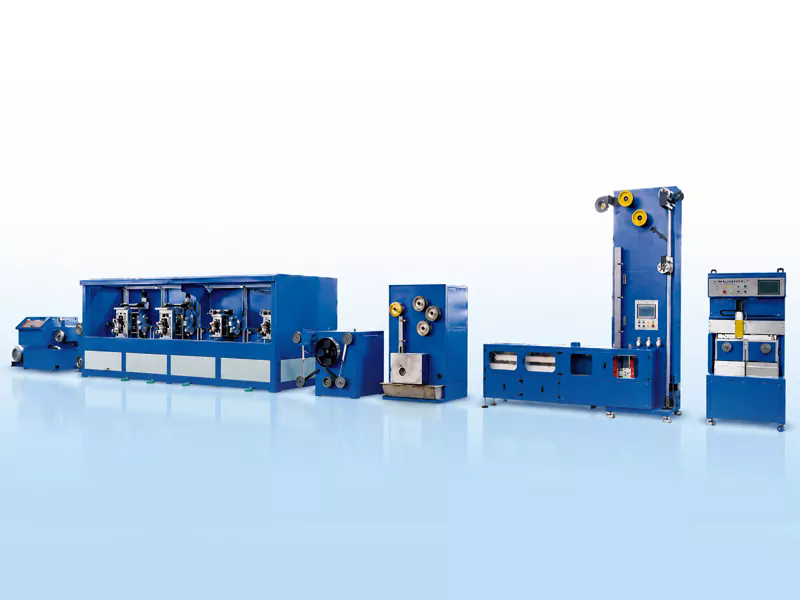
Table of Contents
- 1. What Is MBB Round Wire and Why Does It Matter in Solar Panels?
- 2. What Is a Solar PV Ribbon Machine and How Does It Work?
- 3. How Does Precision Drawing Control Improve Wire Diameter Consistency?
- 4. How Does the Annealing Process Ensure Consistent Mechanical Properties?
- 5. How Does Coating Uniformity Reduce Defects and Improve Cell Connection?
- 6. What Are the Real-World Production Benefits of Using a Solar PV Ribbon Machine?
- 7. Frequently Asked Questions (FAQ)
- 8. Conclusion
1. What Is MBB Round Wire and Why Does It Matter in Solar Panels?
To understand the benefits of the Solar PV Ribbon Machine, we must first understand the product it produces: MBB round wire. MBB, or Multi-Busbar, refers to a cell architecture where multiple thin wires are used to collect current from the solar cell, as opposed to the traditional design of using 3 or 4 thicker, flat ribbons. This architecture is a significant advancement in solar cell technology. By increasing the number of busbars, the current collection path is shortened, reducing the series resistance and improving the overall cell efficiency. The wires themselves must be extremely fine—typically between 0.25mm and 0.4mm in diameter—and are coated with a solder alloy to facilitate connection to the cell.
The transition to MBB round wire has been driven by the relentless pursuit of higher solar cell efficiency. The reduced shading from the thinner, round wires increases the light-collecting area of the cell. The shorter current path reduces resistive losses, and the finer pitch allows for more precise control of the cell's electrical output. These benefits collectively boost the efficiency of the solar panel by 1-2%, which is a significant gain in the competitive solar market. However, the production of MBB round wire is significantly more challenging than traditional ribbon. The smaller diameter and the need for ultra-precise diameter and coating thickness require a new level of manufacturing capability.
The quality of MBB round wire has a direct impact on the performance and reliability of the solar panel. A wire with inconsistent diameter will have variable resistance, leading to hot spots and power loss. A wire with uneven solder coating will create weak solder joints, reducing the mechanical strength and reliability of the panel. A wire with the wrong tensile strength may break during handling. This is why the production of MBB round wire is a high-stakes process that requires the most advanced equipment. At Jiangsu Goodroller Machinery Co., Ltd., we have developed a Solar PV Ribbon Machine that meets these demanding requirements, ensuring that every meter of MBB round wire produced is of the highest quality.
2. What Is a Solar PV Ribbon Machine and How Does It Work?
A Solar PV Ribbon Machine is a specialized production line designed to manufacture the high-precision interconnect wires used in solar panels, including MBB round wire. It is not a simple wire drawing machine; it is a sophisticated system that integrates several critical processes into a single, continuous production line. The machine typically consists of four main stages: pay-off, drawing, annealing, and coating. The process begins with a spool of copper wire, which is fed through a series of drawing dies, each reducing the diameter to the final specification. The drawing process is controlled by a precise tension control system that maintains a constant pulling force, ensuring that the wire is not stretched or broken.
Following the drawing stage, the wire enters the annealing section. Annealing is a heat treatment process that relieves the internal stresses induced by the drawing process, restoring the wire's ductility and controlling its mechanical properties, such as tensile strength and elongation. The annealing section typically consists of a multi-zone furnace with precise temperature control, allowing for the adjustment of the annealing parameters to achieve the desired wire properties. The wire then passes through a cooling section before entering the coating stage. The coating is a critical step, as it applies a uniform layer of solder alloy to the wire. The coating process is typically performed using a hot-dip method, where the wire passes through a bath of molten solder. The temperature of the bath and the speed of the wire are precisely controlled to ensure a consistent coating thickness.
One of the key features of a modern Solar PV Ribbon Machine is its integration of intelligent control systems. The entire production line is monitored and controlled by a PLC (Programmable Logic Controller) that coordinates the speed, tension, temperature, and coating thickness. This ensures that the production parameters are maintained within the tight tolerances required for high-quality MBB round wire. Our factory at GRM Rolling Mill has designed our Solar PV Ribbon Machine with a focus on precision, reliability, and ease of operation. We understand that our customers need a machine that can produce high-quality wire consistently, and our machine is built to deliver that performance.
3. How Does Precision Drawing Control Improve Wire Diameter Consistency?
The most critical parameter in MBB round wire production is the wire diameter. Even a variation of a few microns can affect the wire's electrical and mechanical properties, leading to power loss or breakage. The Solar PV Ribbon Machine achieves exceptional diameter consistency through a combination of precision drawing dies and advanced tension control. The drawing dies are made from extremely hard materials, such as diamond or tungsten carbide, and are manufactured with ultra-precise dimensions. As the wire passes through each die, its diameter is reduced by a specific amount. The dies are arranged in a sequence, with each die reducing the diameter slightly more. The wire is also lubricated during the drawing process to reduce friction and wear on the dies.
The tension control system is the other key component of diameter control. If the tension on the wire is too high, the wire will stretch and become thinner. If the tension is too low, the wire will not be drawn properly, leading to diameter variations. The Solar PV Ribbon Machine uses a closed-loop tension control system that continuously monitors the wire tension and adjusts the speed of the drawing capstans to maintain a constant tension. This ensures that the wire is drawn at a consistent rate, resulting in a uniform diameter. The tension is also controlled during the annealing process, as the wire is pulled through the furnace. This prevents the wire from sagging or breaking due to thermal expansion or contraction.
A Solar PV Ribbon Machine can typically achieve a diameter tolerance of +/- 2 microns, which is significantly better than the +/- 10 microns that is typical of conventional wire drawing machines. This improved consistency is crucial for MBB round wire. A wire with consistent diameter provides consistent resistance, ensuring that the solar cell operates at its optimal efficiency. It also allows for more reliable connection to the solar cell, as the solder joint is more uniform. This results in a more reliable and more efficient solar panel. Our factory has developed a proprietary tension control system that is capable of achieving these tight tolerances, providing our customers with the high-quality MBB round wire needed for next-generation solar cells.
4. How Does the Annealing Process Ensure Consistent Mechanical Properties?
While the diameter is critical, the mechanical properties of the MBB round wire—its tensile strength, ductility, and elongation—are equally important. These properties determine how the wire will perform during the handling, soldering, and service life of the solar panel. If the wire is too stiff, it will be difficult to handle and may break during the soldering process. If the wire is too soft, it may sag or be easily damaged. The annealing process is responsible for controlling these properties. During drawing, the copper wire work-hardens, becoming harder and more brittle. The annealing process heats the wire to a specific temperature, then cools it slowly, which recrystallizes the metal grains, relieving the internal stress and restoring the wire's ductility.
In a Solar PV Ribbon Machine, the annealing section is a precisely controlled multi-zone furnace. The wire passes through several zones, each at a different temperature, to achieve the desired annealing profile. The temperature and the speed of the wire through the furnace determine the final mechanical properties. The furnace is typically equipped with a protective atmosphere, such as nitrogen or hydrogen, to prevent oxidation of the wire during the high-temperature process. The cooling section following the furnace is also designed to achieve a specific cooling rate, which further influences the grain structure and mechanical properties.
Let's look at a specific example: the tensile strength of MBB round wire is typically between 25 and 35 kg/mm². If the wire is annealed to a tensile strength of 28 kg/mm², the wire will have good ductility and will be easy to handle. If the wire is under-annealed, the tensile strength might be 40 kg/mm², making the wire brittle. If the wire is over-annealed, the tensile strength might drop to 20 kg/mm², making the wire too soft. The Solar PV Ribbon Machine's precise temperature control ensures that the annealing process is repeatable and consistent, allowing the manufacturer to produce wire with the exact mechanical properties required. At Jiangsu Goodroller Machinery Co., Ltd., we have extensive experience in designing the annealing section of the Solar PV Ribbon Machine, ensuring that our customers can produce MBB round wire with the required properties.
5. How Does Coating Uniformity Reduce Defects and Improve Cell Connection?
The final critical step in MBB round wire production is the application of the solder coating. The coating serves two purposes: it protects the copper wire from corrosion, and it facilitates the connection to the solar cell. The coating must be applied uniformly and at the correct thickness. If the coating is too thin, it may not provide adequate protection or form a good solder joint. If the coating is too thick, it can reduce the conductivity of the wire and increase the cost of production. The Solar PV Ribbon Machine uses a hot-dip coating process, where the wire passes through a bath of molten solder. The solder is typically a tin-lead or tin-lead-silver alloy, though lead-free alloys are also used. The temperature of the bath and the speed of the wire are precisely controlled to achieve the desired coating thickness.
The uniformity of the coating is achieved through several mechanisms. The wire is pre-cleaned and often fluxed before entering the solder bath to ensure good wetting. The bath temperature is controlled to within +/- 2°C to maintain consistent viscosity and surface tension. The wire is withdrawn from the bath at a controlled angle, which helps to remove excess solder. The coated wire then passes through a wiping system, such as a set of air knives or ceramic wipers, to remove any excess solder and ensure a uniform coating. The final coated wire is then cooled and spooled onto a take-up spool.
The following table summarizes the key process parameters for the coating section of a Solar PV Ribbon Machine.
| Parameter | Typical Value | Impact on Coating Quality |
| Solder Bath Temperature | 260-280°C (SnPb), 350-380°C (SnAgCu) | Controls viscosity, wetting, and coating thickness |
| Wire Speed | 10-30 m/min | Affects coating thickness and dwell time in bath |
| Coating Thickness | 15-25 µm | Affects conductivity, corrosion protection, and solderability |
| Wiping Method | Air knife or ceramic wiper | Removes excess solder and ensures uniform thickness |
| Pre-Cleaning | Ultrasonic or chemical cleaning | Ensures good wetting of solder on the wire |
The uniform coating provided by the Solar PV Ribbon Machine is essential for the reliability of the solar panel. A consistent coating ensures that the solder joint between the wire and the solar cell is strong and uniform, which provides good electrical contact and mechanical strength. This reduces the risk of failure of the solar panel. At Jiangsu Goodroller Machinery Co., Ltd., we have optimized the coating section of our Solar PV Ribbon Machine to deliver the highest quality coating, ensuring that our customers' MBB round wire meets the most demanding requirements.
6. What Are the Real-World Production Benefits of Using a Solar PV Ribbon Machine?
The adoption of a Solar PV Ribbon Machine for MBB round wire production delivers a range of tangible production benefits. These benefits can be measured in terms of increased yield, improved product quality, and reduced production costs. Let's examine the specific ways in which a Solar PV Ribbon Machine improves the production process. One of the most significant benefits is the reduction in scrap rate. The precision of the Solar PV Ribbon Machine, particularly its closed-loop control systems, minimizes diameter variations, annealing inconsistencies, and coating defects. This results in a higher proportion of the wire meeting the specifications, reducing the amount of wire that must be scrapped.
Another benefit is the increase in production speed. A modern Solar PV Ribbon Machine can operate at speeds of 10-30 meters per minute, which is significantly faster than older machines. The high-speed operation, combined with the machine's reliability, increases the overall throughput of the production line. This allows manufacturers to meet the growing demand for MBB round wire without needing to invest in additional production lines. The Solar PV Ribbon Machine also offers improved process control, enabling manufacturers to produce wire with consistent properties, regardless of variations in raw materials or operating conditions. This reduces the need for frequent process adjustments and quality checks, further improving efficiency.
The real-world benefits of using a Solar PV Ribbon Machine are illustrated in the following table, which compares the performance of a typical conventional production line with a line equipped with a Solar PV Ribbon Machine.
| Metric | Conventional Line | Line with Solar PV Ribbon Machine | Improvement |
| Diameter Tolerance (+/- µm) | 10 | 2 | 80% |
| Coating Thickness Variation (+/- µm) | 5 | 2 | 60% |
| Scrap Rate | 5% | 1% | 80% |
| Production Speed (m/min) | 8 | 20 | 150% |
| Line Utilization | 70% | 90% | 29% |
| Annual Output (tons) | 100 | 220 | 120% |
These figures demonstrate that the Solar PV Ribbon Machine is not just an incremental improvement; it is a step-change in MBB round wire production. The combination of improved precision, higher speed, and lower scrap rate leads to a significant increase in output and a reduction in production costs. For manufacturers of MBB round wire, investing in a Solar PV Ribbon Machine is a strategic move that can enhance their competitiveness and profitability. Our factory at GRM Rolling Mill is committed to providing our customers with the highest quality Solar PV Ribbon Machines, helping them to achieve these real-world production benefits.
7. Frequently Asked Questions (FAQ)
Question 1: What wire diameters can a Solar PV Ribbon Machine produce?
Answer: A typical Solar PV Ribbon Machine can produce MBB round wire in a range of diameters, typically from 0.20 mm to 0.50 mm. The specific diameter range depends on the machine's configuration and the dies used. Our factory at Jiangsu Goodroller Machinery Co., Ltd. offers machines that can be customized to produce specific diameters, and we can also provide tooling for a wide range of sizes. The most common diameters for MBB round wire are 0.25 mm, 0.30 mm, and 0.35 mm, but the machine can be adapted for other sizes as required.
Question 2: What types of solder coatings can the Solar PV Ribbon Machine apply?
Answer: The Solar PV Ribbon Machine can apply a variety of solder coatings, including standard tin-lead (SnPb) alloys, lead-free alloys (such as SnAgCu, SnBi, and SnAg), and custom alloys. The coating type is determined by the composition of the solder bath. The machine is designed to operate with different solder alloys by adjusting the bath temperature and the wire speed. Our factory can provide guidance on the best coating alloy for your specific application and can supply the necessary equipment.
Question 3: How does the Solar PV Ribbon Machine handle different wire materials?
Answer: The Solar PV Ribbon Machine is primarily designed for copper wire, which is the standard material for photovoltaic interconnect wires. However, the machine can also handle other materials, such as silver-plated copper or aluminum, with appropriate adjustments to the process parameters. The drawing and annealing processes may need to be modified for different materials, and the coating process must be adapted to the specific solder alloy. Our factory can customize the machine to handle your specific wire material and coating requirements.
Question 4: What is the maintenance requirement for a Solar PV Ribbon Machine?
Answer: The Solar PV Ribbon Machine is designed for reliable operation with minimal maintenance. Routine maintenance includes cleaning the drawing dies, checking the tension control system, and monitoring the condition of the belts and bearings. The annealing furnace also requires periodic inspection and calibration of the temperature sensors. The solder bath requires regular cleaning and replenishment of the solder alloy. Our factory provides a comprehensive maintenance manual and offers technical support to help customers keep their machines operating at peak performance.
Question 5: What is the typical lifespan of a Solar PV Ribbon Machine?
Answer: A high-quality Solar PV Ribbon Machine can have a service life of 10-15 years or more, depending on the level of maintenance and the operating conditions. The key components that may require replacement over time include the drawing dies, the annealing furnace heating elements, and the solder bath components. Our factory at Jiangsu Goodroller Machinery Co., Ltd. provides a full range of spare parts and technical support to ensure that our machines continue to operate reliably for their entire service life.
8. Conclusion
The Solar PV Ribbon Machine is an essential tool for the production of high-quality MBB round wire. Its precision drawing, controlled annealing, and uniform coating capabilities enable manufacturers to produce wire with exceptional consistency, leading to reduced scrap, increased production speed, and a better final product. By investing in a Solar PV Ribbon Machine, manufacturers can meet the growing demand for high-efficiency solar panels while reducing their production costs and improving their environmental footprint. The benefits of the Solar PV Ribbon Machine extend beyond the production line; they contribute to the development of more efficient and reliable solar panels, accelerating the transition to a sustainable energy future.
At Jiangsu Goodroller Machinery Co., Ltd., we are committed to advancing the technology of solar interconnect wire production. Our Solar PV Ribbon Machines are designed with precision, reliability, and ease of operation in mind, ensuring that our customers can produce the highest quality MBB round wire. We invite you to contact us to learn more about our machines and how they can benefit your production operations.
Contact Jiangsu Goodroller Machinery Co., Ltd. today to discover how our Solar PV Ribbon Machine can transform your MBB round wire production.