
- English
- Español
- Português
- русский
- Français
- 日本語
- Deutsch
- tiếng Việt
- Italiano
- Nederlands
- ภาษาไทย
- Polski
- 한국어
- Svenska
- magyar
- Malay
- বাংলা ভাষার
- Dansk
- Suomi
- हिन्दी
- Pilipino
- Türkçe
- Gaeilge
- العربية
- Indonesia
- Norsk
- تمل
- český
- ελληνικά
- український
- Javanese
- فارسی
- தமிழ்
- తెలుగు
- नेपाली
- Burmese
- български
- ລາວ
- Latine
- Қазақша
- Euskal
- Azərbaycan
- Slovenský jazyk
- Македонски
- Lietuvos
- Eesti Keel
- Română
- Slovenski
- मराठी
- Srpski језик
- Esperanto
- Afrikaans
- Català
- שפה עברית
- Cymraeg
- Galego
- Latviešu
- icelandic
- ייִדיש
- беларускі
- Hrvatski
- Kreyòl ayisyen
- Shqiptar
- Malti
- lugha ya Kiswahili
- አማርኛ
- Bosanski
- Frysk
- ភាសាខ្មែរ
- ქართული
- ગુજરાતી
- Hausa
- Кыргыз тили
- ಕನ್ನಡ
- Corsa
- Kurdî
- മലയാളം
- Maori
- Монгол хэл
- Hmong
- IsiXhosa
- Zulu
- Yoruba
- অসমীয়া
- ଓଡିଆ
- Punjabi
- پښتو
- Chichewa
- Samoa
- Sesotho
- සිංහල
- Gàidhlig
- Cebuano
- Somali
- Тоҷикӣ
- O'zbek
- Hawaiian
- سنڌي
- Shinra
- Հայերեն
- Igbo
- Sundanese
- Lëtzebuergesch
- Malagasy

What are the key points for selecting a photovoltaic welding strip rolling mill
The core of choosing a photovoltaic welding strip rolling mill is to match it with its own welding strip product positioning (conventional/MBB/0BB, PERC/TOPCon/HJT) and production capacity planning based on four dimensions: product accuracy, production stability, adaptability, cost, and after-sales service. The following are detailed selection points for modules, covering the entire process from core parameters to implementation selection:
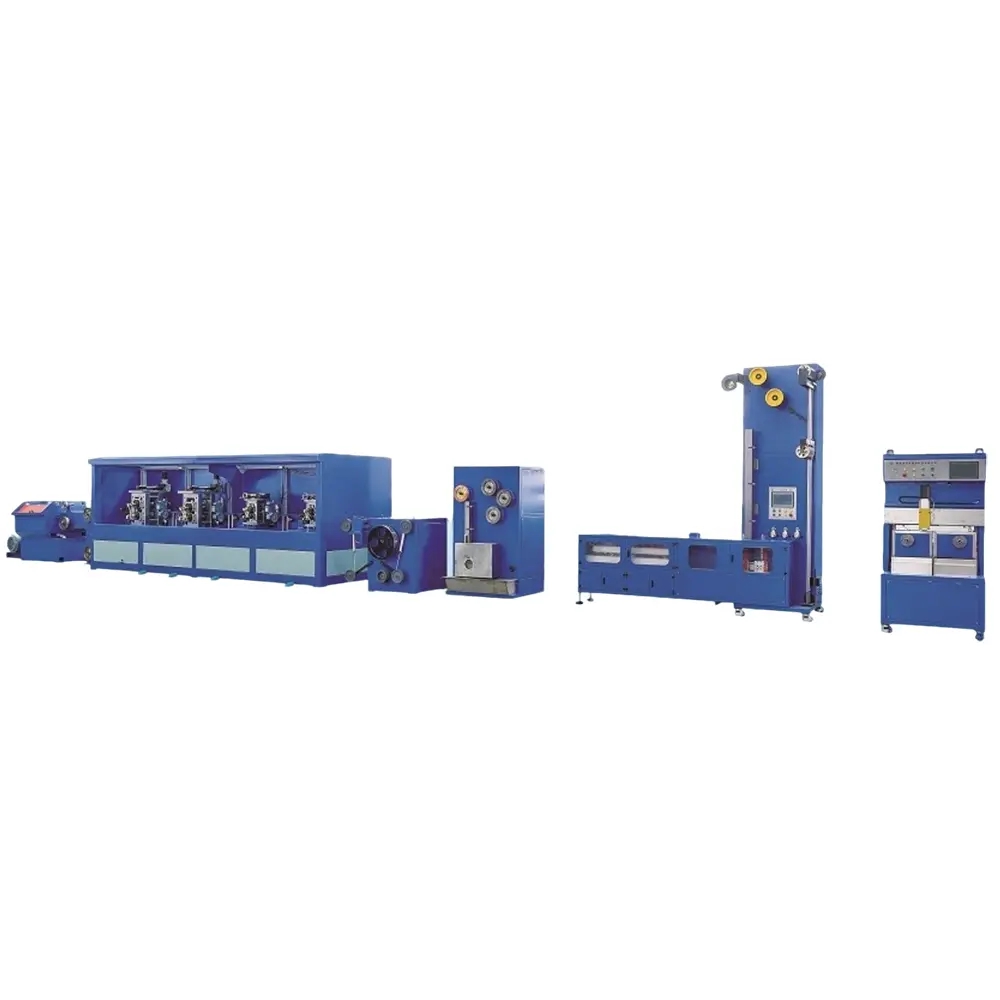
1、 Core accuracy indicators (determining the quality of solder strips and the compatibility of components)
Accuracy is the core competitiveness of photovoltaic ribbon rolling mills, which directly affects the welding performance of the ribbon, the risk of hidden cracks in the battery cells, and the power generation efficiency. It is the primary consideration for selection.
dimensional tolerance
Thickness tolerance: Conventional welding strips are preferred to be * * ± 0.005mm * *, MBB/0BB fine grid welding strips need to be upgraded to * * ± 0.003mm * *, and ultra precision requirements can require ± 0.002mm * *;
Width tolerance: conventional ± 0.02mm, fine grid welding strip needs to be ≤± 0.01mm;
Flatness/side bending: Flat strip side bending ≤ 0.5mm/m, without wavy edges or ruffle edges, to avoid subsequent tin coating and abnormal winding.
Surface quality
The surface roughness of the rolled copper strip is Ra<0.8 μ m, and the mirror grade rolling mill can achieve Ra<0.4 μ m without scratches, pitting, or oxidation spots;
No rolling indentation or rolling marks, ensuring the uniformity of subsequent tin coating, suitable for component processes such as HJT that require high surface cleanliness.
dimensional stability
When producing continuously for a long time (8h/24h), the thickness and width fluctuations should not exceed the tolerance range to avoid batch defects caused by roller heating and tension drift.
2、 Equipment process adaptability (matching its own product and production line layout)
It is necessary to combine the type of welding strip produced, component process, and production line integration requirements to avoid waste caused by equipment and product mismatch.
Welding strip product adaptation
Conventional welding strip (1.0-2.5mm width): a universal two roll/four roll rolling mill can meet the requirements;
MBB fine grid welding strip (≤ 1.0mm wide), 0BB non main grid welding strip: Priority should be given to four roll/six roll precision rolling mills, equipped with high-precision gap adjustment systems;
Ultra soft solder strip: Focus on online annealing process (annealing temperature, speed closed-loop control) to ensure complete stress relief and no fracture during bending;
Low temperature tin coating adaptation (HJT specific): The equipment needs to support low-temperature annealing+low-temperature tin coating linkage to avoid high-temperature damage to the battery cells.
Production line integration capability
Integrated machine selection: Priority should be given to rolling+annealing+tin coating+online detection+coiling integrated models to reduce intermediate transportation and improve yield;
Single machine selection: It is necessary to confirm the interface compatibility with existing pay off machines, tin coating machines, and winding machines, including tension matching, speed synchronization, and signal communication;
Capacity matching: The rolling speed is usually 120-200mm/min, and the fine grid welding strip can reduce the speed appropriately to ensure accuracy. The number of equipment is calculated based on daily/monthly production capacity.
Raw material adaptation
Incoming specifications: Confirm the diameter range of round copper wire supported by the equipment (mainstream Φ 0.1-1.2mm), matching the copper wire raw materials purchased by oneself;
Material adaptation: Supports photovoltaic specific copper materials such as purple copper and oxygen free copper to avoid brittle fracture and uneven deformation during rolling.
3、 Production stability and automation level (determining mass production efficiency and labor costs)
In mass production scenarios, stability and automation directly affect utilization rate, yield rate, and labor input, which are key to long-term operation.
Reliability of core components
Roll material: Priority should be given to hard alloy/tungsten steel mirror roll, which has a long wear resistance life (≥ 5000h) and reduces the frequency of roll replacement;
Drive system: Adopting PLC+servo motor full closed-loop control, with tension control accuracy of ± 1%, to avoid wire stretching and deviation;
Cooling system: Constant temperature cooling of the rolling mill to prevent thermal deformation and ensure long-term production accuracy;
Transmission structure: seamless gear/synchronous belt transmission, reducing vibration and improving rolling stability.
Online detection and closed-loop control
It is necessary to equip online laser thickness and width gauges to collect real-time dimensional data, automatically adjust the gap and tension of the rolling mill rolls, and achieve automatic correction of dimensional deviations;
Optional surface defect detection system (visual inspection), real-time recognition of scratches, oxidation, and pitting, automatic alarm or removal of defective products;
Data traceability: Supports the storage and export of production data (speed, temperature, tolerance, defect rate) to meet the quality traceability requirements of the photovoltaic industry.
Automation and Intelligence
Automatic roll changing, automatic wire arrangement, and automatic joint welding, reducing manual intervention;
Fault self diagnosis and remote operation and maintenance functions can shorten downtime for maintenance;
The human-machine interface is user-friendly, easy to operate, and reduces reliance on skilled workers.
4、 Cost and life cycle cost-effectiveness (avoid overlooking implicit costs by only looking at purchase prices)
Selection should take into account procurement costs, operating costs, maintenance costs, and depreciation costs, rather than simply comparing prices.
procurement cost
Domestic precision models: high cost-effectiveness, priced at 60% -70% of imported equipment, with precision that can meet the needs of the vast majority of domestic photovoltaic enterprises;
Imported models: slightly higher precision, but 30% -40% more expensive, long delivery cycle, suitable for mass production of high-end fine grids/0BB solder strips;
On demand configuration: There is no need to blindly pursue top configuration, and conventional welding strip production does not require the use of ultra precision six roll mills to avoid functional redundancy.
operating cost
Energy consumption: Evaluate equipment power and energy efficiency, prioritize energy-saving servo drives, and reduce electricity expenses;
Consumables: service life and procurement cost of consumables such as rollers, bearings, and detection probes, and whether vulnerable parts are universal and easy to obtain;
Yield rate: Equipment accuracy and stability directly determine the yield rate. Low tolerance equipment can reduce raw material waste and achieve faster long-term cost recovery.
maintenance cost
The equipment structure is modular, easy to disassemble and maintain, with low difficulty in maintenance;
The manufacturer has sufficient spare parts inventory and a short delivery cycle for core components (≤ 7 days);
Provide standardized maintenance manuals and training services to reduce the difficulty of self maintenance.
5、 Manufacturer strength and after-sales service (ensuring long-term stable operation of equipment)
The photovoltaic strip rolling mill is a precision industrial equipment, and the manufacturer's technical capabilities and after-sales response directly affect the continuity of the production line.
Technical research and development strength
Assess the manufacturer's customized experience in the photovoltaic industry and whether they have the ability to iterate equipment for new processes such as MBB/HJT;
Having independent core technologies (roller design, tension control, closed-loop algorithm) instead of simple assembly, to avoid technical bottlenecks.
Customer Cases and Reputation
Priority should be given to manufacturers with cooperation cases with leading photovoltaic ribbon welding enterprises and component factories to verify the stability of the equipment in mass production scenarios;
Conduct research on peer feedback on usage, with a focus on utilization rate, failure rate, and after-sales response speed.
After sales service system
Local service outlets: covering the area where the production base is located, with a response time of ≤ 24 hours, and emergency repairs can be carried out on-site;
Training services: Provide training on the entire process of operation, maintenance, and debugging to ensure that operators are proficient in it;
Warranty terms: Core components (rolling mill, servo system, detection module) have a warranty period of ≥ 1 year and provide lifelong technical support.
6、 Compliance and industry standards (meeting the admission requirements of the photovoltaic industry)
The equipment meets the industry standards for photovoltaic ribbon welding, and its dimensional accuracy, surface quality, and safety performance have passed third-party testing;
The electrical system complies with safety certifications such as CE and 3C, with a protection level of ≥ IP54, and is suitable for workshop production environments;
Support environmental requirements, adapt lead-free tin coating process, and ensure that waste gas and liquid treatment comply with environmental regulations.