
- English
- Español
- Português
- русский
- Français
- 日本語
- Deutsch
- tiếng Việt
- Italiano
- Nederlands
- ภาษาไทย
- Polski
- 한국어
- Svenska
- magyar
- Malay
- বাংলা ভাষার
- Dansk
- Suomi
- हिन्दी
- Pilipino
- Türkçe
- Gaeilge
- العربية
- Indonesia
- Norsk
- تمل
- český
- ελληνικά
- український
- Javanese
- فارسی
- தமிழ்
- తెలుగు
- नेपाली
- Burmese
- български
- ລາວ
- Latine
- Қазақша
- Euskal
- Azərbaycan
- Slovenský jazyk
- Македонски
- Lietuvos
- Eesti Keel
- Română
- Slovenski
- मराठी
- Srpski језик
- Esperanto
- Afrikaans
- Català
- שפה עברית
- Cymraeg
- Galego
- Latviešu
- icelandic
- ייִדיש
- беларускі
- Hrvatski
- Kreyòl ayisyen
- Shqiptar
- Malti
- lugha ya Kiswahili
- አማርኛ
- Bosanski
- Frysk
- ភាសាខ្មែរ
- ქართული
- ગુજરાતી
- Hausa
- Кыргыз тили
- ಕನ್ನಡ
- Corsa
- Kurdî
- മലയാളം
- Maori
- Монгол хэл
- Hmong
- IsiXhosa
- Zulu
- Yoruba
- অসমীয়া
- ଓଡିଆ
- Punjabi
- پښتو
- Chichewa
- Samoa
- Sesotho
- සිංහල
- Gàidhlig
- Cebuano
- Somali
- Тоҷикӣ
- O'zbek
- Hawaiian
- سنڌي
- Shinra
- Հայերեն
- Igbo
- Sundanese
- Lëtzebuergesch
- Malagasy

What Makes a Flat Wire Rolling Mill the Right Choice for Precision Conductors?
Article Summary
A Flat Wire Rolling Mill turns round wire or strip into consistent, high-precision flat wire used in motors, transformers, coils, and advanced electrification projects. But buyers usually run into the same problems: unstable thickness, edge cracks, surface scratches, slow changeovers, and unpredictable yield. This guide breaks down how flat-wire rolling really works, what to check before you buy, how to avoid common production headaches, and how to calculate real-world value—so you can choose equipment that produces stable, repeatable results at scale.
Table of Contents
- Outline
- Where Flat-Wire Production Usually Goes Wrong
- How a Flat Wire Rolling Mill Actually Creates Consistency
- What to Specify Before You Request a Quote
- How to Choose the Right Mill for Your Material and Output
- Quality Control That Prevents Scrap Instead of Measuring It
- Maintenance and Changeover Tips That Protect Yield
- Cost, Throughput, and ROI: What “Good Value” Really Means
- FAQ
Outline
- Common customer pain points in flat-wire production
- Core rolling principles that influence thickness, width, and surface finish
- Critical specifications to confirm (material, size range, tolerance targets, speed)
- Selection checklist for different use-cases (copper, aluminum, small vs. wide flat wire)
- Quality control steps to stabilize production and reduce rework
- Maintenance, pass scheduling, and operator habits that preserve rollers and wire
- ROI calculation ideas and what to ask a supplier to prove
Where Flat-Wire Production Usually Goes Wrong
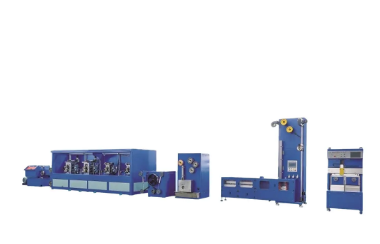
If you’re shopping for a Flat Wire Rolling Mill, you’re probably not doing it “for fun.” You’re doing it because a current process is causing real losses—scrap, rework, delivery delays, or customer complaints. Here are the pain points that show up most often:
- Thickness drift: You can hit the target at the start of a coil, then drift out of tolerance as temperature, lubrication, or roller wear changes.
- Width inconsistency and edge cracking: Too aggressive reduction or poor pass planning can push material outward, creating weak edges or micro-cracks.
- Surface scratches and oxidation marks: Dirty guiding, unstable tension, or incorrect coolant/lubrication can ruin surface finish and downstream winding.
- Low yield from trial-and-error: “Let’s tweak it until it works” sounds normal—until you calculate how much copper or aluminum you’re donating to the scrap bin.
- Slow changeovers: If changing roller sets takes too long, your line becomes a scheduling bottleneck.
- Mismatch with downstream processes: Flat wire often feeds enameling, annealing, spooling, coiling, or hairpin forming. If the mill output isn’t stable, everything downstream suffers.
A well-designed Flat Wire Rolling Mill is less about “rolling metal” and more about controlling variables—pressure, alignment, tension, lubrication, and reduction schedule—so output becomes predictable rather than hopeful.
How a Flat Wire Rolling Mill Actually Creates Consistency
Flat wire rolling is essentially controlled deformation: you reduce thickness while managing width spread and surface quality. The parts that matter most are the ones that keep deformation stable from coil to coil.
Key mechanics that drive stable output
- Precision roller gap control: Small changes in roll gap translate directly into thickness variation. Stable adjustment and repeatable settings are non-negotiable.
- Pass schedule planning: Multiple lighter reductions typically protect edges and surface better than one heavy squeeze. Good mills support consistent multi-pass or tandem strategies.
- Tension management: Too much tension can narrow the wire and cause necking; too little can create waviness or poor tracking. Controlled payoff/takeup behavior matters.
- Guiding and alignment: Misalignment causes edge damage, diagonal scratches, and uneven thickness across width. Good guiding keeps the wire centered and calm.
- Lubrication and cooling: The “right” approach depends on material and speed. The goal is stable friction, controlled temperature, and clean surfaces.
When these variables are controlled, you get the outcome buyers actually care about: stable thickness, clean surface, minimal edge defects, and fewer downstream complaints.
What to Specify Before You Request a Quote
Suppliers can’t recommend the right configuration if your requirements are vague. Before asking for pricing, document the essentials below. This prevents under-spec (pain later) or over-spec (wasted budget).
- Material: copper, aluminum, or alloy; include temper/state if applicable.
- Input form: round wire diameter or strip dimensions; coil inner/outer diameter; coil weight.
- Target flat-wire range: finished thickness and width range, plus tolerance expectations.
- Surface requirements: cosmetic standard, scratch sensitivity, downstream enameling or bonding needs.
- Production target: kg/hour or m/min expectations and typical batch sizes.
- Integration: payoff/takeup, annealing, spooling, inline measuring, or connection to existing line controls.
- Operator reality: your team’s skill level and whether you need easier recipe-based operation.
If you want fewer “surprises,” ask the supplier to map your specs to a recommended rolling method, pass schedule approach, and quality-control plan—not just a machine layout.
How to Choose the Right Mill for Your Material and Output
Not all mills behave the same, even if the brochures look similar. The “right” Flat Wire Rolling Mill is the one that matches your material behavior, tolerance demands, and the reality of day-to-day production.
Use this practical checklist
- Stability over maximum speed: Fast doesn’t matter if you stop often for adjustments or scrap.
- Repeatable recipes: Look for setups that let you save and recall settings for common sizes.
- Fast, safe changeover design: Roller replacement, guiding adjustment, and cleaning should be straightforward.
- Measured output, not guessed output: Inline measurement options (or easy sampling workflow) matter for tight tolerance work.
- Support for your size range: A machine optimized for narrow flat wire may struggle with wide profiles and vice versa.
Many buyers also care about supplier capability: whether the manufacturer can help with commissioning, pass schedule guidance, and operator training. That’s where Jiangsu Goodroller Machinery Co., Ltd. is often evaluated—not only as an equipment provider, but as a partner for stable production setup and repeatability from the first batch onward.
Quick comparison table: what to ask and why it matters
| Decision Item | What to Ask | Why It Matters to You |
|---|---|---|
| Size Range Fit | What is the proven finished thickness/width range on similar materials? | Prevents buying a mill that “can” do your range on paper but struggles in real production. |
| Tolerance Strategy | How do you hold thickness across long runs (control method + measurement)? | Reduces drift, rework, and customer returns. |
| Surface Protection | Guiding design, lubrication approach, and cleaning plan? | Protects finish for winding/enameling and reduces scrap from scratches. |
| Changeover Time | Typical roller/guiding change time with trained operators? | Impacts daily capacity more than top speed numbers do. |
| Commissioning Support | Do you provide pass schedule guidance and operator training? | Shortens ramp-up time and prevents “trial-and-error” waste. |
Quality Control That Prevents Scrap Instead of Measuring It
Flat wire quality is not only about meeting a number on a micrometer. It’s about preventing instability before it becomes scrap. Here are control habits that consistently reduce rejects:
- Start-of-coil verification: Sample early, confirm thickness/width, and lock the recipe before ramping speed.
- Process window checks: Monitor temperature, lubrication condition, and roller cleanliness on a set interval.
- Edge inspection: Edge cracks often start small. A quick routine check can prevent a full coil of defects.
- Consistency across width: Check left-to-right thickness uniformity if your applications are sensitive (e.g., precise coils).
- Traceability: Record coil ID, settings, and results. When a defect happens, you want causes—not guesses.
Common defects and fast diagnosis
| Symptom | Likely Cause | Practical Fix |
|---|---|---|
| Thickness drift over time | Temperature change, lubricant change, roll wear, unstable gap | Stabilize cooling/lubrication, verify gap repeatability, schedule roll inspection |
| Edge cracks | Over-reduction per pass, misalignment, material hardness mismatch | Adjust pass schedule, improve guiding alignment, review material condition |
| Surface scratches | Dirty guide/roll, debris, poor lubrication | Clean guides/rolls, filter lubrication, inspect payoff/takeup cleanliness |
| Waviness or camber | Uneven tension, tracking issues, uneven reduction | Stabilize tension control, check alignment, verify roll condition |
Maintenance and Changeover Tips That Protect Yield
The fastest way to turn a good Flat Wire Rolling Mill into a “problem machine” is to treat maintenance as optional. Flat wire is unforgiving—tiny defects become big downstream issues.
- Cleanliness is production: Keep rollers, guides, and contact surfaces clean. One embedded particle can scar kilometers of wire.
- Roller inspection routine: Check for micro-chips, wear marks, and edge damage. Replace or regrind before defects multiply.
- Lubrication discipline: Maintain consistent lubrication quality. Old or contaminated lubricant changes friction behavior and surface finish.
- Standardized changeover steps: Document the “right way” to change rollers and align guides so performance doesn’t depend on one experienced operator.
- Spare parts strategy: Keep critical wear parts on hand to avoid downtime that destroys delivery commitments.
A supplier who supports you with commissioning documents, training, and preventive schedules can dramatically reduce your ramp-up period and stabilize quality faster—especially when you’re producing multiple sizes with frequent changeovers.
Cost, Throughput, and ROI: What “Good Value” Really Means
Buyers often compare machines by initial price. But the total cost of ownership is usually decided by three things: yield, stability, and uptime.
A simple ROI framework you can use
- Scrap reduction: If better stability reduces scrap by even 1–2%, the savings can be significant for copper-heavy production.
- Fewer stoppages: Every restart costs time, material, and operator attention.
- Faster changeovers: If your product mix is wide, a 15–30 minute improvement per changeover can add real weekly capacity.
- Downstream stability: Stable flat wire reduces rejects in enameling, winding, and forming—where defects can be even more expensive.
When reviewing quotations, ask the supplier to explain how their design protects thickness control, surface finish, and changeover efficiency in real operation—not just in catalog numbers.
FAQ
Q: What input materials can a Flat Wire Rolling Mill handle?
A: Many lines are configured for copper or aluminum in round-wire or strip form. The key is matching the mill configuration and pass approach to your material behavior, size range, and tolerance targets.
Q: How do I decide the right thickness and width tolerance?
A: Start with downstream requirements (enameling, winding, forming, or transformer coil specs). Then set tolerances that are tight enough to protect performance but realistic for stable mass production.
Q: Why do edge cracks happen during rolling?
A: Edge cracks commonly result from overly aggressive reduction per pass, alignment errors, or a mismatch between material condition and rolling schedule. A better pass plan and improved guiding typically solve it.
Q: What should I prioritize if surface finish is critical?
A: Clean guiding, stable lubrication/filtration, and disciplined cleaning routines. Scratches are often caused by debris and inconsistent friction rather than “bad material.”
Q: Can one mill support multiple flat-wire sizes efficiently?
A: Yes—if it’s designed for quick roller and guiding adjustments, plus recipe-style repeatability. If size changes are frequent, changeover design matters as much as speed.
Q: What information should I send a supplier to get an accurate recommendation?
A: Material type, input dimensions, finished size range, tolerance targets, surface requirements, production target, coil specs, and downstream integration needs. The more complete your data, the fewer surprises later.
If your current process is costing you yield, stability, or delivery confidence, a properly matched Flat Wire Rolling Mill can turn flat-wire production into a predictable, controllable workflow. For sizing guidance, configuration recommendations, and practical commissioning support, contact us at Jiangsu Goodroller Machinery Co., Ltd. and tell us your material and finished wire targets—then we’ll help you map a solution that runs cleanly and consistently.