
- English
- Español
- Português
- русский
- Français
- 日本語
- Deutsch
- tiếng Việt
- Italiano
- Nederlands
- ภาษาไทย
- Polski
- 한국어
- Svenska
- magyar
- Malay
- বাংলা ভাষার
- Dansk
- Suomi
- हिन्दी
- Pilipino
- Türkçe
- Gaeilge
- العربية
- Indonesia
- Norsk
- تمل
- český
- ελληνικά
- український
- Javanese
- فارسی
- தமிழ்
- తెలుగు
- नेपाली
- Burmese
- български
- ລາວ
- Latine
- Қазақша
- Euskal
- Azərbaycan
- Slovenský jazyk
- Македонски
- Lietuvos
- Eesti Keel
- Română
- Slovenski
- मराठी
- Srpski језик
- Esperanto
- Afrikaans
- Català
- שפה עברית
- Cymraeg
- Galego
- Latviešu
- icelandic
- ייִדיש
- беларускі
- Hrvatski
- Kreyòl ayisyen
- Shqiptar
- Malti
- lugha ya Kiswahili
- አማርኛ
- Bosanski
- Frysk
- ភាសាខ្មែរ
- ქართული
- ગુજરાતી
- Hausa
- Кыргыз тили
- ಕನ್ನಡ
- Corsa
- Kurdî
- മലയാളം
- Maori
- Монгол хэл
- Hmong
- IsiXhosa
- Zulu
- Yoruba
- অসমীয়া
- ଓଡିଆ
- Punjabi
- پښتو
- Chichewa
- Samoa
- Sesotho
- සිංහල
- Gàidhlig
- Cebuano
- Somali
- Тоҷикӣ
- O'zbek
- Hawaiian
- سنڌي
- Shinra
- Հայերեն
- Igbo
- Sundanese
- Lëtzebuergesch
- Malagasy

How Can Reduction Rolling Mills Cut Scrap, Stabilize OD, and Improve Surface Quality for Tubes and Bars?
Article Summary
When your tube or bar line fights the same battles every week—outer diameter drifting, ovality creeping in, surface finish failing inspection, and changeovers eating your shift—your real cost isn’t only material. It’s rework, downtime, unstable delivery dates, and customer complaints that never show up neatly on a purchase order. This article explains where those problems usually start and how Reduction Rolling Mills tackle them with controlled multi-pass deformation, tight roll-gap control, and smarter measurement and cooling strategies. You’ll get a clear selection checklist, a practical integration guide, and a table of “questions that actually matter” when comparing suppliers. Along the way, I’ll also share how GRM Rolling Mill positions modern reducing solutions for plants that need repeatability across batches, faster changeovers, and a more predictable cost per ton—without sacrificing finish quality.
Table of Contents
- The pain points that quietly drain margin
- What Reduction Rolling Mills do differently
- Where a reducing mill fits best in real production
- Performance levers that decide your results
- A buyer’s checklist you can use on vendor calls
- Line integration and workflow planning
- Quality, inspection, and consistency across batches
- FAQ
Outline
- Identify the hidden sources of diameter variation, ovality, and rough finish
- Explain how reducing mills achieve controlled deformation without “guesswork”
- Map typical use cases and when alternative processes may be better
- Break down the technical levers that impact precision, throughput, and uptime
- Provide a vendor evaluation checklist and a practical integration plan
- Answer common procurement and engineering questions in a clear FAQ
The pain points that quietly drain margin
Most buyers don’t wake up wanting new equipment—they wake up to the consequences of unstable output. In tube and bar production, the same “small” issues often stack up:
- Outer diameter drift and batch inconsistency that triggers scrap, sorting, or customer returns
- Ovality and straightness problems that show up after downstream processing
- Surface defects and roughness that fail coating, sealing, or fatigue requirements
- Throughput bottlenecks when you have to slow down to “protect quality”
- Long roll-change and setup time that turns a planned shift into a catch-up shift
- High operating cost per ton from rework, heavy lubrication, wasted energy, or frequent tool wear
Here’s the uncomfortable truth: many plants try to solve a control problem with more inspection. That helps you detect bad output—but it doesn’t prevent it. The better question is where the variation is introduced.
Typical root causes include unstable temperature, inconsistent incoming stock, roll wear, uneven lubrication, weak guiding, and a lack of closed-loop measurement that can correct drift before it becomes scrap.
What Reduction Rolling Mills do differently
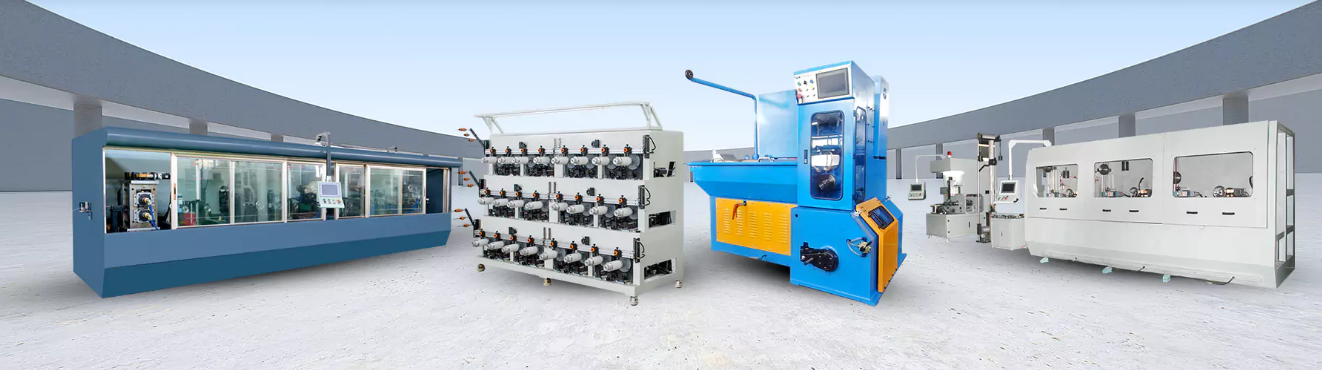
At a practical level, Reduction Rolling Mills are built for one mission: reduce diameter with repeatability while protecting surface and geometry. Instead of relying on single-step deformation that can amplify variation, a modern reducing mill typically uses controlled, staged deformation across multiple passes. That gives you more “knobs” to tune—without forcing operators to make risky adjustments that destabilize the line.
In plain terms, a well-configured reducing mill helps you:
- Distribute reduction across passes so each pass works within a stable deformation range
- Hold roll gap and speed consistently so your output doesn’t swing with operator feel
- Improve roundness and reduce ovality through guiding and pass design
- Upgrade surface finish by avoiding tearing, chatter, and unstable friction conditions
Many modern systems add a second layer of control: online measurement (often laser-based diameter gauging) and feedback logic that can correct drift early. When that’s done right, the line stops behaving like a “batch-to-batch mystery” and starts behaving like a repeatable process.
Where a reducing mill fits best in real production
Not every operation needs a reducing mill. If you only run short batches with loose tolerances, you may be better served by simpler equipment. But if you live in the world of repeat orders, inspection reports, and tight customer specs, Reduction Rolling Mills become a strategic tool rather than a “nice-to-have.”
Common best-fit applications
| Industry | What matters most | Why a reducing mill helps |
|---|---|---|
| Energy and pipeline | Stable OD, roundness, predictable weld and fit-up | Multi-pass reduction can stabilize geometry while keeping throughput high |
| Automotive and shafts | Surface quality and fatigue performance | Controlled deformation and guiding reduce surface defects and ovality |
| Hydraulics and cylinders | Straightness and consistent ID/OD behavior downstream | Better control means fewer surprises during honing, sealing, and assembly |
| Construction and scaffolding | Throughput and uptime | Fast changeover options and stable rolling reduce stoppages and rework |
Material range is also a driver. If you process carbon steel, stainless, or alloy grades and you need consistent reduction behavior across those families, you’ll care about how the mill controls temperature and friction. That’s where supplier design and configuration make a measurable difference.
Performance levers that decide your results
If you only compare brochures, most mills look “similar.” The difference shows up in the levers that control precision and uptime. When evaluating Reduction Rolling Mills, these are the levers worth obsessing over:
-
Pass configuration and reduction strategy
A flexible pass range lets you match deformation to your input size and material behavior. More isn’t always better, but the ability to tune pass design is how you avoid pushing one pass too hard and creating defects. -
Roll-gap stability and control resolution
Precision comes from stable mechanics and stable control. Ask how the gap is set, how repeatable it is, and what happens as rolls wear. -
Online measurement and feedback
If your diameter is only checked at the end, drift becomes scrap. Online gauging can allow early correction and tighter stability over long runs. -
Thermal management
Temperature influences deformation, friction, and microstructure. Modern solutions may use internal cooling and external spray strategies to keep roller temperature within a narrow band. -
Changeover design
If roll changes take hours, you’ll avoid doing them—and quality will suffer. Modular assemblies and quick-change concepts are often the difference between “theoretical uptime” and real uptime. -
Guiding and entry/exit stability
Great roll design can be ruined by poor guiding. Look for robust guides that support round-to-round, round-to-oval, or square-to-round style transitions where needed. -
Drive efficiency and diagnostics
Efficient motors, responsive feedback control, and built-in diagnostics reduce energy waste and shorten troubleshooting time when something drifts.
This is also where supplier capability matters. GRM Rolling Mill, for example, positions its reducing solutions around configurable passes, controlled process adjustment, and optional measurement add-ons—so you can tune for either high-precision output or high-throughput production without turning the line into an operator guessing game.
A buyer’s checklist you can use on vendor calls
If you want fewer surprises after commissioning, push vendors to answer practical questions. Here’s a simple checklist you can copy into an email and send to suppliers.
| Question | Why it matters | What a strong answer includes |
|---|---|---|
| What reduction range can your mill hold reliably for our materials? | Avoids pushing deformation beyond a stable window | Pass design guidance, sample schedules, and material-specific considerations |
| How do you maintain OD stability over long runs? | Long runs magnify drift from heat, wear, and friction | Control logic, roll-gap strategy, and measurement options |
| What are realistic changeover times for rolls and guides? | Changeover is often the biggest hidden cost | Modular assemblies, tooling strategy, and documented procedures |
| How do you manage roller temperature and lubrication needs? | Thermal drift and friction instability can ruin surface finish | Cooling approach, lubrication modes, and operating cost impacts |
| What diagnostics and support are available during ramp-up? | Commissioning speed impacts your payback timeline | Remote monitoring options, fault isolation, training, and spare parts plan |
One more practical tip: ask vendors to describe what happens when your input stock is slightly out-of-spec. A serious supplier will talk about guiding tolerance, feedback correction, and process windows—not just “it works.”
Line integration and workflow planning
A reducing mill is rarely a standalone machine. It’s part of a workflow that starts with input stability and ends with inspection and packaging. When planning integration for Reduction Rolling Mills, think in modules:
- Payoff and feeding that prevents whipping, misalignment, and unstable tension
- Heating or conditioning when required by material grade and reduction schedule
- Reducing mill and guiding tuned to maintain geometry and surface stability
- Cooling and lubrication management that keeps friction consistent without excessive consumption
- Coiling, cutting, or bundling designed to protect the improved finish you just created
- Measurement and documentation for traceability and customer confidence
Integration reality check
Precision output is a system outcome. If guiding and tension are unstable upstream, even the best mill can’t “rescue” the process. Plan the entire line so the mill can do its job without fighting chaos.
Suppliers like GRM Rolling Mill often support these integration questions by offering configurable layouts and add-on measurement options, helping plants reduce commissioning risk and reach stable production faster.
Quality, inspection, and consistency across batches
Most customers don’t pay extra for “interesting manufacturing stories.” They pay for consistent parts. If your market requires tighter OD, controlled ovality, or better surface finish, your quality plan should be aligned with your process controls.
Advanced Reduction Rolling Mills can support a tighter stability band—often down to hundredth-of-a-millimeter class control in suitable conditions—especially when paired with continuous gauging and disciplined setup routines. The goal is not to chase a single “perfect” reading; it’s to keep production inside a predictable window so downstream steps (machining, coating, welding, sealing) behave the same way every time.
Practical steps that improve stability quickly
- Standardize incoming stock checks for diameter, straightness, and surface condition
- Define pass schedules by material family, not by operator preference
- Track roll wear and replace on a schedule instead of “when quality collapses”
- Use consistent lubrication modes and monitor consumption per ton
- Adopt online measurement when tight tolerances drive your profit model
FAQ
Q1: What is the main difference between reducing and drawing for diameter reduction?
A: Drawing can be effective, but it often depends heavily on die condition, lubrication, and pull stability. A reducing mill distributes deformation across passes and can offer more control levers for geometry and surface stability, especially in continuous production environments.
Q2: Can Reduction Rolling Mills handle both tubes and solid bars?
A: Many designs can be configured for pipes and bars, but the guiding, pass design, and stability requirements differ. Share your product range (materials, sizes, target tolerances) so the supplier can propose an appropriate configuration rather than a generic “one-size” solution.
Q3: What tolerance level should I expect in normal production?
A: Expected tolerance depends on material behavior, input stability, reduction amount, and whether you use continuous measurement. With strong control and stable conditions, advanced systems can maintain very tight OD stability. The key is to validate performance on your product mix, not a single best-case demonstration.
Q4: How do I prevent ovality during reduction?
A: Ovality is usually a combination of guiding, pass design, and unstable deformation. Strong entry/exit guidance, well-designed passes, and consistent roll-gap control are the foundation. Online measurement can also help detect drift early.
Q5: Does cooling really matter for precision?
A: Yes. Temperature influences deformation resistance, friction, and tool wear. A stable thermal approach—often combining internal and external cooling strategies—helps reduce drift over long runs and supports consistent surface finish.
Q6: What should I ask about roll material and wear?
A: Ask about roller material selection for your alloys, the wear pattern you should expect, and how wear is managed in control strategy. Also ask how quickly the roller module can be serviced or replaced and what spares are recommended.
Q7: How can I reduce downtime during roll changes?
A: Look for modular tooling concepts, clear changeover procedures, and realistic time estimates. Faster changeover isn’t just convenience—it allows you to keep quality high by changing tools on schedule rather than delaying until defects appear.
Q8: What support should I expect during ramp-up?
A: A strong supplier should provide commissioning guidance, operator training, process parameter support, and a practical spare-parts plan. Remote monitoring and diagnostics can shorten troubleshooting cycles and improve early stability.
Closing thoughts
If your customers are tightening specs while your line is still fighting drift, the fastest path forward is upgrading process control—not adding another inspection step at the end. Well-configured Reduction Rolling Mills can reduce scrap, stabilize output, and protect surface quality while keeping throughput practical. And when you evaluate solutions, focus on the levers that truly drive results: pass strategy, guiding, measurement, thermal stability, and changeover design.
If you want to match a reducing solution to your tube or bar range—materials, target sizes, tolerance expectations, and line layout—GRM Rolling Mill can help you build a configuration that fits your production reality. Reach out to discuss your application details and contact us for a tailored recommendation.