
- English
- Español
- Português
- русский
- Français
- 日本語
- Deutsch
- tiếng Việt
- Italiano
- Nederlands
- ภาษาไทย
- Polski
- 한국어
- Svenska
- magyar
- Malay
- বাংলা ভাষার
- Dansk
- Suomi
- हिन्दी
- Pilipino
- Türkçe
- Gaeilge
- العربية
- Indonesia
- Norsk
- تمل
- český
- ελληνικά
- український
- Javanese
- فارسی
- தமிழ்
- తెలుగు
- नेपाली
- Burmese
- български
- ລາວ
- Latine
- Қазақша
- Euskal
- Azərbaycan
- Slovenský jazyk
- Македонски
- Lietuvos
- Eesti Keel
- Română
- Slovenski
- मराठी
- Srpski језик
- Esperanto
- Afrikaans
- Català
- שפה עברית
- Cymraeg
- Galego
- Latviešu
- icelandic
- ייִדיש
- беларускі
- Hrvatski
- Kreyòl ayisyen
- Shqiptar
- Malti
- lugha ya Kiswahili
- አማርኛ
- Bosanski
- Frysk
- ភាសាខ្មែរ
- ქართული
- ગુજરાતી
- Hausa
- Кыргыз тили
- ಕನ್ನಡ
- Corsa
- Kurdî
- മലയാളം
- Maori
- Монгол хэл
- Hmong
- IsiXhosa
- Zulu
- Yoruba
- অসমীয়া
- ଓଡିଆ
- Punjabi
- پښتو
- Chichewa
- Samoa
- Sesotho
- සිංහල
- Gàidhlig
- Cebuano
- Somali
- Тоҷикӣ
- O'zbek
- Hawaiian
- سنڌي
- Shinra
- Հայերեն
- Igbo
- Sundanese
- Lëtzebuergesch
- Malagasy

What Is a Photovoltaic Welding Strip Rolling Mill?
Photovoltaic Welding Strip Rolling Mill refers to highly specialized rolling equipment designed for the precision production of welding strips used in solar photovoltaic (PV) modules. These strips are essential conductive components that interconnect individual PV cells and carry the generated current efficiently throughout the module.
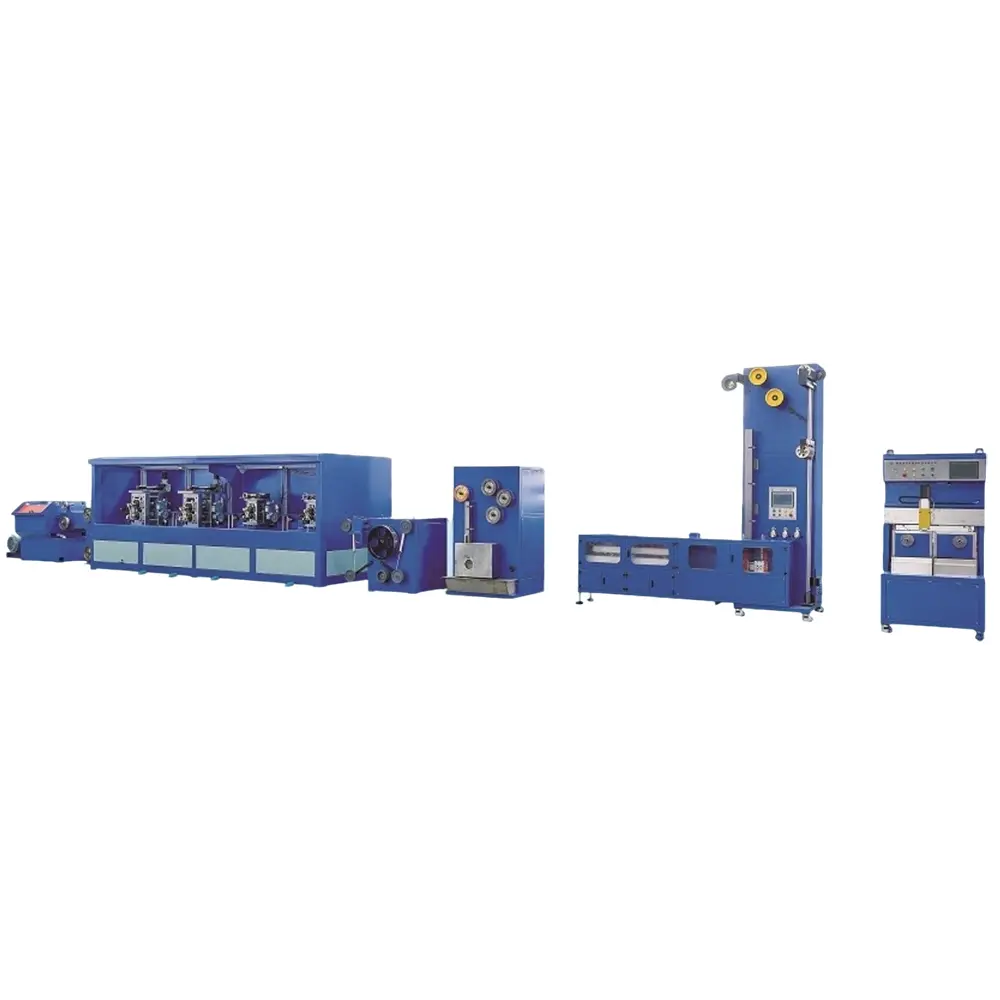
Table of Contents
- Executive Summary
- What Role Does a Photovoltaic Welding Strip Rolling Mill Play?
- How Does a Photovoltaic Welding Strip Rolling Mill Work?
- What Are the Key Components of the Rolling Mill?
- Which Specifications Matter Most in Rolling Mills?
- Why Choose Advanced Rolling Mill Solutions?
- What Are the Latest Industry Trends?
- FAQ
Executive Summary
This in‑depth guide explains the technology, functions, and industrial significance of the Photovoltaic Welding Strip Rolling Mill. As part of the advanced precision machinery used in solar component manufacturing, this equipment transforms high‑purity copper or aluminum raw materials into highly precise welding strips for photovoltaic modules — with tight tolerances in thickness and width, consistent surface quality, and automated production processes. It plays a pivotal role in achieving high electrical conduction efficiency in modern photovoltaic assemblies, enabling scalable and reliable solar power generation.
What Role Does a Photovoltaic Welding Strip Rolling Mill Play?
In photovoltaic module production, the welding strip—also called PV ribbon—is the conductive link between cells that carries the generated electrical current to busbars and junction boxes. The rolling mill facilitates this by converting copper or aluminum raw wire into flat strips with precise mechanical and electrical properties.
- Converts round wire into consistent flat ribbon shapes.
- Ensures electrical conductivity and tensile strength appropriate for solar cells.
- Supports high‑volume and automated manufacturing environments in solar factories.
How Does a Photovoltaic Welding Strip Rolling Mill Work?
The working principle of photovoltaic welding strip rolling involves step‑by‑step reduction of the raw metal’s cross‑section while controlling surface quality, tension, and thickness at each stage. Typical process steps include:
- High‑precision unwinding of raw copper/aluminum wire.
- Multi‑stage rolling and drawing to form the flat strip geometry.
- Online thickness/width monitoring and tension control.
- Annealing to optimize mechanical properties.
- Winding the finished strip for downstream coating or soldering processes.
Advanced models integrate automatic feeding, detection systems, and high‑speed winding modules to minimize manual intervention and maximize throughput.
What Are the Key Components of the Rolling Mill?
Modern photovoltaic welding strip rolling mills incorporate several precision components:
- Servo‑driven rolling stands — to control strip deformation with high accuracy.
- Precision measuring systems — real‑time instruments that ensure thickness and width tolerances.
- Tension control systems — closed‑loop tension regulation across the process line for consistency.
- Annealing units — thermal processing modules that restore ductility and reduce work hardening.
- Automated unwind/rewind units — streamlined material handling for minimal downtime.
Which Specifications Matter Most in Rolling Mills?
When evaluating rolling mill equipment, manufacturers consider key parameters such as:
| Specification | Industry Importance |
|---|---|
| Thickness accuracy | Ensures uniform electrical conduction and mechanical stability |
| Width tolerance | Affects compatibility with cell interconnection and welding |
| Line speed | Directly impacts output rate and cost per meter |
| Material adaptability | Ability to handle copper and aluminum feeds |
Equipment performance is often expressed in maximum processing speeds, tolerance ranges, and automation levels — all critical for photovoltaic production lines.
Why Choose Advanced Rolling Mill Solutions?
Adopting advanced welding strip rolling mill technology delivers several strategic advantages:
- Precision and Consistency: Tight control over dimensional tolerances improves module performance reliability.
- Productivity and Efficiency: Automated feeds and high line speeds boost throughput.
- Reduced Waste: Accurate production decreases off‑spec material and rework.
- Scalable Manufacturing: Modular designs allow capacity upgrades and flexible product changeovers.
What Are the Latest Industry Trends?
The photovoltaic welding strip market and its equipment technologies are advancing rapidly:
- Market growth: The global photovoltaic welding strip sector is expanding due to accelerated solar energy adoption worldwide.
- Automation explosion: Manufacturers are integrating MES systems and AI‑driven quality controls.
- Material innovation: Multi‑shape welding strips (triangular/flat) for improved mechanical and electrical performance.
- Energy efficiency: Rolling mills now include energy saving drives and waste heat recovery systems.
Frequently Asked Questions (FAQ)
Q: What exactly is a photovoltaic welding strip?
A: A photovoltaic welding strip is a conductive metal ribbon—typically copper or aluminum with tin coating—used to connect solar cells within PV modules, enabling the flow of electricity generated by the cells.
Q: What is the function of a photovoltaic welding strip rolling mill?
A: The mill’s function is to convert round feedstock into a precise flat ribbon shape with specific thickness, width, and surface quality, ensuring efficient electrical conduction and compatibility with downstream soldering or tabbing equipment.
Q: Which industries benefit from this equipment?
A: Primarily solar module and photovoltaic manufacturing industries, but similar precision flat wire rolling technology is also used in electronics and electrical component sectors.
Q: What factors should be considered when selecting a rolling mill?
A: Consider dimensional tolerance capability, automation features, production speed, material compatibility (copper or aluminum), and after‑sales support services.
Q: How does automation improve welding strip production?
A: Automation increases throughput, reduces manual error, and allows continuous 24/7 operation — all leading to higher quality and lower unit production costs.