
- English
- Español
- Português
- русский
- Français
- 日本語
- Deutsch
- tiếng Việt
- Italiano
- Nederlands
- ภาษาไทย
- Polski
- 한국어
- Svenska
- magyar
- Malay
- বাংলা ভাষার
- Dansk
- Suomi
- हिन्दी
- Pilipino
- Türkçe
- Gaeilge
- العربية
- Indonesia
- Norsk
- تمل
- český
- ελληνικά
- український
- Javanese
- فارسی
- தமிழ்
- తెలుగు
- नेपाली
- Burmese
- български
- ລາວ
- Latine
- Қазақша
- Euskal
- Azərbaycan
- Slovenský jazyk
- Македонски
- Lietuvos
- Eesti Keel
- Română
- Slovenski
- मराठी
- Srpski језик
- Esperanto
- Afrikaans
- Català
- שפה עברית
- Cymraeg
- Galego
- Latviešu
- icelandic
- ייִדיש
- беларускі
- Hrvatski
- Kreyòl ayisyen
- Shqiptar
- Malti
- lugha ya Kiswahili
- አማርኛ
- Bosanski
- Frysk
- ភាសាខ្មែរ
- ქართული
- ગુજરાતી
- Hausa
- Кыргыз тили
- ಕನ್ನಡ
- Corsa
- Kurdî
- മലയാളം
- Maori
- Монгол хэл
- Hmong
- IsiXhosa
- Zulu
- Yoruba
- অসমীয়া
- ଓଡିଆ
- Punjabi
- پښتو
- Chichewa
- Samoa
- Sesotho
- සිංහල
- Gàidhlig
- Cebuano
- Somali
- Тоҷикӣ
- O'zbek
- Hawaiian
- سنڌي
- Shinra
- Հայերեն
- Igbo
- Sundanese
- Lëtzebuergesch
- Malagasy

What is the application prospect of photovoltaic welding strip rolling mill
As the core equipment for photovoltaic welding strip production, the application prospects of photovoltaic welding strip rolling mill closely rely on the explosive growth of the photovoltaic industry. At the same time, it benefits from the upgrading of welding strip technology and the trend of replacing domestic equipment. Overall, it presents a good trend of strong demand, technology driven upgrading, and continuous expansion of market space. Specific analysis can be carried out from the following aspects:
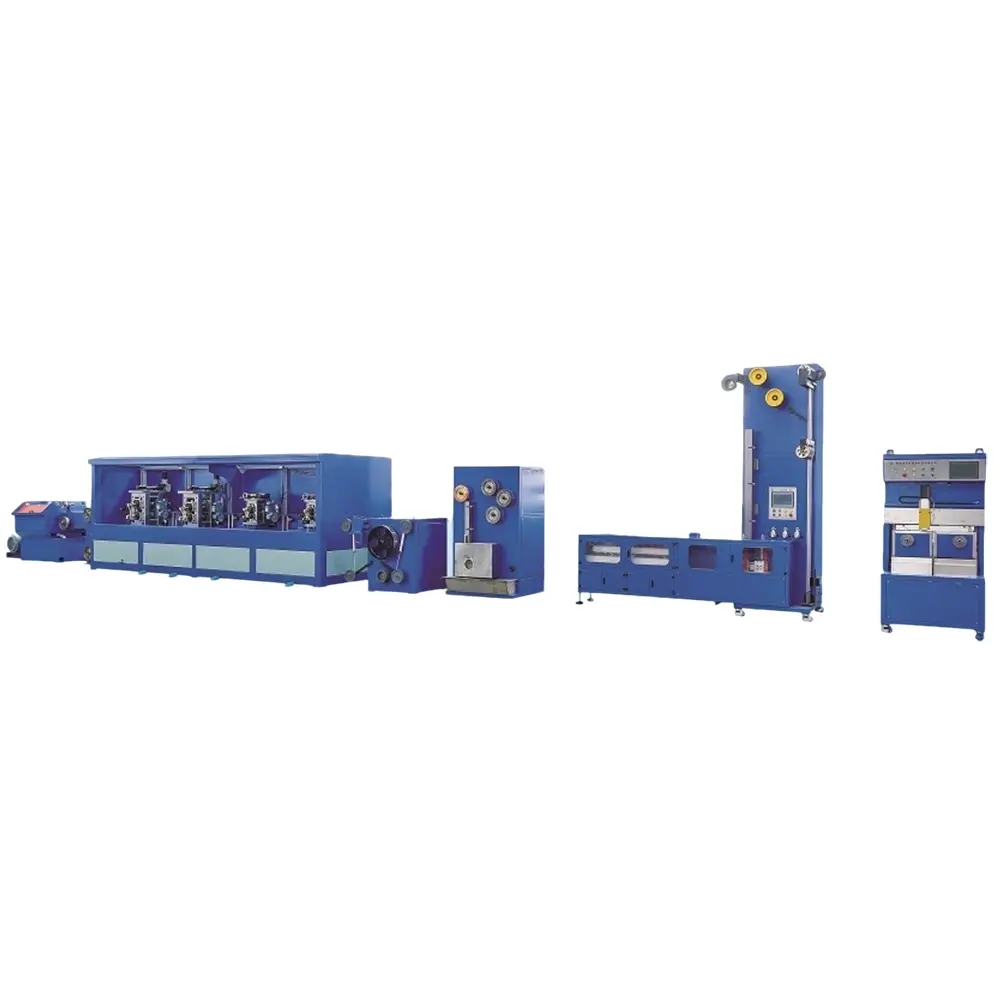
The expansion of the photovoltaic industry brings sustained demand: Photovoltaic ribbon is known as the "blood vessel" of photovoltaic modules and is the core auxiliary material for connecting solar cells. The rolling and other processes of the photovoltaic ribbon rolling mill directly determine the accuracy and quality of the ribbon, which in turn affects the power generation efficiency of photovoltaic modules. Driven by the global dual carbon goals, the photovoltaic industry is growing rapidly. In the first half of 2025, China's newly installed photovoltaic capacity reached 212.21GW, a year-on-year increase of 107.07%; The global demand for photovoltaic ribbon will exceed 1.2 million tons in 2023 and is expected to reach 2 million tons by 2025. The continuous expansion of downstream photovoltaic modules will inevitably drive a massive demand for photovoltaic welding strips, thereby opening up a stable and huge market space for photovoltaic welding strip rolling mills. And in the future, mainstream new components such as heterojunctions and TOPCon will still use photovoltaic ribbon as the main connection method, further ensuring the long-term demand of rolling mills.
The upgrade of welding strip technology has forced equipment iteration and created new increments: photovoltaic welding strips are upgraded in the direction of forward fine grid, ultra-thin, and irregular shapes. For example, the demand for ultra-thin welding strips below 0.08mm and irregular section welding strips is increasing day by day. These high-precision welding strips require extremely high rolling accuracy and tolerance control ability of the rolling mill, and traditional rolling mills are difficult to adapt to. For example, new components such as HJT and TOPCon require welding strips with thickness tolerances controlled within ± 0.005mm, which drives photovoltaic companies to eliminate traditional equipment and purchase new rolling mills with high-precision rolling capabilities. In addition, the demand for energy-saving and cost reduction in welding strip production has also prompted the iteration of rolling mills. For example, Jiangsu Youjuan's photovoltaic welding strip rolling mill reduces rolling energy consumption by 25% through a servo control system. These energy-saving rolling mills can help enterprises reduce production costs and will become the mainstream in the market, driving the demand for equipment upgrades.
The acceleration of domestic substitution and the broad prospects of local equipment: Previously, high-end photovoltaic strip rolling mills were monopolized by European and American brands for a long time. Not only was the price of a single unit more than 50% higher than domestic equipment, but the delivery cycle was also as long as 45-60 days, and it was also susceptible to fluctuations in the international supply chain. In recent years, domestic rolling mill technology has made rapid breakthroughs, reaching international advanced levels in precision, energy efficiency, and other aspects. For example, domestic rolling mills can achieve control of welding strip thickness tolerance ± 0.005mm, with energy consumption about 25% lower than imported equipment, and the price is only 60% -70% of imported equipment. The delivery cycle is shortened to 20-30 days. At the same time, domestic manufacturers can also provide customized services, and can provide customized solutions within 3 days to adapt to the production of different specifications of welding strips. These advantages enable domestic photovoltaic strip rolling mills to gradually replace imported equipment, and their market share in the domestic and even global markets is expected to continue to increase in the future.
The pain points in the industry urgently need to be addressed, and high-quality equipment suppliers are facing development opportunities. Currently, 80% of small and medium-sized manufacturers in the photovoltaic welding strip industry rely on traditional rolling mills, which have problems such as high energy consumption, low yield, and serious homogenization. Some manufacturers' equipment energy consumption is 20% -30% higher than advanced equipment, and the welding strip production yield is less than 85%. In addition, environmental policies are also forcing traditional rolling mills with high pollution and energy consumption to exit the market. In this context, photovoltaic strip welding and rolling mill manufacturers with energy-saving, cost reducing, high-precision, and customization capabilities can not only solve industry pain points, but also help small and medium-sized manufacturers meet environmental protection and production needs. The market acceptance of such high-quality rolling mills will continue to increase, and their application scenarios will further expand from traditional photovoltaic strip welding enterprises to a large number of small and medium-sized manufacturers.