
- English
- Español
- Português
- русский
- Français
- 日本語
- Deutsch
- tiếng Việt
- Italiano
- Nederlands
- ภาษาไทย
- Polski
- 한국어
- Svenska
- magyar
- Malay
- বাংলা ভাষার
- Dansk
- Suomi
- हिन्दी
- Pilipino
- Türkçe
- Gaeilge
- العربية
- Indonesia
- Norsk
- تمل
- český
- ελληνικά
- український
- Javanese
- فارسی
- தமிழ்
- తెలుగు
- नेपाली
- Burmese
- български
- ລາວ
- Latine
- Қазақша
- Euskal
- Azərbaycan
- Slovenský jazyk
- Македонски
- Lietuvos
- Eesti Keel
- Română
- Slovenski
- मराठी
- Srpski језик
- Esperanto
- Afrikaans
- Català
- שפה עברית
- Cymraeg
- Galego
- Latviešu
- icelandic
- ייִדיש
- беларускі
- Hrvatski
- Kreyòl ayisyen
- Shqiptar
- Malti
- lugha ya Kiswahili
- አማርኛ
- Bosanski
- Frysk
- ភាសាខ្មែរ
- ქართული
- ગુજરાતી
- Hausa
- Кыргыз тили
- ಕನ್ನಡ
- Corsa
- Kurdî
- മലയാളം
- Maori
- Монгол хэл
- Hmong
- IsiXhosa
- Zulu
- Yoruba
- অসমীয়া
- ଓଡିଆ
- Punjabi
- پښتو
- Chichewa
- Samoa
- Sesotho
- සිංහල
- Gàidhlig
- Cebuano
- Somali
- Тоҷикӣ
- O'zbek
- Hawaiian
- سنڌي
- Shinra
- Հայերեն
- Igbo
- Sundanese
- Lëtzebuergesch
- Malagasy

What Makes a High-Precision Micro Flat Wire Rolling Mill the Key to Next-Generation Micro Wire Manufacturing
Article Summary: This blog explores how a High-Precision Micro Flat Wire Rolling Mill is transforming modern micro-wire manufacturing by delivering exceptional accuracy, stability, and productivity. It explains the working principles, technical advantages, applications, and industry value of advanced rolling technology. Special attention is given to how GRM integrates engineering innovation into its High-Precision Micro Flat Wire Rolling Mill solutions to support industries requiring ultra-fine, high-quality flat wire production.
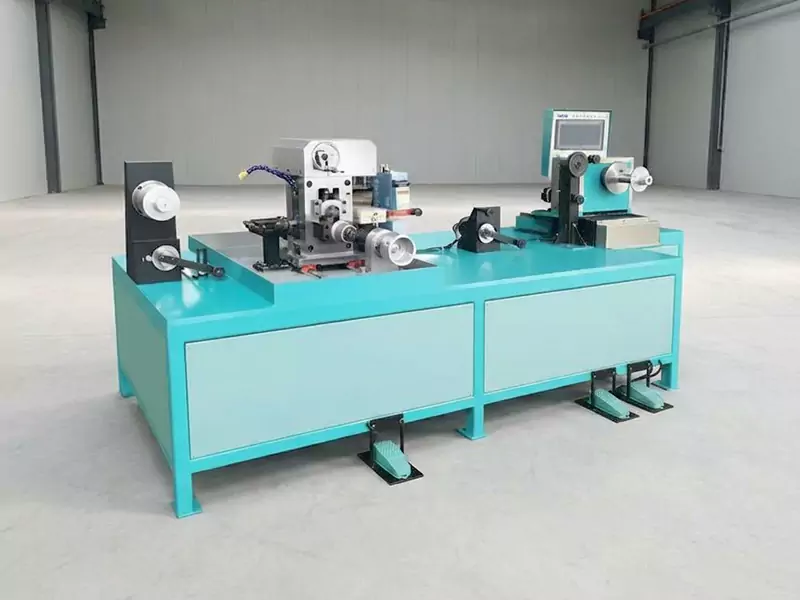
Table of Contents
2. What is a High-Precision Micro Flat Wire Rolling Mill?
3. Working Principle of Micro Flat Wire Rolling Technology
4. Key Features and Innovations
5. Technical Specifications Overview
8. Equipment Comparison Analysis
9. Industry Challenges and Solutions
10. Maintenance and Operational Tips
1. Introduction
In today’s precision-driven manufacturing landscape, the demand for ultra-thin, highly consistent metal wire continues to grow rapidly. Industries such as electronics, aerospace, medical devices, and energy storage rely heavily on advanced forming technologies. Among them, the High-Precision Micro Flat Wire Rolling Mill has become a cornerstone of next-generation production systems. Companies like GRM have developed highly advanced solutions in this field, offering stable and efficient rolling performance that ensures dimensional accuracy at the micron level.
Unlike conventional rolling equipment, modern micro flat wire systems are designed to handle extreme tolerances while maintaining surface integrity and mechanical strength. This combination of precision and reliability makes them essential in modern industrial ecosystems.
2. What is a High-Precision Micro Flat Wire Rolling Mill?
A High-Precision Micro Flat Wire Rolling Mill is specialized equipment used to convert round wire into ultra-thin flat wire with precise dimensional control. The process involves multiple rolling stages where the material is gradually compressed and shaped under controlled pressure conditions.
The goal is not only to reduce thickness but also to maintain uniform width, smooth surface finish, and consistent mechanical properties. This is particularly important in applications requiring electrical conductivity, heat resistance, or micro-scale structural integration.
- Transforms round wire into micro-scale flat wire
- Ensures micron-level dimensional accuracy
- Maintains surface smoothness and structural integrity
- Supports high-speed continuous production
3. Working Principle of Micro Flat Wire Rolling Technology
The working principle of a High-Precision Micro Flat Wire Rolling Mill is based on controlled plastic deformation. The wire passes through a series of precision rollers that gradually compress it into a flat profile. Each stage is carefully calibrated to avoid stress concentration and surface damage.
Key operational stages include:
- Feeding stage: Raw wire is aligned and guided into the rolling system.
- Pre-rolling: Initial compression stabilizes material flow.
- Precision rolling: High-accuracy rollers shape the wire into a flat form.
- Finishing: Final adjustments ensure dimensional accuracy and surface quality.
Advanced systems developed by GRM integrate automated feedback loops that continuously monitor thickness, tension, and alignment, ensuring consistent output quality.
4. Key Features and Innovations
Modern High-Precision Micro Flat Wire Rolling Mills are equipped with cutting-edge technologies that significantly enhance performance and reliability.
- Ultra-high precision roller calibration system
- Digital control and real-time monitoring
- Automatic tension adjustment mechanism
- High-speed continuous production capability
- Low energy consumption design
- Enhanced durability for long-term operation
GRM integrates smart control systems that improve consistency while reducing human intervention, making production more efficient and stable.
5. Technical Specifications Overview
| Parameter | Specification Range |
|---|---|
| Input Wire Diameter | 0.05 mm – 1.5 mm |
| Output Flat Wire Thickness | 0.02 mm – 0.8 mm |
| Width Range | 0.1 mm – 5.0 mm |
| Precision Tolerance | ±0.001 mm – ±0.005 mm |
| Rolling Speed | Up to 120 m/min |
| Control System | PLC + Intelligent Feedback System |
6. Industrial Applications
The High-Precision Micro Flat Wire Rolling Mill plays a crucial role in multiple high-tech industries.
- Electronics: Connectors, micro circuits, and conductive strips
- Medical devices: Surgical tools and precision implants
- Aerospace: Lightweight structural components
- Automotive: Sensor systems and fine wiring
- Energy storage: Battery electrodes and conductive layers
The flexibility of GRM’s systems ensures compatibility with a wide range of materials, including copper, aluminum, stainless steel, and specialty alloys.
7. Core Advantages
- Exceptional dimensional stability
- Improved production efficiency
- Reduced material waste
- High surface finish quality
- Automated precision control
These advantages make the High-Precision Micro Flat Wire Rolling Mill indispensable for manufacturers aiming to meet strict quality standards while optimizing production costs.
8. Equipment Comparison Analysis
| Feature | Conventional Rolling Mill | High-Precision Micro Flat Wire Rolling Mill |
|---|---|---|
| Precision Level | Moderate | Ultra-high (micron-level) |
| Automation | Partial | Fully automated control system |
| Surface Quality | Standard finish | High smoothness and uniformity |
| Energy Efficiency | Medium | Optimized low-energy design |
9. Industry Challenges and Solutions
Despite technological progress, micro flat wire production still faces several challenges. These include maintaining ultra-thin tolerances, reducing material deformation defects, and ensuring continuous production stability.
The High-Precision Micro Flat Wire Rolling Mill addresses these challenges through:
- Adaptive pressure control systems
- Real-time monitoring sensors
- High-precision roller alignment
- Thermal stability optimization
GRM’s engineering approach focuses on reducing variability and enhancing process repeatability.
10. Maintenance and Operational Tips
Proper maintenance is essential for ensuring long-term performance and accuracy of rolling mills.
- Regular roller surface inspection
- Lubrication system checks
- Calibration of measuring sensors
- Cleaning of debris and residue
- Software system updates
Following these practices helps maintain optimal efficiency and extends equipment lifespan.
11. Frequently Asked Questions
Q1: What materials can be processed?
A: Copper, aluminum, stainless steel, and various alloy wires can be processed efficiently.
Q2: How precise is the output?
A: Modern systems can achieve tolerances as tight as ±0.001 mm depending on configuration.
Q3: Is automation included in the system?
A: Yes, most High-Precision Micro Flat Wire Rolling Mills include PLC-based intelligent automation systems.
Q4: What industries benefit most?
A: Electronics, medical devices, aerospace, automotive, and energy storage industries.
Q5: How does GRM improve production efficiency?
A: GRM integrates smart monitoring, precision rollers, and adaptive control systems to reduce downtime and improve consistency.
12. Conclusion & Contact Us
The High-Precision Micro Flat Wire Rolling Mill represents a major advancement in precision manufacturing technology. With its ability to deliver ultra-fine tolerances, stable performance, and high efficiency, it has become an essential solution for modern industries demanding accuracy and reliability.
By leveraging advanced engineering and intelligent control systems, GRM continues to push the boundaries of micro wire production technology, providing manufacturers with tools to achieve higher quality standards and improved productivity.
If you are looking to upgrade your production line or explore advanced micro wire rolling solutions, contact us today to learn how GRM can support your business with customized, high-performance equipment designed for the future of manufacturing.