
- English
- Español
- Português
- русский
- Français
- 日本語
- Deutsch
- tiếng Việt
- Italiano
- Nederlands
- ภาษาไทย
- Polski
- 한국어
- Svenska
- magyar
- Malay
- বাংলা ভাষার
- Dansk
- Suomi
- हिन्दी
- Pilipino
- Türkçe
- Gaeilge
- العربية
- Indonesia
- Norsk
- تمل
- český
- ελληνικά
- український
- Javanese
- فارسی
- தமிழ்
- తెలుగు
- नेपाली
- Burmese
- български
- ລາວ
- Latine
- Қазақша
- Euskal
- Azərbaycan
- Slovenský jazyk
- Македонски
- Lietuvos
- Eesti Keel
- Română
- Slovenski
- मराठी
- Srpski језик
- Esperanto
- Afrikaans
- Català
- שפה עברית
- Cymraeg
- Galego
- Latviešu
- icelandic
- ייִדיש
- беларускі
- Hrvatski
- Kreyòl ayisyen
- Shqiptar
- Malti
- lugha ya Kiswahili
- አማርኛ
- Bosanski
- Frysk
- ភាសាខ្មែរ
- ქართული
- ગુજરાતી
- Hausa
- Кыргыз тили
- ಕನ್ನಡ
- Corsa
- Kurdî
- മലയാളം
- Maori
- Монгол хэл
- Hmong
- IsiXhosa
- Zulu
- Yoruba
- অসমীয়া
- ଓଡିଆ
- Punjabi
- پښتو
- Chichewa
- Samoa
- Sesotho
- සිංහල
- Gàidhlig
- Cebuano
- Somali
- Тоҷикӣ
- O'zbek
- Hawaiian
- سنڌي
- Shinra
- Հայերեն
- Igbo
- Sundanese
- Lëtzebuergesch
- Malagasy

How to Control Roll Gap Parallelism on a Two High Rolling Machine to Prevent Strip Edge Thickness Deviation
The Two High Rolling Machine has a simple structure and low investment cost, and is widely used for rolling copper aluminum strips, thin plates, metal foils, and composite materials. The two high rolling machine only has one pair of working rolls and lacks a complex plate shape control mechanism. Once the two sides of the roll gap are not parallel, a wedge-shaped gap will form, resulting in unilateral thickness deviation, sickle bending, and deviation of the rolled plate. In severe cases, it can cause strip breakage and scrap of the coil material. The control of roll gap parallelism runs through multiple stages, including equipment calibration, maintenance of bearings and pressing mechanisms, dynamic compensation during the rolling process, and online detection. It is the core control point for the stable production of uniform thickness plates by the two roll rolling mill.
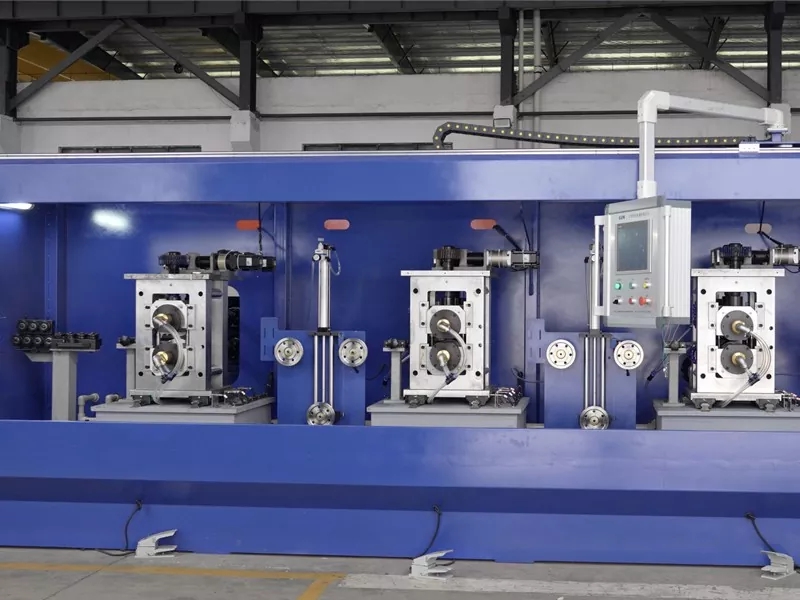
1. After installation and roll replacement, perform zero point calibration of roll seam parallelism
After machine installation or roll change, zero calibration of roll gap parallelism is mandatory for Two High Rolling Machine. Measure gap values at drive side and operation side with feeler gauges and dial indicators. Adjust both sides of the screw down system synchronously. Calibration should be carried out under working temperature to avoid thermal expansion error. Good calibration prevents wedge-shaped gap and one-sided thickness error of rolled plate.
2. Regularly check the clearance between bearings, bearing seats, and pressing mechanisms
Worn bearings, chocks and screw-down assemblies are common causes of uneven roll gap on Two High Rolling Machine. Clearance on one side will cause uneven pressure during rolling and lead to strip thickness deviation. Regular inspection of bearing temperature, fasteners and screw wear is required. Replace failed bearings and repair screw-down parts in time.
3. Control the thermal balance during the rolling process and compensate for the thermal asymmetric deformation of the rolling mill rolls
Unbalanced cooling causes asymmetric thermal expansion of work rolls on Two High Rolling Machine. Blocked cooling nozzles will make one side roll diameter bigger and change roll gap parallelism. Keep cooling flow balanced on both sides and recheck roll gap periodically during long time rolling. Wedge incoming material will worsen thickness defects.
4. Align tension, guidance, and feeding to reduce rolling force deviation
Centering guide and balanced tension are important for Two High Rolling Machine. Mis-fed strip or unequal coiling tension will tilt the rolls under rolling force, even if static roll gap is parallel. For thin copper and aluminum foil, low speed trial rolling and multi-point thickness sampling are recommended.
5. Online thickness monitoring, establishing a closed-loop control process for parallelism
Install exit thickness gauge to monitor cross profile of strip for Two High Rolling Machine. When thickness difference appears on one side, adjust the screw-down side by side gently. Full width thickness test on first sample before mass rolling is necessary for precision metal strip orders.