
- English
- Español
- Português
- русский
- Français
- 日本語
- Deutsch
- tiếng Việt
- Italiano
- Nederlands
- ภาษาไทย
- Polski
- 한국어
- Svenska
- magyar
- Malay
- বাংলা ভাষার
- Dansk
- Suomi
- हिन्दी
- Pilipino
- Türkçe
- Gaeilge
- العربية
- Indonesia
- Norsk
- تمل
- český
- ελληνικά
- український
- Javanese
- فارسی
- தமிழ்
- తెలుగు
- नेपाली
- Burmese
- български
- ລາວ
- Latine
- Қазақша
- Euskal
- Azərbaycan
- Slovenský jazyk
- Македонски
- Lietuvos
- Eesti Keel
- Română
- Slovenski
- मराठी
- Srpski језик
- Esperanto
- Afrikaans
- Català
- שפה עברית
- Cymraeg
- Galego
- Latviešu
- icelandic
- ייִדיש
- беларускі
- Hrvatski
- Kreyòl ayisyen
- Shqiptar
- Malti
- lugha ya Kiswahili
- አማርኛ
- Bosanski
- Frysk
- ភាសាខ្មែរ
- ქართული
- ગુજરાતી
- Hausa
- Кыргыз тили
- ಕನ್ನಡ
- Corsa
- Kurdî
- മലയാളം
- Maori
- Монгол хэл
- Hmong
- IsiXhosa
- Zulu
- Yoruba
- অসমীয়া
- ଓଡିଆ
- Punjabi
- پښتو
- Chichewa
- Samoa
- Sesotho
- සිංහල
- Gàidhlig
- Cebuano
- Somali
- Тоҷикӣ
- O'zbek
- Hawaiian
- سنڌي
- Shinra
- Հայերեն
- Igbo
- Sundanese
- Lëtzebuergesch
- Malagasy

How Can a Profile Rolling Machine Transform Metal Forming Efficiency and Product Quality
In today's highly competitive metal processing industry, manufacturers are constantly seeking advanced equipment that can improve productivity, precision, and cost efficiency. As a leading provider of rolling mill solutions, GRM delivers innovative technologies designed to meet modern manufacturing demands. Among these solutions, the Profile Rolling Machine has become an essential piece of equipment for producing high-quality metal profiles with consistent dimensions, excellent surface finish, and enhanced structural integrity. Whether used in construction, automotive, railway, aerospace, or industrial manufacturing, profile rolling technology plays a critical role in achieving superior production performance.
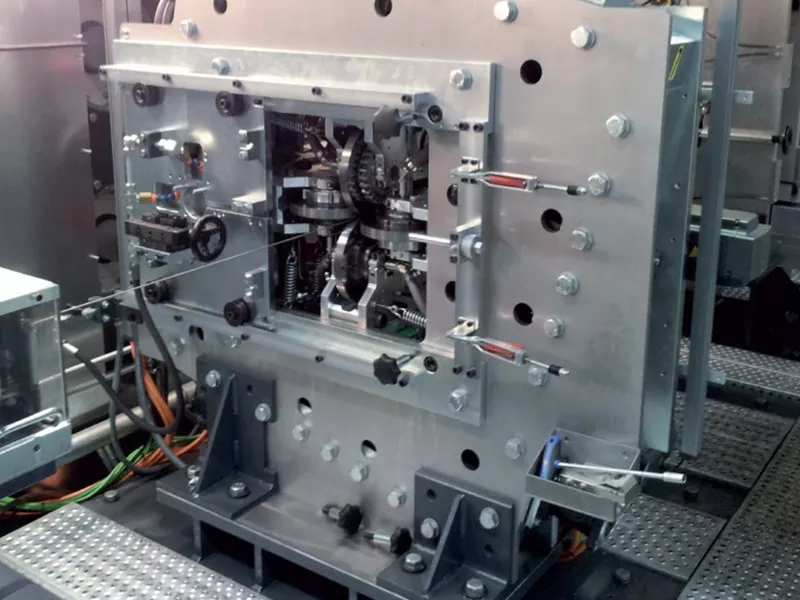
Table of Contents
- What Is a Profile Rolling Machine?
- How Does a Profile Rolling Machine Work?
- Main Components of a Profile Rolling Machine
- Key Advantages of Profile Rolling Machines
- Industrial Applications
- Profile Rolling vs Traditional Forming Methods
- How to Choose the Right Profile Rolling Machine
- Future Trends in Profile Rolling Technology
- Frequently Asked Questions
- Conclusion
What Is a Profile Rolling Machine?
A Profile Rolling Machine is a specialized metal forming system designed to shape metal bars, rods, beams, channels, angles, and custom profiles through controlled rolling processes. Unlike traditional machining methods that remove material, profile rolling reshapes metal through plastic deformation, preserving material integrity while improving mechanical properties.
The machine utilizes precisely engineered rollers to gradually transform raw metal stock into the desired cross-sectional profile. This process enables manufacturers to produce complex shapes with high dimensional accuracy and excellent repeatability.
Profile rolling machines are widely used for processing materials such as:
- Carbon Steel
- Stainless Steel
- Alloy Steel
- Aluminum
- Copper
- Brass
- Titanium Alloys
How Does a Profile Rolling Machine Work?
The profile rolling process involves passing metal stock through a series of specially designed rollers. Each roller station progressively modifies the material shape until the final profile is achieved.
Basic Working Process
- Raw material is loaded into the machine.
- Rollers apply controlled pressure.
- Material undergoes gradual deformation.
- Multiple rolling passes refine the profile.
- Final dimensions are achieved with precision control.
- Finished products undergo quality inspection.
Modern profile rolling machines incorporate advanced automation systems, allowing operators to monitor rolling parameters, roller positions, material speed, and product dimensions in real time.
Main Components of a Profile Rolling Machine
Understanding the key components helps manufacturers evaluate machine performance and maintenance requirements.
| Component | Function | Importance |
|---|---|---|
| Rolling Stands | Support and position rollers | Ensure stability during operation |
| Rollers | Shape and form the material | Directly influence profile accuracy |
| Drive System | Provides rolling power | Maintains consistent production speed |
| Control System | Monitors machine operations | Improves automation and precision |
| Hydraulic Unit | Adjusts roller pressure | Ensures uniform deformation |
| Cooling System | Controls operating temperature | Extends equipment lifespan |
Key Advantages of Profile Rolling Machines
1. High Production Efficiency
Profile rolling machines operate continuously, enabling high-volume production with minimal downtime. Compared with conventional machining methods, rolling significantly reduces processing time and increases throughput.
2. Excellent Material Utilization
Since profile rolling forms metal without extensive cutting or machining, material waste is greatly reduced. This leads to lower raw material costs and improved sustainability.
3. Superior Dimensional Accuracy
Advanced roller designs and computerized controls ensure highly consistent profile dimensions, reducing rejection rates and improving product quality.
4. Enhanced Mechanical Properties
The rolling process refines grain structure and improves material strength, toughness, and fatigue resistance, making rolled profiles suitable for demanding structural applications.
5. Lower Production Costs
By combining high efficiency, reduced waste, and automation, profile rolling machines contribute to significant long-term cost savings.
6. Versatility
A single machine can often produce multiple profile configurations through roller changes and parameter adjustments, providing exceptional production flexibility.
Industrial Applications
Profile rolling technology supports a wide range of industries worldwide.
| Industry | Typical Products | Benefits |
|---|---|---|
| Construction | Beams, channels, structural sections | High strength and consistency |
| Automotive | Frame components, reinforcements | Weight reduction and durability |
| Railway | Rail profiles and support structures | Precision and reliability |
| Aerospace | Special alloy profiles | High dimensional accuracy |
| Energy | Transmission structures | Long service life |
| Industrial Equipment | Machine frames and supports | Cost-effective manufacturing |
Manufacturers seeking customized rolling solutions can learn more through the official GRM product page: Profile Rolling Machine.
Profile Rolling vs Traditional Forming Methods
| Factor | Profile Rolling | Traditional Machining |
|---|---|---|
| Material Waste | Low | High |
| Production Speed | High | Moderate |
| Mechanical Properties | Improved | Unchanged |
| Operating Cost | Lower | Higher |
| Dimensional Consistency | Excellent | Good |
| Mass Production Capability | Excellent | Limited |
How to Choose the Right Profile Rolling Machine
Selecting the appropriate profile rolling machine is a critical investment decision that directly impacts production efficiency, product quality, and long-term profitability. Manufacturers should evaluate several important factors before purchasing equipment.
Production Capacity Requirements
The first consideration is the expected production volume. High-capacity operations typically require fully automated profile rolling machines capable of continuous operation with minimal manual intervention. Smaller production facilities may benefit from flexible machines that support multiple profile types and shorter production runs.
Material Specifications
Different metals exhibit varying mechanical properties and forming characteristics. The selected machine should be capable of processing the specific materials used in production, whether carbon steel, stainless steel, aluminum alloys, copper, or specialty metals.
Profile Complexity
Some applications require simple structural profiles, while others demand highly customized cross-sections with tight tolerances. Advanced rolling systems equipped with precision control technologies are better suited for complex profile production.
Automation Level
Modern manufacturers increasingly prefer automated profile rolling machines due to their ability to:
- Reduce labor costs
- Improve production consistency
- Minimize human error
- Enable real-time process monitoring
- Support smart factory integration
Maintenance and Service Support
Reliable after-sales service and technical support are essential for maximizing equipment uptime. Choosing an experienced supplier like GRM ensures access to professional installation, training, spare parts, and long-term maintenance assistance.
Key Evaluation Checklist
| Evaluation Factor | Why It Matters |
|---|---|
| Production Volume | Determines machine capacity requirements |
| Material Type | Influences rolling force and roller design |
| Profile Accuracy | Affects final product quality |
| Automation Features | Improves efficiency and reduces labor |
| Energy Consumption | Impacts operating costs |
| Technical Support | Ensures reliable long-term operation |
Future Trends in Profile Rolling Technology
As manufacturing continues to embrace digital transformation, profile rolling technology is evolving rapidly. Industry 4.0 and smart manufacturing initiatives are driving innovation across rolling mill systems.
Smart Automation
Artificial intelligence and machine learning algorithms are being integrated into rolling equipment to optimize production parameters automatically. These systems can analyze production data in real time and make adjustments that improve efficiency and product quality.
Digital Monitoring Systems
Advanced sensors and monitoring platforms enable manufacturers to track machine performance, detect abnormalities, and perform predictive maintenance before failures occur.
Energy-Efficient Designs
Modern profile rolling machines increasingly incorporate energy-saving technologies that reduce power consumption while maintaining high production output.
Flexible Manufacturing
Future rolling systems will offer faster changeovers and greater adaptability, allowing manufacturers to switch between different profile types with minimal downtime.
Sustainable Production
Environmental sustainability is becoming a major priority across the manufacturing sector. Profile rolling technology contributes to greener production through:
- Reduced material waste
- Lower energy consumption
- Improved resource utilization
- Longer equipment lifespan
- Reduced carbon footprint
Frequently Asked Questions
What is the primary purpose of a Profile Rolling Machine?
A Profile Rolling Machine is used to form metal into specific cross-sectional shapes through controlled rolling processes, providing high precision, excellent material utilization, and improved mechanical properties.
Which materials can be processed using a Profile Rolling Machine?
Most profile rolling machines can process carbon steel, stainless steel, alloy steel, aluminum, copper, brass, and various specialty alloys depending on machine specifications.
How does profile rolling improve product quality?
The rolling process refines the material's internal grain structure, enhances strength, improves dimensional consistency, and delivers a superior surface finish compared to many conventional forming methods.
Is profile rolling suitable for large-scale production?
Yes. Profile rolling machines are highly efficient and ideal for mass production environments due to their continuous operation capabilities and high production speeds.
Can one machine produce multiple profile shapes?
Yes. Many modern profile rolling machines can manufacture different profiles by changing roller configurations and adjusting machine settings.
What industries benefit most from profile rolling technology?
Construction, automotive, railway, aerospace, energy, heavy equipment manufacturing, and industrial machinery sectors all benefit significantly from profile rolling technology.
Why choose GRM Profile Rolling Machines?
GRM combines advanced engineering, reliable manufacturing quality, customized solutions, and comprehensive technical support to help customers achieve superior production performance and long-term operational success.
Conclusion
The Profile Rolling Machine has become an indispensable solution for modern metal forming operations. Its ability to deliver high productivity, excellent dimensional accuracy, enhanced material properties, and reduced production costs makes it a valuable investment across numerous industries. As manufacturing technology continues to advance, profile rolling systems will play an even greater role in supporting smart, efficient, and sustainable production environments.
Whether your business requires standard structural profiles or highly customized metal sections, selecting a high-quality rolling solution can significantly improve competitiveness and manufacturing performance. By understanding the capabilities, benefits, and selection criteria outlined in this guide, manufacturers can make informed decisions that support long-term growth and operational excellence.
Contact Us for Professional Profile Rolling Solutions
Looking for a reliable and high-performance Profile Rolling Machine for your manufacturing operations? GRM is committed to providing advanced rolling mill equipment, customized engineering solutions, and comprehensive technical support to customers worldwide.
Whether you need assistance selecting the right machine, optimizing your production line, or developing a customized rolling solution, our experienced team is ready to help.
Contact us today to discuss your project requirements and discover how GRM can help improve your production efficiency, product quality, and business profitability.