
- English
- Español
- Português
- русский
- Français
- 日本語
- Deutsch
- tiếng Việt
- Italiano
- Nederlands
- ภาษาไทย
- Polski
- 한국어
- Svenska
- magyar
- Malay
- বাংলা ভাষার
- Dansk
- Suomi
- हिन्दी
- Pilipino
- Türkçe
- Gaeilge
- العربية
- Indonesia
- Norsk
- تمل
- český
- ελληνικά
- український
- Javanese
- فارسی
- தமிழ்
- తెలుగు
- नेपाली
- Burmese
- български
- ລາວ
- Latine
- Қазақша
- Euskal
- Azərbaycan
- Slovenský jazyk
- Македонски
- Lietuvos
- Eesti Keel
- Română
- Slovenski
- मराठी
- Srpski језик
- Esperanto
- Afrikaans
- Català
- שפה עברית
- Cymraeg
- Galego
- Latviešu
- icelandic
- ייִדיש
- беларускі
- Hrvatski
- Kreyòl ayisyen
- Shqiptar
- Malti
- lugha ya Kiswahili
- አማርኛ
- Bosanski
- Frysk
- ភាសាខ្មែរ
- ქართული
- ગુજરાતી
- Hausa
- Кыргыз тили
- ಕನ್ನಡ
- Corsa
- Kurdî
- മലയാളം
- Maori
- Монгол хэл
- Hmong
- IsiXhosa
- Zulu
- Yoruba
- অসমীয়া
- ଓଡିଆ
- Punjabi
- پښتو
- Chichewa
- Samoa
- Sesotho
- සිංහල
- Gàidhlig
- Cebuano
- Somali
- Тоҷикӣ
- O'zbek
- Hawaiian
- سنڌي
- Shinra
- Հայերեն
- Igbo
- Sundanese
- Lëtzebuergesch
- Malagasy

Continuously Transposed Conductors: The Secrets of Power Transfer
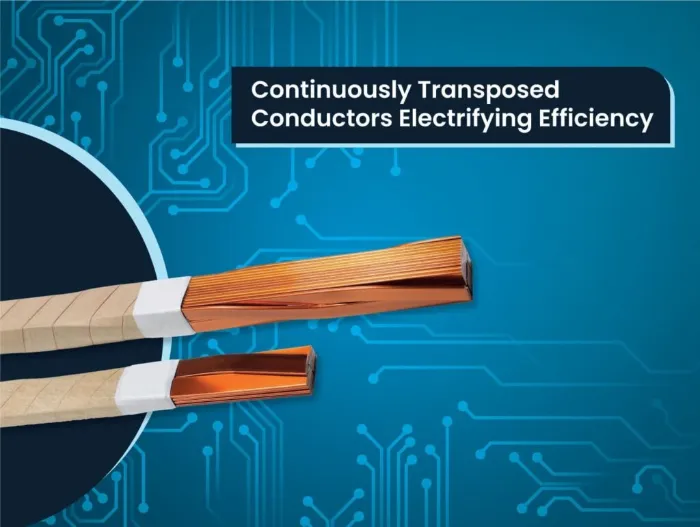
A continuously transposed conductor (CTC) is a special type of conductor, typically made of copper, designed to optimize power transfer. This article will unveil the mystery of CTCs, exploring their applications, the technical principles behind them, and why they are the unsung hero of the transformer world.
CTC Practical Value
When you plug it into a device, it starts working. But what exactly happens inside the transformer to make this possible? The answer lies in the carefully designed and meticulously crafted continuously transposed copper conductor, a special type of wire with exceptional properties.
What is CTC?
First, CTCs are typically made of copper, possessing excellent conductivity. This high conductivity allows current to flow with minimal resistance, reducing energy loss and ensuring efficient power transfer. And when it comes to the continuous transposition process, this is where the real magic begins.
A CTC (continuously transposed copper conductor) is not simply a straight conductor; it undergoes a continuous twisting and rotation process within a continuously transposed copper conductor machine. This ingenious design is not merely aesthetically pleasing, but a functional marvel. Continuous transposition (CTC) helps minimize energy loss, enabling conductors to achieve extremely high efficiency in power conversion.
Why Transformers Use Continuously Transposed Conductors (CTCs)
Transformers play a crucial role in power distribution, responsible for transferring electrical energy from one voltage level to another. The core component of a transformer is its conductor windings. CTCs have revolutionized efficient power transmission.
Their unique design ensures smooth power transmission and withstands the stringent requirements of power transmission, making them ideal for transformers.
Innovative Process
The birth of CTCs began with the CTC machine, a masterpiece of engineering precision. This machine precisely adjusts the conductors to ensure they remain in optimal condition. Continuous transposition is not merely a manufacturing process, but a symphony of innovation, constantly refining the conductors to achieve optimal performance, thereby reducing energy loss and improving overall efficiency.
Applications
The applications of continuous shift conductors extend far beyond transformers. They can also be used in modern infrastructure, powering industrial machinery, power grids, and ensuring the operation of critical systems. They provide a stable and reliable power supply, improve efficiency and performance, and enhance the robustness and resilience of modern infrastructure.