
- English
- Español
- Português
- русский
- Français
- 日本語
- Deutsch
- tiếng Việt
- Italiano
- Nederlands
- ภาษาไทย
- Polski
- 한국어
- Svenska
- magyar
- Malay
- বাংলা ভাষার
- Dansk
- Suomi
- हिन्दी
- Pilipino
- Türkçe
- Gaeilge
- العربية
- Indonesia
- Norsk
- تمل
- český
- ελληνικά
- український
- Javanese
- فارسی
- தமிழ்
- తెలుగు
- नेपाली
- Burmese
- български
- ລາວ
- Latine
- Қазақша
- Euskal
- Azərbaycan
- Slovenský jazyk
- Македонски
- Lietuvos
- Eesti Keel
- Română
- Slovenski
- मराठी
- Srpski језик
- Esperanto
- Afrikaans
- Català
- שפה עברית
- Cymraeg
- Galego
- Latviešu
- icelandic
- ייִדיש
- беларускі
- Hrvatski
- Kreyòl ayisyen
- Shqiptar
- Malti
- lugha ya Kiswahili
- አማርኛ
- Bosanski
- Frysk
- ភាសាខ្មែរ
- ქართული
- ગુજરાતી
- Hausa
- Кыргыз тили
- ಕನ್ನಡ
- Corsa
- Kurdî
- മലയാളം
- Maori
- Монгол хэл
- Hmong
- IsiXhosa
- Zulu
- Yoruba
- অসমীয়া
- ଓଡିଆ
- Punjabi
- پښتو
- Chichewa
- Samoa
- Sesotho
- සිංහල
- Gàidhlig
- Cebuano
- Somali
- Тоҷикӣ
- O'zbek
- Hawaiian
- سنڌي
- Shinra
- Հայերեն
- Igbo
- Sundanese
- Lëtzebuergesch
- Malagasy

Why Does the Right Rolling Mill Matter So Much for Modern Metal Processing?
Manufacturers rarely lose profit because of one dramatic mistake. More often, they lose it through repeated small problems such as unstable thickness, unexpected downtime, excessive scrap, slow product switching, and inconsistent finished quality. A well-matched Rolling Mill helps solve these daily production frustrations by improving dimensional control, process stability, equipment flexibility, and long-term operating confidence. In this article, we explore what buyers should truly look for, which problems deserve the most attention, and how a reliable solution from GRM Machinery can support more efficient and predictable production.
Article Summary
Choosing a Rolling Mill is not only about speed or initial price. The real decision should focus on output consistency, tolerance control, material adaptability, ease of maintenance, and the ability to support future production goals. This article breaks down common customer pain points, explains what separates a dependable mill from a risky one, and offers a practical framework for evaluating equipment before you invest.
Contents
- Article Outline
- What production pain points does a Rolling Mill need to solve?
- What should buyers check before choosing a Rolling Mill?
- How does the right Rolling Mill reduce cost and quality risk?
- Which equipment features matter most in daily operation?
- Where can a Rolling Mill create the most value?
- Why do buyers care about the manufacturer behind the machine?
- FAQ
Article Outline
- Understand the hidden production problems that make rolling results unstable
- Review the practical buying standards that matter more than brochure language
- Compare short-term machine savings with long-term operating cost
- Examine the features that improve precision, consistency, and ease of use
- Identify which application scenarios need a more advanced Rolling Mill
- Explain why technical support and manufacturing experience affect project success
- Answer common buyer questions before inquiry and project planning
What production pain points does a Rolling Mill need to solve?
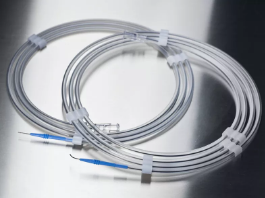
Many buyers begin by asking about model size, rolling speed, or output range. Those questions matter, but they often come too early. The more important starting point is this: what is going wrong in your current process? A Rolling Mill should not be viewed as a standalone machine. It is a production tool that must solve real operating problems.
In many workshops, the same frustrations appear again and again. Thickness drifts during long runs. Surface quality changes from batch to batch. Operators spend too much time adjusting settings. Material waste increases when changing dimensions. Production stops because maintenance is reactive rather than planned. Finished products fail internal inspection, which creates delivery pressure and customer complaints.
These issues do not only affect output. They also damage planning confidence. When a line is unpredictable, managers cannot commit comfortably to delivery dates, quality targets, or margin expectations. That is why buyers looking for a Rolling Mill should pay attention to process stability first. A stable machine does more than produce metal; it protects schedules, reduces internal friction, and helps the factory operate with less uncertainty.
- Unstable dimensional accuracy causes rejection and rework
- Frequent downtime interrupts production planning
- Excess scrap directly reduces material profitability
- Slow adjustment increases labor pressure and setup time
- Weak consistency makes quality control harder to manage
What should buyers check before choosing a Rolling Mill?
A good purchasing decision comes from matching the equipment to the process, not from choosing the most impressive sales language. Before selecting a Rolling Mill, buyers should evaluate the machine through the lens of their own material, target profile, precision requirement, and expected production rhythm.
The first checkpoint is application fit. Are you rolling flat wire, round wire, strip, shaped profiles, or another precision product? Different applications require different roll arrangements, control strategies, and tension coordination. A machine that performs well in one application may not be the best choice in another.
The second checkpoint is repeatability. Can the machine maintain stable results over time, not only during a short trial? Consistency across shifts, batches, and product changes is what determines whether the equipment will deliver real value after installation.
The third checkpoint is usability. Sophisticated equipment is helpful only when your team can operate, adjust, and maintain it without unnecessary complexity. A buyer should always ask whether the machine helps reduce dependence on individual operator habits.
| Evaluation Point | Why It Matters | What to Ask |
|---|---|---|
| Material compatibility | Different metals respond differently to rolling pressure and precision demands | Has this Rolling Mill been used for materials similar to ours? |
| Tolerance stability | Stable dimensions reduce rejects and improve downstream performance | How is precision controlled during continuous operation? |
| Changeover efficiency | Frequent switching can quietly consume time and profit | How long does it take to change product size or specification? |
| Maintenance access | Poor access increases downtime and service cost | Which parts require regular servicing and how easy are they to reach? |
| Technical support | A machine is only as useful as the support behind it | What kind of installation, training, and after-sales guidance is provided? |
How does the right Rolling Mill reduce cost and quality risk?
The cost of a machine is easy to see. The cost of poor process control is harder to measure, but it usually becomes much larger over time. A low-confidence Rolling Mill often leads to hidden losses in scrap, labor, downtime, delayed orders, quality disputes, and overcautious production planning.
On the other hand, the right machine improves the entire operating chain. Better dimensional control helps downstream steps run more smoothly. A predictable process reduces the need for constant manual correction. Stronger stability helps managers commit to output schedules with less risk. Better equipment also supports expansion because it gives the factory a stronger foundation for product upgrades and customer diversification.
Buyers who focus only on purchase price may save money at the beginning but lose flexibility later. Buyers who focus on total operating performance usually build a stronger and more profitable production system.
- Lower scrap means more sellable output from the same material input
- Better consistency reduces inspection pressure and complaint risk
- Faster setup supports small-batch and mixed-order production
- Smarter control reduces operator burden and variation
- Reliable running improves delivery confidence and customer trust
Which equipment features matter most in daily operation?
Buyers often compare specifications, but daily operation reveals what really matters. A strong Rolling Mill should combine precision, stability, and practicality. That means the machine must not only perform under ideal conditions, but also remain manageable during routine production, shifting product demands, and real factory pressure.
One key feature is structural rigidity. Good rigidity helps preserve stable deformation behavior and supports more reliable dimensional outcomes. Another important factor is control responsiveness. Operators need adjustment systems that are accurate, understandable, and efficient. Advanced control is valuable when it makes production easier rather than more complicated.
Integrated process coordination is also important. In many production environments, rolling quality is closely connected to feeding, tension handling, speed matching, and downstream collection. A machine that fits well into a broader line often creates more practical value than one that only looks strong as a standalone unit.
- Stable roll configuration for reliable forming performance
- Precise adjustment capability for fine tolerance control
- Smooth operating logic that helps reduce training difficulty
- Durable design for continuous industrial use
- Scalable configuration for changing production needs
- Support for intelligent control where process visibility matters
This is where experience from a specialized manufacturer becomes meaningful. GRM Machinery is known for focusing on precision rolling solutions across different metal processing applications, which makes the discussion more practical for buyers who need a machine aligned with actual production goals rather than generic catalog promises.
Where can a Rolling Mill create the most value?
A Rolling Mill creates the greatest value in industries where precision, repeatability, and surface quality directly affect downstream performance. In these sectors, the difference between average rolling and controlled rolling can influence not only product quality, but also final application reliability.
Precision metal processing is especially important for manufacturers serving demanding markets. If the final product must meet strict dimensional or functional expectations, then rolling quality becomes a strategic part of competitiveness rather than a basic workshop step.
| Application Area | Why Rolling Quality Matters |
|---|---|
| Electrical and electronic materials | Uniform dimensions and surface stability support better downstream performance and product consistency |
| Precision wire and strip production | Tight control is essential when products are thin, fine, or application-sensitive |
| Automotive and industrial components | Stable forming helps maintain quality expectations in high-volume manufacturing |
| Energy-related metal products | Precision and repeatability support product durability and process efficiency |
| Custom profile manufacturing | Flexible rolling capability makes specification changes more manageable |
Why do buyers care about the manufacturer behind the machine?
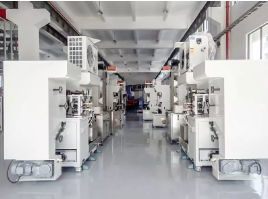
Even the most promising equipment can become frustrating if the supplier lacks application understanding, communication discipline, or technical follow-through. That is why experienced buyers do not evaluate a Rolling Mill only by machine photos or parameter sheets. They also examine the manufacturer’s focus, problem-solving ability, and willingness to support real production needs.
A capable supplier should be able to discuss material behavior, process expectations, tolerance targets, and line integration in a practical way. That conversation is often more revealing than a long product brochure. Buyers want confidence that the supplier understands the job to be done, not just the machine to be sold.
When working with GRM Machinery, many buyers are looking for exactly that kind of confidence: a partner that understands precision rolling applications, supports stable operation, and can help connect equipment capability with business goals. In a competitive market, that support can make the difference between a machine that merely runs and one that truly strengthens your production system.
FAQ
How do I know which Rolling Mill is right for my product?
Start with your material type, required dimensions, tolerance expectations, and production volume. The right choice depends on how closely the machine matches your real process rather than how broad its marketing claims appear.
Is a higher precision Rolling Mill always the better choice?
Not necessarily. The best machine is the one that balances precision, stability, operating simplicity, and cost effectiveness for your target application. Overbuying can create unnecessary complexity, while underbuying can create expensive process limitations.
Why does rolling consistency matter more than peak speed?
Peak speed looks attractive, but consistency is what protects quality, delivery, and profitability. A fast machine that produces unstable results often creates more hidden loss than a slightly slower machine with dependable performance.
What should I prepare before contacting a Rolling Mill supplier?
Prepare your material details, target finished dimensions, required tolerances, expected output, current process pain points, and any line integration requirements. The clearer your information, the more accurately the supplier can recommend a suitable solution.
Can GRM Machinery help with customized Rolling Mill solutions?
Yes. If your production involves specific dimensional targets, unique materials, or line-level coordination needs, a discussion with GRM Machinery can help identify a more suitable and practical equipment direction.
Ready to improve your production results?
If you are looking for a dependable Rolling Mill solution that supports precision, stability, and long-term manufacturing value, contact us today. The team at GRM Machinery is ready to discuss your material, process goals, and project requirements, and help you find a solution that fits your production with greater confidence.