
- English
- Español
- Português
- русский
- Français
- 日本語
- Deutsch
- tiếng Việt
- Italiano
- Nederlands
- ภาษาไทย
- Polski
- 한국어
- Svenska
- magyar
- Malay
- বাংলা ভাষার
- Dansk
- Suomi
- हिन्दी
- Pilipino
- Türkçe
- Gaeilge
- العربية
- Indonesia
- Norsk
- تمل
- český
- ελληνικά
- український
- Javanese
- فارسی
- தமிழ்
- తెలుగు
- नेपाली
- Burmese
- български
- ລາວ
- Latine
- Қазақша
- Euskal
- Azərbaycan
- Slovenský jazyk
- Македонски
- Lietuvos
- Eesti Keel
- Română
- Slovenski
- मराठी
- Srpski језик
- Esperanto
- Afrikaans
- Català
- שפה עברית
- Cymraeg
- Galego
- Latviešu
- icelandic
- ייִדיש
- беларускі
- Hrvatski
- Kreyòl ayisyen
- Shqiptar
- Malti
- lugha ya Kiswahili
- አማርኛ
- Bosanski
- Frysk
- ភាសាខ្មែរ
- ქართული
- ગુજરાતી
- Hausa
- Кыргыз тили
- ಕನ್ನಡ
- Corsa
- Kurdî
- മലയാളം
- Maori
- Монгол хэл
- Hmong
- IsiXhosa
- Zulu
- Yoruba
- অসমীয়া
- ଓଡିଆ
- Punjabi
- پښتو
- Chichewa
- Samoa
- Sesotho
- සිංහල
- Gàidhlig
- Cebuano
- Somali
- Тоҷикӣ
- O'zbek
- Hawaiian
- سنڌي
- Shinra
- Հայերեն
- Igbo
- Sundanese
- Lëtzebuergesch
- Malagasy

Why Choose a Complex Profile Rolling Mill?
Article Abstract
A Complex Profile Rolling Mill is built for manufacturers who need repeatable, high-precision profiles at scale—without living in a constant loop of scrap, rework, and changeover headaches. This article breaks down the most common customer pain points (tolerance drift, profile twist, surface marks, tooling wear, long setup times, unstable yield, and inconsistent downstream fit-up) and turns them into clear buying and implementation criteria. You’ll also get a practical checklist, a feature-to-verification table you can use during supplier discussions, and an FAQ that answers the questions teams ask right before they commit.
Table of Contents
- Outline at a Glance
- What Makes a Profile “Complex” in Roll Forming
- Customer Pain Points and What They Usually Mean
- How to Choose the Right Mill Without Overpaying
- Keeping Tolerances Stable: Process Controls That Matter
- Tooling, Changeover, and Maintenance: Where Time Gets Lost
- Cost, Throughput, and ROI: A Practical Way to Evaluate
- Implementation Checklist
- FAQ
- About GRM Rolling Mill
- Next Step
Outline at a Glance
- Define what “complex profile” really means in real production terms
- Map pain points to root causes you can verify before purchase
- Identify must-have capabilities vs. nice-to-haves for your profile family
- Build a stable quality loop using measurement, setup discipline, and control points
- Reduce downtime with smarter tooling, faster changeover, and maintainability
- Evaluate ROI using scrap, labor, output stability, and downstream fit-up costs
What Makes a Profile “Complex” in Roll Forming
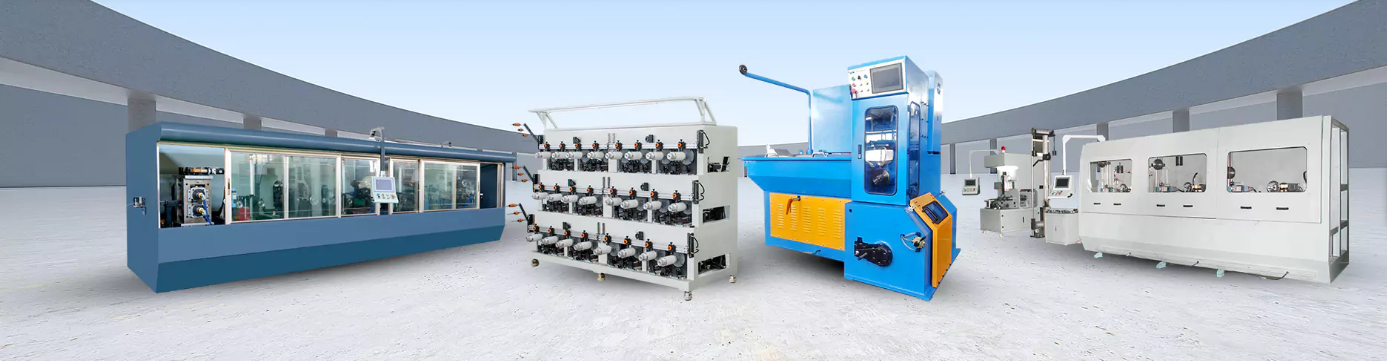
“Complex” usually doesn’t mean “fancy.” It means the profile is unforgiving: small deviations create big problems later. In practical terms, a profile tends to be complex when it includes several of the factors below:
- Multiple bends and radii that must stay consistent along the entire length
- Asymmetry (one side shaped differently from the other), making twist control harder
- Deep channels, lips, hems, or returns that amplify springback and forming stress
- Tight mating requirements with other parts (clip-in, snap-fit, seal compression, or sliding interfaces)
- Surface-sensitive material where marks, scuffs, or edge wave become customer-visible defects
- Post-process constraints such as punching, notching, embossing, or cut-to-length tolerances
The goal of a Complex Profile Rolling Mill is to keep geometry stable at production speed while staying controllable during setup and changeover. If your current process relies on “operator feel” to keep things within tolerance, it will eventually fail—usually on the day you need output the most.
Customer Pain Points and What They Usually Mean
If you’re shopping for a mill, you probably already have scars: rejected batches, parts that “almost fit,” or lines that can’t hold a tolerance after lunch. Below are the pain points buyers mention most—and what they typically point to.
| Pain Point | Common Root Cause | What to Ask/Verify | What “Good” Looks Like |
|---|---|---|---|
| Profile twist or camber varies by coil | Unbalanced forming, poor entry guidance, insufficient straightening | Entry guide design, straightener capability, stand alignment method | Stable geometry across coil lots with predictable adjustment points |
| Edge wave, oil-canning, or buckle | Improper strain distribution, too aggressive pass design, material variability | Pass design approach, material window, forming simulation/validation process | Defined material range with documented pass strategy and trials |
| Surface scratches or roll marks | Roll finish/material mismatch, debris control, inadequate lubrication strategy | Roll material/heat treatment, surface finish, cleaning and protection practices | Repeatable surface quality with controllable wear and simple cleaning routines |
| Frequent rework after changeover | Tooling repeatability issues, lack of reference datums, inconsistent setup steps | Quick-change system, datum strategy, documented setup procedure | Changeover returns to “near-final” settings with minimal trial runs |
| Cut length drifts or ends deform | Inadequate cut-to-length integration, poor support near shear, speed mismatch | Cut system type, synchronization, support/hold-down near cut | Clean ends with stable length accuracy and minimal end distortion |
| Tooling wears fast, tolerances fade | Overstressed passes, wrong roll hardness/finish, misalignment | Roll life expectations, alignment method, maintenance access | Predictable wear intervals and fast maintenance without “mystery drift” |
Notice the theme: the biggest problems are rarely “one bad roll.” They’re systems problems—alignment discipline, controllability, measurement, and repeatability. A mill that’s designed for complex profiles should make these things easier, not harder.
How to Choose the Right Mill Without Overpaying
Complex profiles can push buyers into buying “the most expensive everything,” but that’s not always the smartest move. Instead, choose based on your profile family, material behavior, and how often you change over.
-
Start with the profile tolerance that matters most
Don’t treat every dimension equally. Identify the 2–4 critical-to-fit dimensions and plan controls around them. -
Define your material window
Coil consistency, yield strength variation, and surface requirements strongly influence pass design and stability. If your suppliers vary, your mill needs more controllability and better guidance. -
Match the mill architecture to complexity
More demanding profiles benefit from robust stand structure, stable drive, reliable adjustment mechanisms, and repeatable tooling mounting. -
Decide how much automation you truly need
Automation is valuable when you change over often, produce high volumes, or must document quality. If you run one profile for months, simpler systems may outperform “feature-heavy” ones in uptime.
A good supplier will help translate your drawing into a forming strategy: pass design logic, control points, expected risks, and how adjustments affect results. If a supplier can’t explain this clearly, you’ll pay later—in scrap.
Keeping Tolerances Stable: Process Controls That Matter
Complex profiles don’t fail all at once. They drift. The fix is not “a better operator” alone—it’s a tighter loop between setup, measurement, and controlled adjustment.
-
Repeatable alignment and referencing
When stands and tooling reference points are consistent, adjustments become predictable rather than experimental. -
Documented setup steps that match real physics
Setup should follow the forming sequence: entry straightening → early shaping → stabilization → final sizing. Skipping around creates chaos in complex profiles. -
In-process checks with fast feedback
Even simple gauges, go/no-go fixtures, and periodic dimension logging can prevent “drift until failure.” If your quality checks happen only after cutting a full batch, you’re paying tuition in scrap. -
Control of speed, tension, and support
Stability improves when speed ramps are smooth and the strip is properly supported through forming and cutting.
The best mill is the one that keeps output consistent across operators, shifts, and coil lots. That consistency comes from design choices that prioritize controllability and repeatability—not just “maximum speed.”
Tooling, Changeover, and Maintenance: Where Time Gets Lost
Many buyers focus on the mill purchase price, then quietly bleed money in downtime. For complex profiles, the most expensive minute is the minute after changeover when nobody trusts the first parts.
-
Tooling repeatability
Quick-change or cassette-style tooling can reduce variability if it returns to the same datums every time. “Fast changeover” without repeatability is just fast confusion. -
Accessible maintenance points
Complex profiles demand alignment discipline. If bearings, spacers, and adjustment points are hard to access, maintenance gets delayed—and drift becomes “normal.” -
Wear strategy, not wear surprises
Ask how roll wear is expected to show up (which dimensions move first), and how to compensate before parts go out of spec. -
Training and documentation
Your best operator will not live forever. The line should run well with ordinary humans—supported by clear instructions, reference measurements, and standard checks.
Cost, Throughput, and ROI: A Practical Way to Evaluate
If your current process “works,” the question becomes: is it working profitably and reliably? Use this simple framework to evaluate return:
- Scrap and rework: What percentage of production gets downgraded, reworked, or rejected?
- Changeover time: How many hours per month are spent chasing settings after changeovers?
- Labor stability: Does output depend on a single expert operator?
- Downstream fit-up cost: Are you paying later in assembly time, sealing issues, or warranty returns?
- Material flexibility: Can you run the material you can actually buy, not just the “ideal” coil?
A well-designed Complex Profile Rolling Mill can improve all five categories. Even modest gains stack fast when you run large batches—especially if your profile is used in parts where “almost fits” is the same as “doesn’t ship.”
Implementation Checklist
Before you finalize a mill specification, run through this checklist. It’s short on purpose—because teams actually use short lists.
- Profile definition: Critical-to-fit dimensions identified and prioritized
- Material range: Thickness, grade window, surface requirements clarified
- Downstream steps: Punching/notching/cut-to-length requirements documented
- Quality plan: In-process checks defined (what to measure, how often, and acceptable drift)
- Changeover plan: Target changeover time and repeatability method agreed
- Maintenance plan: Wear parts, access points, and routine schedule defined
- Acceptance criteria: Trial run conditions and pass/fail rules set before purchase
FAQ
-
Q: What is the biggest difference between a standard roll forming line and a Complex Profile Rolling Mill?
A: The difference is controllability and repeatability. Complex profiles amplify small errors, so the mill needs stronger guidance, stable adjustment mechanisms, and a forming strategy designed to hold critical dimensions consistently—not just “make the shape once.”
-
Q: Why do complex profiles twist even when the drawing looks balanced?
A: Twist can come from asymmetric forming forces, material variability, entry guidance issues, or pass design that concentrates strain unevenly. The fix is usually a combination of better entry/straightening, disciplined alignment, and pass strategy adjustments—not just slowing down.
-
Q: How can we reduce scrap during setup and after changeovers?
A: Focus on repeatable datums, documented setup steps, and quick verification gauges for the critical dimensions. Also consider tooling and stand systems that return to known positions reliably, so you’re adjusting from a stable baseline rather than “starting over” each time.
-
Q: What should we prepare before asking for a quotation?
A: Provide the profile drawing, target tolerances (and which dimensions matter most), expected material range, coil information, production volume, and any downstream operations like punching or cut-to-length. The clearer your inputs, the more accurate the forming strategy and the fewer unpleasant surprises later.
-
Q: Can one mill handle multiple complex profiles?
A: Often yes—if the profiles share a similar forming “family” and the line is designed for efficient changeover. The main limiter is usually tooling complexity and how much adjustment range is available without sacrificing stability.
-
Q: How do we keep quality consistent across different coils or suppliers?
A: Define an acceptable material window, keep setup references consistent, and implement in-process checks that catch drift early. If material variation is unavoidable, prioritize a mill design that makes adjustments predictable and repeatable.
About GRM Rolling Mill
GRM Rolling Mill focuses on roll forming solutions designed for stable production and repeatable output—especially where complex geometry, tight fit-up, and process consistency matter. If your team is trying to scale a demanding profile while reducing scrap, downtime, and “operator-dependent” results, a purpose-built Complex Profile Rolling Mill can be the difference between a line that merely runs and a line you can confidently schedule.
Next Step
If you’re evaluating a Complex Profile Rolling Mill for an upcoming project, bring your drawing, material details, target output, and the top two pain points you want to eliminate. We’ll help you translate those realities into a practical forming plan and a configuration that makes sense for your production.
Ready to move from “it almost fits” to consistent, ship-ready parts—every shift? Contact us to discuss your profile, requirements, and the most reliable path to stable roll forming production.