
- English
- Español
- Português
- русский
- Français
- 日本語
- Deutsch
- tiếng Việt
- Italiano
- Nederlands
- ภาษาไทย
- Polski
- 한국어
- Svenska
- magyar
- Malay
- বাংলা ভাষার
- Dansk
- Suomi
- हिन्दी
- Pilipino
- Türkçe
- Gaeilge
- العربية
- Indonesia
- Norsk
- تمل
- český
- ελληνικά
- український
- Javanese
- فارسی
- தமிழ்
- తెలుగు
- नेपाली
- Burmese
- български
- ລາວ
- Latine
- Қазақша
- Euskal
- Azərbaycan
- Slovenský jazyk
- Македонски
- Lietuvos
- Eesti Keel
- Română
- Slovenski
- मराठी
- Srpski језик
- Esperanto
- Afrikaans
- Català
- שפה עברית
- Cymraeg
- Galego
- Latviešu
- icelandic
- ייִדיש
- беларускі
- Hrvatski
- Kreyòl ayisyen
- Shqiptar
- Malti
- lugha ya Kiswahili
- አማርኛ
- Bosanski
- Frysk
- ភាសាខ្មែរ
- ქართული
- ગુજરાતી
- Hausa
- Кыргыз тили
- ಕನ್ನಡ
- Corsa
- Kurdî
- മലയാളം
- Maori
- Монгол хэл
- Hmong
- IsiXhosa
- Zulu
- Yoruba
- অসমীয়া
- ଓଡିଆ
- Punjabi
- پښتو
- Chichewa
- Samoa
- Sesotho
- සිංහල
- Gàidhlig
- Cebuano
- Somali
- Тоҷикӣ
- O'zbek
- Hawaiian
- سنڌي
- Shinra
- Հայերեն
- Igbo
- Sundanese
- Lëtzebuergesch
- Malagasy

Why Choose a Flat Wire Rolling Mill That Solves Precision and Yield Problems?
Article Summary
If you are producing flat wire for electrical conductors, welding strips, heating elements, precision components, or specialty alloys, the biggest headaches are rarely “just rolling.” Most buyers struggle with thickness consistency, edge quality, unstable tension, frequent setup changes, tool wear, scrap spikes, and throughput that drops whenever product specifications change.
This article explains how the right Flat Wire Rolling Mill can address those pain points in a practical way. We break down what to check before buying, what configuration decisions affect product quality, how to reduce downtime, and how to evaluate long-term operating cost instead of only the purchase price. We also include a selection checklist, a comparison table, and an FAQ to help you make a confident decision.
Table of Contents
- Article Outline
- What Problems Are Buyers Usually Trying to Solve?
- How Does a Flat Wire Rolling Mill Improve Product Stability?
- Which Selection Criteria Matter Before You Buy?
- What Should You Compare Beyond the Quotation Price?
- How Can You Reduce Risk During Installation and Ramp-Up?
- Why Do Many Buyers Discuss Customization Early With GRM Rolling Mill?
- FAQ
- Conclusion
Article Outline
- Identify the production pain points that actually hurt margin and delivery performance.
- Explain how rolling stability, pass design, tension control, and measurement consistency influence final flat wire quality.
- Provide a practical buying framework for materials, dimensions, tolerances, output targets, and future expansion.
- Show a comparison table to evaluate total value, not just machine price.
- Share ramp-up and operation tips to shorten time-to-stable production.
- Answer common buyer questions for first-time and upgrade projects.
What Problems Are Buyers Usually Trying to Solve?
Many factories start looking for a Flat Wire Rolling Mill only after quality complaints or capacity bottlenecks become impossible to ignore. The problem is not always obvious at first. A team may think they need “a faster line,” but the real loss comes from rework, unstable dimensions, or frequent manual adjustments.
Here are the most common pain points customers bring to suppliers:
- Thickness variation that causes downstream winding, forming, coating, or assembly issues.
- Poor edge quality that creates burrs, cracks, or inconsistent profile geometry.
- High scrap rate during startup, shift changes, or product changeover.
- Low repeatability when producing multiple sizes or materials on the same line.
- Manual setup dependence that makes output quality depend too much on operator experience.
- Roll wear and maintenance downtime that reduce actual production hours.
- Tension instability that causes surface marks, dimension drift, or coil quality problems.
- Limited expansion capability when product demand grows or new specifications are introduced.
If any of these sound familiar, you are not simply buying a machine. You are fixing a process system. That is why the right solution must match your material type, target tolerances, line speed, coil handling method, and future product roadmap.
How Does a Flat Wire Rolling Mill Improve Product Stability?
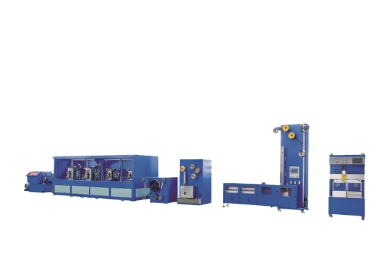
A modern Flat Wire Rolling Mill is more than a rolling stand. It is a coordinated production platform built around deformation control, repeatability, and monitoring. When configured correctly, it helps transform a round wire or preform into flat wire with controlled thickness, width, and surface condition over multiple passes.
The biggest performance jump usually comes from consistency, not from headline speed. A stable process makes each coil more predictable, reduces intervention, and protects downstream equipment from dimension-related defects.
In practice, the machine contributes to stability in several ways:
- Rigid mechanical structure: reduces vibration and deformation under load, supporting dimensional repeatability.
- Precise adjustment control: enables finer control of thickness reduction across passes.
- Better roll and pass management: improves edge formation and lowers defect risk.
- Tension management options: helps maintain steady wire behavior between processing stages.
- Measurement and feedback support: gives operators visibility to correct trends early instead of scrapping full coils.
- Automation and stored recipes: improves repeatability when switching among different product sizes.
This is especially important for customers making products with strict downstream requirements. A small deviation in flat wire can trigger larger issues later, such as uneven insulation coating, winding misalignment, poor soldering behavior, or lower assembly efficiency. In other words, the mill does not just affect rolling quality; it can shape the performance of your entire production chain.
Which Selection Criteria Matter Before You Buy?
Buyers often focus on one number first: capacity. But capacity alone can be misleading if the process becomes unstable at higher speed, or if the line cannot maintain the tolerance your customers require. A better approach is to evaluate a Flat Wire Rolling Mill based on production fit, control capability, maintainability, and upgrade flexibility.
Start with application clarity. Before requesting a quotation, define the following as clearly as possible:
- Input material type (for example, copper, aluminum, alloy, stainless steel, or specialty materials)
- Incoming wire dimensions and condition
- Target flat wire width and thickness range
- Tolerance expectations and surface quality requirements
- Required output (hourly, daily, and monthly)
- Product mix complexity (single product or frequent changeovers)
- Coiling and downstream process requirements
- Plant constraints such as floor space, power, cooling, and staffing
Then evaluate process compatibility. A machine that looks strong on paper may still be a poor choice if its configuration does not align with your production reality. Ask how the proposed setup handles your target dimensions, how pass schedules are managed, and what support is available for future variants.
Pay attention to operational practicality. Many long-term losses come from slow adjustments, complicated maintenance access, and limited parts support. A practical line should help your team stay productive across shifts, not just perform well during the supplier demo.
A Useful Buying Mindset
Treat the project as a productivity upgrade, not just an equipment purchase. The best machine is the one that consistently produces sellable flat wire with the least waste, the shortest changeover time, and the fewest unplanned stops.
What Should You Compare Beyond the Quotation Price?
A low initial price can become expensive if the line creates scrap, needs frequent manual tuning, or cannot expand when product demand changes. The table below helps procurement, engineering, and production teams evaluate proposals using business-relevant criteria.
| Comparison Item | Why It Matters | What to Ask the Supplier |
|---|---|---|
| Dimensional Stability | Directly impacts rejection rate, rework, and customer complaints. | How is thickness/width consistency controlled and monitored during production? |
| Changeover Efficiency | Affects output when you run multiple specifications. | How long does typical setup take, and which adjustments are manual vs. assisted? |
| Maintenance Accessibility | Determines downtime length and operator efficiency. | How are roll changes, lubrication points, and wear-part replacement handled? |
| Automation & Recipe Management | Improves repeatability across shifts and reduces operator dependence. | Can process settings be stored and reused for recurring products? |
| Tension & Coil Handling Compatibility | Supports surface quality and coil consistency. | What options are available for tension control and winding integration? |
| Scalability / Modularity | Protects investment when you add products or capacity later. | Can the line be expanded or reconfigured without replacing the core system? |
| Technical Support & Training | Critical during commissioning and early production ramp-up. | What training, commissioning guidance, and troubleshooting support are included? |
| Total Operating Cost | Long-term cost driver beyond equipment purchase price. | What are expected wear parts, maintenance intervals, and utility requirements? |
Tip: Align engineering and procurement on the same scorecard before comparing quotations. This prevents a “cheaper machine, higher operating loss” outcome.
How Can You Reduce Risk During Installation and Ramp-Up?
Even an excellent Flat Wire Rolling Mill can underperform if ramp-up is rushed. The first production weeks are where many projects lose confidence, usually because the team expects instant full-speed output without enough process validation.
A smoother rollout usually follows this sequence:
- Define acceptance targets early: confirm dimension tolerances, surface expectations, and coil quality before commissioning.
- Prepare representative materials: run the same material grades and sizes you plan to sell, not only easy test material.
- Create startup recipes: document initial settings by product type and keep revision history.
- Train operators by scenario: include normal production, changeover, alarms, and defect response procedures.
- Track scrap by cause: separate startup scrap, adjustment scrap, and defect scrap so improvement actions are precise.
- Build a maintenance rhythm early: routine checks prevent “mystery instability” later.
The goal is not to reach maximum speed on day one. The goal is to establish a repeatable process window. Once the process is stable, speed optimization becomes safer and much more effective.
Why Do Many Buyers Discuss Customization Early With GRM Rolling Mill?
In flat wire production, requirements vary widely across industries and materials. That is why many buyers prefer to discuss their application details early with GRM Rolling Mill instead of requesting a generic quotation first. Early technical communication helps avoid mismatch between machine configuration and actual production goals.
A useful conversation with a supplier is not just “What is the price?” It should include your target dimensions, tolerances, output expectations, material types, planned product expansion, and current bottlenecks. When these details are clear, the proposed solution can be aligned to real operational needs rather than a one-size-fits-all setup.
For buyers, this approach often leads to better project planning, more realistic commissioning expectations, and a stronger basis for internal approval because engineering and purchasing can evaluate the same production objectives.
FAQ
Q1: What is the biggest mistake when buying a Flat Wire Rolling Mill?
The most common mistake is choosing based only on initial price or rated speed. If the machine cannot maintain stable dimensions, edge quality, and repeatable setup performance for your actual product mix, your long-term cost can rise quickly through scrap, rework, and downtime.
Q2: How do I know whether I need a customized solution?
If you process multiple materials, require tight tolerances, change sizes frequently, or expect future product expansion, customization is often worth discussing. A tailored configuration can improve consistency and reduce operational friction.
Q3: Can one Flat Wire Rolling Mill handle different product specifications?
In many cases, yes, but the practical range depends on machine design, tooling strategy, control capability, and process planning. You should confirm the working range and changeover expectations with the supplier before purchase.
Q4: What information should I prepare before asking for a quotation?
Prepare material type, incoming dimensions, target width and thickness range, tolerance requirements, desired output, coil requirements, and any downstream process constraints. The clearer your data, the more useful the proposal.
Q5: How long does it usually take to reach stable production after installation?
It depends on product complexity, operator experience, and process preparation. Projects move faster when acceptance targets, test materials, recipe documentation, and training plans are defined before commissioning starts.
Q6: What should I prioritize if my current pain point is high scrap?
Prioritize process stability and repeatability: adjustment precision, tension control compatibility, recipe management, measurement visibility, and operator-friendly setup. Scrap reduction usually comes from consistent control rather than speed alone.
Conclusion
Choosing a Flat Wire Rolling Mill is a strategic production decision. The right system helps you reduce scrap, stabilize dimensions, improve edge quality, shorten changeover time, and support future product growth. The wrong choice can lock your factory into avoidable losses for years.
If you are evaluating a new line or planning an upgrade, define your real production pain points first, compare proposals using total value criteria, and align engineering with purchasing before final selection. This approach leads to better output quality and better business results.
Ready to improve your flat wire production performance?
Share your material type, target dimensions, tolerance requirements, and output goals with GRM Rolling Mill, and get a solution discussion built around your actual process needs. Whether you are upgrading an existing line or launching a new project, contact us to explore a practical configuration that supports stable quality and long-term growth.