
- English
- Español
- Português
- русский
- Français
- 日本語
- Deutsch
- tiếng Việt
- Italiano
- Nederlands
- ภาษาไทย
- Polski
- 한국어
- Svenska
- magyar
- Malay
- বাংলা ভাষার
- Dansk
- Suomi
- हिन्दी
- Pilipino
- Türkçe
- Gaeilge
- العربية
- Indonesia
- Norsk
- تمل
- český
- ελληνικά
- український
- Javanese
- فارسی
- தமிழ்
- తెలుగు
- नेपाली
- Burmese
- български
- ລາວ
- Latine
- Қазақша
- Euskal
- Azərbaycan
- Slovenský jazyk
- Македонски
- Lietuvos
- Eesti Keel
- Română
- Slovenski
- मराठी
- Srpski језик
- Esperanto
- Afrikaans
- Català
- שפה עברית
- Cymraeg
- Galego
- Latviešu
- icelandic
- ייִדיש
- беларускі
- Hrvatski
- Kreyòl ayisyen
- Shqiptar
- Malti
- lugha ya Kiswahili
- አማርኛ
- Bosanski
- Frysk
- ភាសាខ្មែរ
- ქართული
- ગુજરાતી
- Hausa
- Кыргыз тили
- ಕನ್ನಡ
- Corsa
- Kurdî
- മലയാളം
- Maori
- Монгол хэл
- Hmong
- IsiXhosa
- Zulu
- Yoruba
- অসমীয়া
- ଓଡିଆ
- Punjabi
- پښتو
- Chichewa
- Samoa
- Sesotho
- සිංහල
- Gàidhlig
- Cebuano
- Somali
- Тоҷикӣ
- O'zbek
- Hawaiian
- سنڌي
- Shinra
- Հայերեն
- Igbo
- Sundanese
- Lëtzebuergesch
- Malagasy

How Can Reduction Rolling Mills Deliver Tighter Tolerances Without Killing Throughput?
Article Abstract
When customers shop for Reduction Rolling Mills, they’re rarely chasing “a machine” in the abstract. They’re trying to stop very real production headaches: inconsistent diameter, ovality that refuses to behave, surface finish that sparks downstream rework, and changeovers that eat the shift alive. This guide breaks down what a reduction rolling mill actually does, where it fits versus drawing or forging, and—most importantly—how to evaluate a line so it solves quality and productivity pain points at the same time. You’ll also find a practical selection checklist, a comparison table, and FAQs to help you make decisions with fewer surprises.
Quick takeaway: The best Reduction Rolling Mills aren’t “fast” or “accurate” in isolation. They’re designed as a controlled system—pass design, temperature management, roll-gap stability, guiding, and measurement working together— so the output stays predictable even when material, operators, or orders change.
Table of Contents
- Outline at a Glance
- The Real Problems Buyers Are Trying to Fix
- What a Reduction Rolling Mill Does
- Where It Fits in a Production Line
- Design Features That Actually Move the Needle
- Comparison Table for Common Decision Scenarios
- A Practical Buyer’s Checklist
- Operations, Maintenance, and Training
- What to Expect From GRM on Real Projects
- FAQ
- Next Steps
Outline at a Glance
- Diagnose pain points: tolerance drift, ovality, finish, scrap, and bottlenecks.
- Understand the mechanism: multi-pass rolling reduces OD and improves geometry through controlled deformation.
- Evaluate system design: guiding, roll-gap stability, cooling, and measurement are as important as “horsepower.”
- Choose confidently: use the checklist to match product mix, material behavior, and growth plans.
- Run sustainably: maintenance strategy and operator training protect your investment long-term.
The Real Problems Buyers Are Trying to Fix
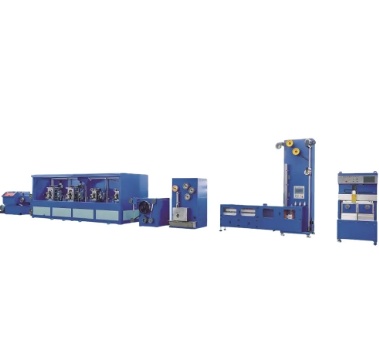
If you’ve ever watched a batch that “should” be simple turn into a full-day firefight, you already know the pain behind the purchase. Most buyers of Reduction Rolling Mills are trying to solve a blend of quality and productivity issues—not just one.
- Diameter variation and drift: You start the run in spec, then the last coil mysteriously isn’t. This often comes from roll-gap instability, temperature swings, inconsistent feed geometry, or material variability.
- Ovality and poor straightness: Round products that aren’t round cause downstream assembly trouble, vibration, leakage, or premature wear. In many cases, guiding and pass design matter as much as raw rolling force.
- Surface issues that trigger rework: Roughness, chatter marks, or scale-related defects can push finishing cost through the roof. Lubrication strategy, roll condition, cooling, and process stability all show up on the surface.
- Changeovers that punish you: When orders are smaller and product mix is wider, slow roll changes can turn your line into a schedule risk.
- Unpredictable “tribal knowledge” operation: If only one operator can run it “right,” you don’t have a process—you have a dependency.
Buyer mindset shift: Don’t ask, “How fast is the mill?” Ask, “How consistently can the mill hold geometry and finish at speed across my worst-case material and order mix?”
What a Reduction Rolling Mill Does
A reduction rolling mill is built to reduce the outer diameter of metal bars, tubes, or similar products through rolling deformation. Instead of pulling material through a die (drawing), the mill uses multiple rolling passes (stands) to gradually shape the product. This matters because gradual, controlled deformation can improve dimensional consistency and geometry—especially when combined with solid guiding and stable roll-gap control.
In plain terms: Reduction Rolling Mills work like a disciplined series of “small corrections” rather than one aggressive step. Each pass takes a portion of the reduction, keeping the process controllable and reducing the risk of defects caused by overloading a single stage.
Where It Fits in a Production Line
Most lines that use Reduction Rolling Mills are trying to connect upstream heating/preparation with downstream coiling, straightening, cutting, inspection, or packaging. Where the mill sits depends on your product and quality targets:
- After heating: Useful when material needs controlled temperature for formability or surface behavior.
- With inline measurement: Helps stabilize output and reduce “guess-and-check” adjustments.
- Before finishing: Better geometry can lower grinding/polishing burden and improve final yield.
- With coiling or cut-to-length: Output handling must match your speed and product stiffness.
If you’re currently using drawing for size control, a rolling approach can be attractive when you want higher throughput, fewer consumables, or better control of ovality—provided your process design matches the material and reduction targets.
Design Features That Actually Move the Needle
Specs look impressive on paper, but buyers get burned when key system details are missing. Here are the design areas that tend to decide whether Reduction Rolling Mills feel “effortless” or “fragile” in real production.
- Multi-pass flexibility: A mill that supports a wider pass range lets you tune for different alloys, starting sizes, and finish requirements. More importantly, it helps you avoid forcing one pass to do too much.
- Independent control of roll gap and speed: When adjustment is precise and repeatable, you can stop “chasing” the dimension. Consistency beats heroics.
- Inline measurement and closed-loop correction: Continuous diameter feedback can reduce scrap caused by drift and shorten startup time. Even better if it logs data for traceability and troubleshooting.
- Temperature management around the rolls: Cooling design influences roll life, stability, and surface finish. Tight thermal control is often the difference between “stable all shift” and “mysteriously off after lunch.”
- Quick-change roll modules: For mixed orders, faster changeover is a profit lever, not a convenience. It also makes maintenance less disruptive.
- Durable roll materials and corrosion resistance: Roll wear changes geometry. Wear also changes how operators compensate—often inconsistently. Build materials matter because they protect your process window.
- Guiding and support for multiple shapes: Round-to-round sounds simple until you fight ovality. Strong guiding helps keep the material centered and reduces shape errors.
- Automation readiness: Remote monitoring, alarms, and data connectivity aren’t “luxury features” when your downtime is expensive. They help you diagnose issues faster and standardize operation across shifts.
Pro tip: Ask the supplier to walk you through a “bad day” scenario—material variability, temperature fluctuation, a fast changeover— and explain how the mill design keeps output steady. The answer reveals more than a brochure ever will.
Comparison Table for Common Decision Scenarios
Not every shop needs the same configuration. Use this table to align your main pain point with the design emphasis that tends to solve it.
| What’s hurting you most | What to prioritize in the mill | What success looks like |
|---|---|---|
| Diameter drift across a run | Stable roll-gap control, inline measurement, consistent cooling | Less scrap at tail-end, shorter startup tuning, predictable output |
| Ovality / shape inconsistency | Guiding design, pass strategy, stand alignment, rigidity | Tighter geometry, fewer downstream fit issues, smoother assembly |
| Surface finish rework | Roll condition management, lubrication strategy, thermal stability | Lower polishing/grinding load, fewer surface-related rejects |
| Changeovers eat your schedule | Quick-change modular rolls, repeatable setup, clear parameter recipes | Faster product switches, higher OEE, fewer “trial runs” |
| Maintenance surprises | Accessible design, standard components, condition monitoring | Planned downtime instead of emergency stops |
A Practical Buyer’s Checklist
If you’re comparing suppliers, this checklist keeps you focused on what protects output quality and long-term ownership cost. Bring it to your next technical call or factory visit.
- Product range: Starting size, target size, and how often they change.
- Material behavior: Carbon steel vs stainless vs alloy, and sensitivity to heat and surface defects.
- Reduction plan: How many passes do you need for your toughest reductions without forcing defects?
- Measurement strategy: Do you want inline diameter checking and data logging?
- Thermal control: How does the system manage roll and material temperature stability?
- Changeover time: What is the realistic roll-change workflow with your team?
- Drive and control: How fine is the adjustment resolution, and how repeatable are recipes across shifts?
- Spare parts and support: What’s stocked, what’s lead time, and what training is included?
- Safety and ergonomics: Guarding, interlocks, pinch-point management, and clear operating procedures.
Decision shortcut: If a supplier can’t describe how they stabilize geometry (not just “reduce diameter”), you’re likely buying future troubleshooting.
Operations, Maintenance, and Training
A reduction mill earns its keep over years, not weeks. That means ownership details matter: how quickly you can diagnose drift, how you manage roll wear, how you standardize recipes, and how you train operators so the process doesn’t live in one person’s head.
- Standardize setup: Keep parameter “recipes” by material and size. Record what works and why. Consistency prevents well-meaning but harmful tweaks.
- Plan roll care: Roll surface and geometry influence product surface and size. Routine inspection, cleaning, and replacement planning reduce the “mystery problems.”
- Use data when you have it: Even basic logs—temperature, speed, pass settings—help isolate root causes instead of guessing.
- Train for scenarios: Teach operators what to do when ovality rises, when surface quality drops, or when temperature drifts, so the response is controlled—not improvised.
In many shops, the jump in performance isn’t only from buying Reduction Rolling Mills; it’s from turning the rolling step into a documented, repeatable system.
What to Expect From GRM on Real Projects
If you’re evaluating Reduction Rolling Mills for a production upgrade or a new line, it helps when the supplier speaks the language of real constraints: mixed orders, tight timelines, variable raw material, and limited tolerance for downtime.
GRM focuses on building reduction rolling solutions that emphasize controllability and repeatability—because buyers don’t just want an “accurate” result once; they want it on every shift, with documented settings, and with support that keeps the line stable after commissioning. In practical terms, that means discussing pass strategy, guiding, thermal stability, and measurement options early—so the configuration fits your product mix instead of forcing your product mix to fit the machine.
What you should ask GRM (or any supplier): “Show me a typical process flow for my starting size and target size, and explain where stability comes from.” The best suppliers answer with a system, not a slogan.
FAQ
Can Reduction Rolling Mills replace drawing for diameter control?
Sometimes, yes—but it depends on your size range, material, and finish requirements. Rolling can be attractive when you want higher throughput, fewer die-related consumables, and stronger control of geometry through multi-pass shaping. Many facilities also use both: rolling for efficient reduction and drawing for specific final tolerances or surface needs.
What causes ovality even when the target diameter is correct?
Ovality often comes from guiding issues, stand alignment, uneven deformation across passes, or instability caused by temperature fluctuation and roll wear. Fixing it typically requires a combination of better guiding, more stable pass design, and consistent operating conditions—not just “adjusting the gap.”
How do I estimate the number of passes I need?
Start with your maximum reduction requirement and material formability. A conservative multi-pass plan usually improves stability and surface quality. Your supplier should propose a pass strategy that avoids overloading any single stand and includes how you’ll measure and verify output during production.
Does inline measurement really reduce scrap?
It can, especially when it shortens startup tuning and catches drift early. The biggest benefit is consistency: you reduce reliance on manual checks, respond faster to change, and build a clearer record of what happened when something goes off-track.
What should I look for in after-sales support?
Focus on response time, spare part availability, training depth, and the supplier’s ability to help you standardize parameters. A strong support package should help you maintain stable operation, not merely “replace parts when broken.”
Next Steps
If your operation is struggling with size drift, ovality, surface rework, or slow changeovers, the right Reduction Rolling Mills setup can turn those problems into a stable, repeatable process—provided you evaluate the system as a whole: pass plan, guiding, thermal control, measurement, and support.
Want a configuration recommendation based on your starting size, target diameter, material grade, and daily output goals? Share your basic requirements and contact us—GRM can help map a practical rolling solution that balances tolerance, finish, and throughput.