
- English
- Español
- Português
- русский
- Français
- 日本語
- Deutsch
- tiếng Việt
- Italiano
- Nederlands
- ภาษาไทย
- Polski
- 한국어
- Svenska
- magyar
- Malay
- বাংলা ভাষার
- Dansk
- Suomi
- हिन्दी
- Pilipino
- Türkçe
- Gaeilge
- العربية
- Indonesia
- Norsk
- تمل
- český
- ελληνικά
- український
- Javanese
- فارسی
- தமிழ்
- తెలుగు
- नेपाली
- Burmese
- български
- ລາວ
- Latine
- Қазақша
- Euskal
- Azərbaycan
- Slovenský jazyk
- Македонски
- Lietuvos
- Eesti Keel
- Română
- Slovenski
- मराठी
- Srpski језик
- Esperanto
- Afrikaans
- Català
- שפה עברית
- Cymraeg
- Galego
- Latviešu
- icelandic
- ייִדיש
- беларускі
- Hrvatski
- Kreyòl ayisyen
- Shqiptar
- Malti
- lugha ya Kiswahili
- አማርኛ
- Bosanski
- Frysk
- ភាសាខ្មែរ
- ქართული
- ગુજરાતી
- Hausa
- Кыргыз тили
- ಕನ್ನಡ
- Corsa
- Kurdî
- മലയാളം
- Maori
- Монгол хэл
- Hmong
- IsiXhosa
- Zulu
- Yoruba
- অসমীয়া
- ଓଡିଆ
- Punjabi
- پښتو
- Chichewa
- Samoa
- Sesotho
- සිංහල
- Gàidhlig
- Cebuano
- Somali
- Тоҷикӣ
- O'zbek
- Hawaiian
- سنڌي
- Shinra
- Հայերեն
- Igbo
- Sundanese
- Lëtzebuergesch
- Malagasy

How Can a Complex Profile Rolling Mill Reduce Scrap While Holding Tight Tolerances?
Article Summary
Complex profiles look great on a drawing—until the first trial run exposes twist, waviness, edge cracking, inconsistent dimensions, or a surface finish that doesn’t meet spec. This article breaks down what typically causes those issues and shows how a Complex Profile Rolling Mill can be configured to stabilize forming, improve repeatability, shorten changeovers, and keep production moving with fewer surprises. You’ll also find a practical checklist, a comparison table of common pain points and solutions, and FAQs for buyers and engineers.
Table of Contents
- What a Complex Profile Rolling Mill Actually Does
- The Pain Points Behind “Perfect on Paper” Profiles
- How the Right Mill Setup Solves Dimensional Drift
- Typical Line Configuration and Options
- Selection Checklist for Buyers and Engineers
- Pain Points vs. Practical Countermeasures
- Process Control and Quality Habits That Pay Off
- Maintenance and Tooling Practices for Repeatability
- FAQ
Outline
- Define complex profiles and why they’re harder than standard channels or simple tubes.
- Identify the most common production headaches: twist, bow, springback, surface defects, and frequent adjustments.
- Explain equipment and setup features that improve stability: rigidity, roll design strategy, guided forming, and tension management.
- Show how a complete line (uncoiler → leveling → forming → straightening → cut-to-length) helps consistency.
- Provide a buyer-focused checklist, a solutions table, and a clear FAQ section.
What a Complex Profile Rolling Mill Actually Does
A Complex Profile Rolling Mill is built to form parts with multiple radii, steps, lips, offsets, and functional features—often in a single pass sequence— while controlling geometry across length, width, and thickness. Compared with simpler shapes, complex profiles amplify small variations: a minor change in strip thickness, coil set, lubrication, or entry alignment can become visible as twist, “smile,” bow, or uneven flange heights.
The key goal isn’t just “forming the shape.” It’s doing so predictably, shift after shift, coil after coil—without constant manual tweaking. That’s where mill rigidity, stand alignment, roll tooling strategy, and process control separate a stable line from a stressful one.
Reality check: If operators are adjusting side guides every few minutes, chasing dimension drift, or trimming ends aggressively to meet spec, you’re paying hidden costs—material loss, labor, downtime, and missed delivery windows.
The Pain Points Behind “Perfect on Paper” Profiles
Complex sections often fail in predictable ways. Here are the issues buyers mention most when they’re replacing older equipment or scaling production:
- Twist and camber: The profile rotates along its length or curves sideways, creating fit-up problems downstream.
- Waviness and bow: Inconsistent forming energy or residual stress leaves a part that won’t sit flat or assemble cleanly.
- Springback drift: The “same setting” doesn’t produce the same dimension, especially when coil properties change.
- Edge cracking and surface marks: Overforming early stands, poor roll finish, or incorrect lubrication creates defects.
- Slow changeovers: Too much trial-and-error dialing in after roll changes kills throughput.
- High scrap at start/end of coil: Entry instability and tail-out effects create waste that adds up fast.
Most of these are not “operator problems.” They’re system problems: alignment, rigidity, guiding, and how the forming path manages stress.
How the Right Mill Setup Solves Dimensional Drift
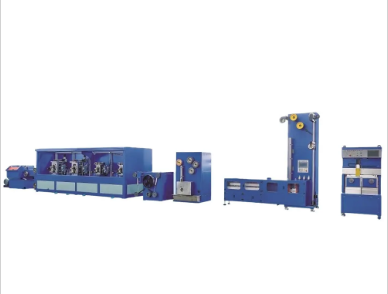
A well-designed Complex Profile Rolling Mill focuses on stability first, then speed. It typically improves outcomes through a mix of structural design and smart configuration—depending on your profile, material range, and tolerance requirements.
1) Rigidity and alignment that stay put
- High-stiffness stands and stable base structures help prevent micro-deflection that shows up as dimension variation.
- Repeatable adjustments (with clear scales or digital readouts) reduce “tribal knowledge” dependence.
- Consistent bearing and spindle quality reduces vibration marks on sensitive surfaces.
2) Forming path that manages stress instead of forcing it
- Progressive forming distributes deformation across stands to reduce edge stress and cracking risk.
- Guided forming and proper side support can prevent twist before it starts.
- Strategic use of breakdown stands, fin passes, and sizing can improve final geometry control.
3) Entry and tension control that protects the first 50 meters
- Better decoiling, straightening, and leveling reduce coil set and give the mill a consistent “starting material.”
- Stable guiding into the first stands improves repeatability and reduces start-up scrap.
- For longer lines, integrated tension or speed coordination can prevent subtle pulling that distorts complex features.
4) Straightening and post-form correction where it matters
- Inline straighteners and corrective units help remove residual stress effects that cause bow and wave.
- Cut-to-length systems with reliable measuring reduce length variation and improves downstream assembly.
Typical Line Configuration and Options
Many production lines for complex profiles include the same “spine,” then add options based on tolerance targets and part geometry. Suppliers like Jiangsu Youzha Machinery Co. Ltd. commonly support configurable line designs so you can match equipment to your product family rather than forcing one profile to set the rules for everything.
- Uncoiler + coil handling: stable feeding, optional hydraulic expansion, coil car, and safety interlocks.
- Leveling / straightening: reduces coil memory and improves entry consistency.
- Feeding and guiding: side guides, entry tables, and alignment aids to stabilize the first stands.
- Forming stands: sequence designed around the profile; may include driven/non-driven stands depending on the process.
- Inline correction: straighteners, twist control, or sizing depending on the profile behavior.
- Cut-to-length and runout: flying cutoff or stop-start, measuring, stacking, and protection for finished surfaces.
Tip for buyers: Ask how the line handles your worst-case coil: maximum yield strength, thickness tolerance, and surface sensitivity. A line that only performs on “ideal coil” will cost you more in production reality.
Selection Checklist for Buyers and Engineers
When you’re comparing machines, it’s easy to focus on speed or stand count. For complex profiles, a better approach is to evaluate how the system protects repeatability and reduces intervention.
- Profile family fit: Are you forming one part or many similar shapes? Modular tooling strategy can matter more than raw speed.
- Material range: Thickness, yield strength, coatings, and allowable surface marks should guide roll finish and forming approach.
- Tolerance targets: Define critical-to-quality dimensions (flange height, web width, twist per meter, bow limits) before specifying the mill.
- Changeover expectations: How often will tooling change? Look for repeatable settings, clear adjustment references, and efficient access.
- Operator workload: What adjustments are expected during stable running? Your goal is “set and run,” not “babysit and chase.”
- Quality plan: Confirm what measurement and sampling methods you’ll use (and how the line design supports them).
- After-sales capability: Tooling refinement, spare parts availability, and remote support can decide your long-term uptime.
Pain Points vs. Practical Countermeasures
| Common Pain Point | What It Usually Signals | Practical Countermeasure in a Complex Profile Line |
|---|---|---|
| Twist along length | Asymmetric forming forces, poor guiding, or uneven entry | Improved entry alignment, guided forming support, corrective straightening, better stand rigidity |
| Bow / waviness | Residual stress imbalance, inconsistent deformation path | Progressive forming strategy, inline straightener, controlled forming energy across stands |
| Dimension drift between coils | Material property variation, springback sensitivity | Process windows defined by trials, repeatable adjustments, monitoring key dimensions early in run |
| Edge cracks or lip damage | Overforming early, tight radii, excessive local strain | Rebalanced pass design, better roll surface finish, lubrication approach, reduce “forcing” in early stands |
| Surface scratches / marks | Roll finish issues, debris, misalignment, vibration | Higher-quality roll finishing, cleaning routines, stable bearings, protective handling on runout |
| Long changeovers and rework | Non-repeatable settings, unclear references, poor access | Digital or indexed adjustments, documented setup sheets, ergonomic access for roll changes |
Process Control and Quality Habits That Pay Off
Equipment matters, but discipline multiplies results. The most stable profile lines share a few habits:
- Start-up routine: verify entry alignment, guide contact, and first-stand settings before ramping speed.
- First-article checkpoints: measure critical-to-quality dimensions early and record the final “good” settings.
- Coil traceability: log coil ID, thickness, and key properties so you can correlate dimension drift with material.
- Surface protection: keep roll tooling clean, control debris, and protect finished profiles on runout/stacking.
- Training that matches reality: teach operators what each adjustment actually influences (twist vs. bow vs. flange height).
Simple win: Keep a “golden setup sheet” for each profile: stand positions, guide settings, straightener settings, cutoff parameters, and inspection results. It’s one of the fastest ways to reduce re-trials after tooling changes.
Maintenance and Tooling Practices for Repeatability
Complex profiles punish small mechanical looseness. If repeatability suddenly gets worse, it’s often not the roll design—it’s wear, play, or contamination.
- Bearing and alignment checks: schedule inspections to catch early looseness that becomes vibration and marking.
- Tooling preservation: store rolls properly, protect finished surfaces, and document refurbishment history.
- Guides and contact surfaces: worn guides can introduce asymmetric forces that create twist.
- Lubrication and cleanliness: consistent lubrication reduces heat and surface damage; cleanliness prevents embedded scratches.
- Spare parts readiness: critical wear components on hand reduce downtime and prevent “temporary fixes” that degrade quality.
FAQ
Q: What makes a profile “complex” in roll forming terms?
A: Complexity usually means multiple forming features (steps, offsets, tight radii, lips, and functional edges) that are sensitive to material variation and alignment. These profiles need a forming path that manages stress carefully to avoid twist, bow, or cracks.
Q: How do I know if twist is caused by the mill or the material?
A: If twist changes with coil source or coil position (head vs. middle vs. tail), material variability is a strong suspect. If twist is consistent regardless of coil, check entry alignment, guide condition, stand squareness, and whether deformation is balanced left-to-right through the pass sequence.
Q: Is “more stands” always better for a Complex Profile Rolling Mill?
A: Not always. More stands can help distribute deformation, but only if the pass design and rigidity support stability. Poorly planned extra stands can add friction and adjustment points without improving quality.
Q: What should I provide to a manufacturer before they quote a line?
A: Profile drawings with tolerances, material specs (grade, thickness range, coating), target speed, coil size range, required straightness limits, surface requirements, and planned downstream operations (punching, welding, assembly). The clearer the constraints, the fewer surprises during commissioning.
Q: How can I reduce start-up scrap?
A: Focus on entry stability: leveling/straightening, accurate guiding into the first stands, and a consistent start-up routine. Also document final “good settings” so you aren’t rediscovering the same setup every time.
Q: Can one line handle multiple complex profiles?
A: Often yes—if the profiles share a family geometry and the line is designed with changeover efficiency in mind. Discuss modular tooling strategy and how quickly settings can be repeated when switching between products.
Complex profiles don’t have to mean complex production. If you’re trying to reduce adjustments, stabilize dimensions, and scale output with confidence, a properly configured Complex Profile Rolling Mill can make the difference.
Tell Jiangsu Youzha Machinery Co. Ltd. your profile drawing, material range, and tolerance targets—and contact us to discuss a line configuration that fits your real production conditions.