
- English
- Español
- Português
- русский
- Français
- 日本語
- Deutsch
- tiếng Việt
- Italiano
- Nederlands
- ภาษาไทย
- Polski
- 한국어
- Svenska
- magyar
- Malay
- বাংলা ভাষার
- Dansk
- Suomi
- हिन्दी
- Pilipino
- Türkçe
- Gaeilge
- العربية
- Indonesia
- Norsk
- تمل
- český
- ελληνικά
- український
- Javanese
- فارسی
- தமிழ்
- తెలుగు
- नेपाली
- Burmese
- български
- ລາວ
- Latine
- Қазақша
- Euskal
- Azərbaycan
- Slovenský jazyk
- Македонски
- Lietuvos
- Eesti Keel
- Română
- Slovenski
- मराठी
- Srpski језик
- Esperanto
- Afrikaans
- Català
- שפה עברית
- Cymraeg
- Galego
- Latviešu
- icelandic
- ייִדיש
- беларускі
- Hrvatski
- Kreyòl ayisyen
- Shqiptar
- Malti
- lugha ya Kiswahili
- አማርኛ
- Bosanski
- Frysk
- ភាសាខ្មែរ
- ქართული
- ગુજરાતી
- Hausa
- Кыргыз тили
- ಕನ್ನಡ
- Corsa
- Kurdî
- മലയാളം
- Maori
- Монгол хэл
- Hmong
- IsiXhosa
- Zulu
- Yoruba
- অসমীয়া
- ଓଡିଆ
- Punjabi
- پښتو
- Chichewa
- Samoa
- Sesotho
- සිංහල
- Gàidhlig
- Cebuano
- Somali
- Тоҷикӣ
- O'zbek
- Hawaiian
- سنڌي
- Shinra
- Հայերեն
- Igbo
- Sundanese
- Lëtzebuergesch
- Malagasy

How Can a Flat Wire Rolling Mill Improve Yield and Consistency?
Abstract
Flat wire is unforgiving: tiny thickness shifts can ruin downstream winding, plating, welding, or stamping. If you’ve ever fought edge cracking, waviness, “mystery” burrs, or coils that behave differently from the first meter to the last, you already know the real cost isn’t just scrap—it’s downtime, rework, late deliveries, and customer complaints.
This article breaks down the most common flat-wire production pain points and maps them to the process controls a Flat Wire Rolling Mill should provide: stable tension, accurate reduction, reliable straightness, fast changeovers, and quality assurance you can trust. You’ll also get a selection checklist, a commissioning plan, and an FAQ to help you buy (or upgrade) with fewer surprises.
Contents
- Outline at a Glance
- What Makes Flat Wire So Difficult to Produce
- Pain Points You Can Diagnose in Minutes
- Core Process Controls That Actually Move the Needle
- A Feature-to-Problem Map for Fast Evaluation
- Selection Checklist for Buyers and Engineers
- Commissioning and Start-Up Plan
- FAQ
- Conclusion and Next Steps
Outline at a Glance
Pain points → root causes Controls that prevent defects Evaluation table Buyer checklist Commissioning plan FAQ
If you’re short on time: skim the table sections first, then return to the checklist and commissioning plan before you finalize a purchase.
What Makes Flat Wire So Difficult to Produce
Unlike round wire, flat wire has two “faces” and two edges that must behave. When thickness or width drifts, the wire doesn’t just look slightly off—it can twist, buckle, or stack poorly on the spool. That instability shows up later as:
- Winding defects (loose layers, telescoping, inconsistent coil density)
- Electrical performance variation (especially when flat wire is used in motors, transformers, inductors, or busbar-related applications)
- Surface-related failures (poor plating adhesion, scratches that become crack starters, contamination)
- Edge sensitivity (micro-cracks, burr formation, edge roll that breaks dimensional tolerances)
The key idea: flat-wire quality is rarely “one component’s fault.” It’s usually a system issue—tension, roll alignment,
reduction schedule, lubrication/cooling, and post-rolling straightening all interact.
Pain Points You Can Diagnose in Minutes
Here are the fast symptoms most teams see on the floor—and what they typically mean:
- Thickness varies coil-to-coil → unstable tension, roll gap drift, inconsistent incoming material
- Waviness or camber → alignment issues, uneven reduction, wrong pass schedule, poor straightening
- Edge cracking → excessive single-pass reduction, improper lubrication, material work-hardening, poor edge support
- Scratches / roll marks → contaminated coolant, worn rolls, poor filtration, mis-handling between stations
- Frequent line stops → slow changeovers, poor coil handling, weak automation, inadequate monitoring
If you “fix” defects by slowing the line to a crawl, you haven’t solved the process—you’ve only paid for stability with throughput.
A capable Flat Wire Rolling Mill should let you run fast and stable.
Core Process Controls That Actually Move the Needle
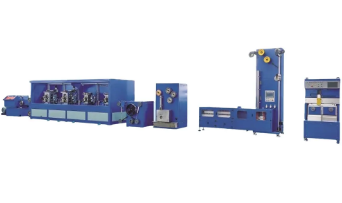
When evaluating a Flat Wire Rolling Mill, focus less on marketing labels and more on whether the system can hold these controls under real production conditions:
- Tension stability from payoff to take-up: the line should keep tension predictable during acceleration, deceleration, and coil diameter changes.
- Roll gap accuracy and repeatability: you want consistent reduction without “hunting” or manual micro-adjustments every few minutes.
- Alignment and rigidity: flat wire magnifies small angular errors—rigid frames and precise roll alignment reduce camber and edge defects.
- Lubrication and cooling discipline: clean, filtered lubrication protects surface finish and roll life while stabilizing friction.
- Pass schedule support: the mill should make it easy to run a reduction plan that avoids overworking the material in one step.
- Inline measurement and feedback: detecting drift early prevents “scrap by the kilometer.”
If you’re working with copper, aluminum, nickel alloys, or specialty materials, the quality window can be narrow. That’s why many buyers choose to work with experienced manufacturers such as Jiangsu Youzha Machinery Co. Ltd. when configuring a line—because the “right machine” is often the right process package, not just a set of rollers.
A Feature-to-Problem Map for Fast Evaluation
Use this table during vendor calls. Ask them to explain how their design prevents the problem, not just whether it “supports” it.
| Pain Point | Typical Root Cause | Mill Capability That Helps | What to Ask for in a Trial |
|---|---|---|---|
| Thickness drift | Roll gap change, tension fluctuation, temperature effects | Stable drive + accurate gap control + consistent cooling | Show thickness data across full coil length at production speed |
| Waviness / camber | Misalignment, uneven reduction, poor straightening | Rigid stand + alignment method + dedicated straightening stage | Provide straightness/camber measurement and acceptance criteria |
| Edge cracking | Over-reduction per pass, work-hardening, edge stress | Pass schedule support + controlled lubrication + roll geometry match | Run worst-case material batch and report edge inspection results |
| Surface scratches | Dirty coolant, damaged rolls, handling friction | Filtration system + roll finish control + protective guiding | Show surface roughness targets and photos under consistent lighting |
| Low OEE / frequent stops | Slow changeover, weak automation, unstable take-up | Quick-change tooling + automation + robust coil handling | Time a full spec change: coil change + roll setting + first-article pass |
Selection Checklist for Buyers and Engineers
Here’s a practical checklist you can copy into your RFQ or internal review. It’s designed to prevent the most common “we forgot to ask” problems that show up after the machine arrives.
Technical Fit
- Target flat-wire range (thickness, width) with tolerance expectations clearly defined
- Material list (copper, aluminum, alloy grades) and incoming condition (annealed, hard, surface state)
- Required line speed and annual output (don’t guess—use realistic utilization numbers)
- Surface finish expectations and downstream processes (plating, welding, stamping, winding)
- Edge quality requirements (burr limits, crack limits, edge radius if applicable)
Process Stability
- Tension control strategy across payoff and take-up, including acceleration/deceleration behavior
- Measurement approach (inline or at-line), data logging, and alarm thresholds
- Cooling/lubrication filtration level and maintenance access
- Roll setting repeatability and how recipes are stored and recalled
- How the design reduces operator dependency (standardized setup, guided adjustment)
Maintainability and Lifecycle Cost
- Roll life expectations and regrinding plan (who does it, how often, what specs)
- Spare parts list, lead times, and critical spares recommended for the first year
- Accessibility for cleaning, alignment checks, and component replacement
- Training scope: operators, maintenance, process engineers
A good vendor won’t dodge these questions. If answers stay vague (“it depends”) without proposing a test plan,
treat that as a signal—not a detail.
Commissioning and Start-Up Plan
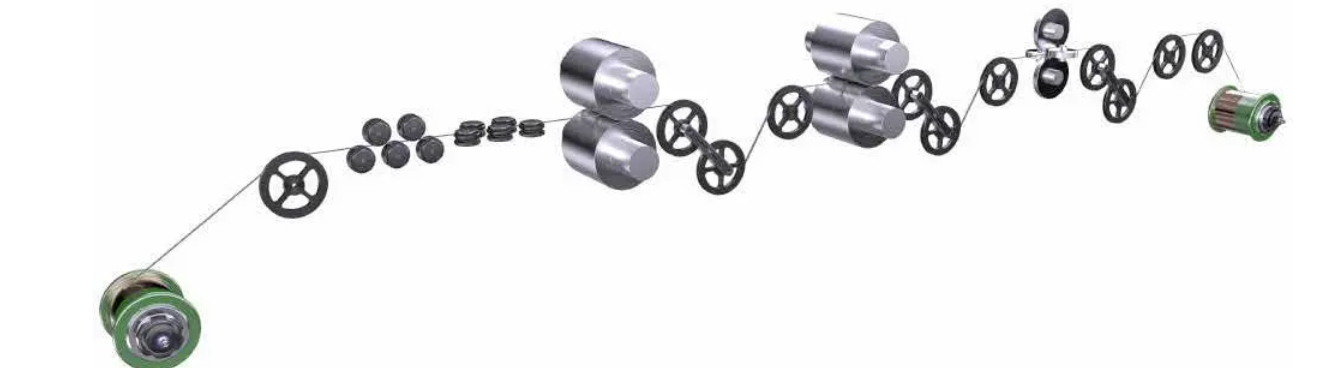
Even a strong Flat Wire Rolling Mill can underperform if start-up is rushed. This plan reduces the chance of “we’re live, but quality is unstable” for the first three months.
- Define acceptance metrics before installation: thickness, width, camber/straightness, surface condition, edge inspection method, and sampling frequency.
- Run a material matrix: include best-case and worst-case incoming material to validate robustness, not just ideal coils.
- Lock a pass schedule library: document reductions, speeds, lubrication settings, and straightener settings per spec.
- Train operators with “why,” not just “how”: understanding defect causes reduces trial-and-error adjustments.
- Stabilize maintenance routines early: coolant filtration, roll cleaning, alignment checks, and sensor calibration schedules.
- Implement traceability: coil ID, parameter recipes, measurement results, and nonconformance notes should be searchable.
FAQ
Q: What’s the fastest way to improve flat-wire consistency without sacrificing speed?
Start with tension stability and measurement discipline. When tension swings, everything downstream becomes harder: roll bite changes, thickness drifts, and straightness suffers. Pair stable tension with regular measurement feedback so drift is corrected early, not after kilometers of production.
Q: Why do edges crack even when thickness looks “in spec”?
Edge cracking is often about stress distribution and work-hardening, not just final thickness. Excessive reduction in a single pass, inadequate lubrication, or misalignment can overload edges. A well-planned pass schedule with controlled friction usually reduces the risk.
Q: What should I prioritize for surface quality—roll finish or coolant quality?
Both matter, but coolant quality is the silent killer. Even perfectly finished rolls can mark wire if filtration is weak or contamination builds up. Clean, stable lubrication/cooling protects the surface and extends roll life.
Q: How do I compare two mills if both vendors claim “high precision”?
Ask for coil-length data at real speed, not short samples. Request a timed changeover demonstration. Also ask how settings are stored and recalled. Consistency is proven by repeatability under production conditions, not by a single “best run.”
Q: Can one Flat Wire Rolling Mill handle multiple materials and sizes efficiently?
Yes, if the system is designed for quick, repeatable setup and has a clear recipe approach. The more diverse your material mix, the more you should care about changeover time, alignment repeatability, and how the line controls tension and lubrication across specs.
Conclusion and Next Steps
Flat wire manufacturing rewards discipline: stable tension, repeatable roll settings, clean lubrication, and a pass schedule that respects the material. When those pieces are built into a properly configured Flat Wire Rolling Mill, you get fewer surprises—less scrap, fewer line stops, and coils that behave consistently in your customer’s process.
If you’re planning a new line or upgrading an existing setup, working with a supplier that can provide both equipment and process guidance (including trials, parameter libraries, and training) can shorten your ramp-up dramatically. That’s why many teams evaluate solutions from Jiangsu Youzha Machinery Co. Ltd. when they need reliable, production-ready flat-wire rolling.
Want to match your target dimensions, materials, and throughput to a practical rolling plan—and see what a stable line could look like for your factory? Send your spec sheet and current pain points, and we’ll help you outline a configuration that fits. Contact us to start the conversation.