
- English
- Español
- Português
- русский
- Français
- 日本語
- Deutsch
- tiếng Việt
- Italiano
- Nederlands
- ภาษาไทย
- Polski
- 한국어
- Svenska
- magyar
- Malay
- বাংলা ভাষার
- Dansk
- Suomi
- हिन्दी
- Pilipino
- Türkçe
- Gaeilge
- العربية
- Indonesia
- Norsk
- تمل
- český
- ελληνικά
- український
- Javanese
- فارسی
- தமிழ்
- తెలుగు
- नेपाली
- Burmese
- български
- ລາວ
- Latine
- Қазақша
- Euskal
- Azərbaycan
- Slovenský jazyk
- Македонски
- Lietuvos
- Eesti Keel
- Română
- Slovenski
- मराठी
- Srpski језик
- Esperanto
- Afrikaans
- Català
- שפה עברית
- Cymraeg
- Galego
- Latviešu
- icelandic
- ייִדיש
- беларускі
- Hrvatski
- Kreyòl ayisyen
- Shqiptar
- Malti
- lugha ya Kiswahili
- አማርኛ
- Bosanski
- Frysk
- ភាសាខ្មែរ
- ქართული
- ગુજરાતી
- Hausa
- Кыргыз тили
- ಕನ್ನಡ
- Corsa
- Kurdî
- മലയാളം
- Maori
- Монгол хэл
- Hmong
- IsiXhosa
- Zulu
- Yoruba
- অসমীয়া
- ଓଡିଆ
- Punjabi
- پښتو
- Chichewa
- Samoa
- Sesotho
- සිංහල
- Gàidhlig
- Cebuano
- Somali
- Тоҷикӣ
- O'zbek
- Hawaiian
- سنڌي
- Shinra
- Հայերեն
- Igbo
- Sundanese
- Lëtzebuergesch
- Malagasy

Why Is a Flat Wire Rolling Mill Essential for High-Precision Metal Forming?
In modern metal processing, consistency, precision, and efficiency determine the competitiveness of any manufacturing line. The Flat Wire Rolling Mill has quickly become one of the most reliable solutions for industries that demand tight tolerances and high surface quality. From automotive components to electronics and construction hardware, the ability to roll flat wire with uniform thickness brings significant improvements in performance and cost control. As a supplier of advanced rolling equipment, Jiangsu Goodroller Machinery Co., Ltd. provides customized Flat Wire Rolling Mill systems engineered for stable production and long-term durability.
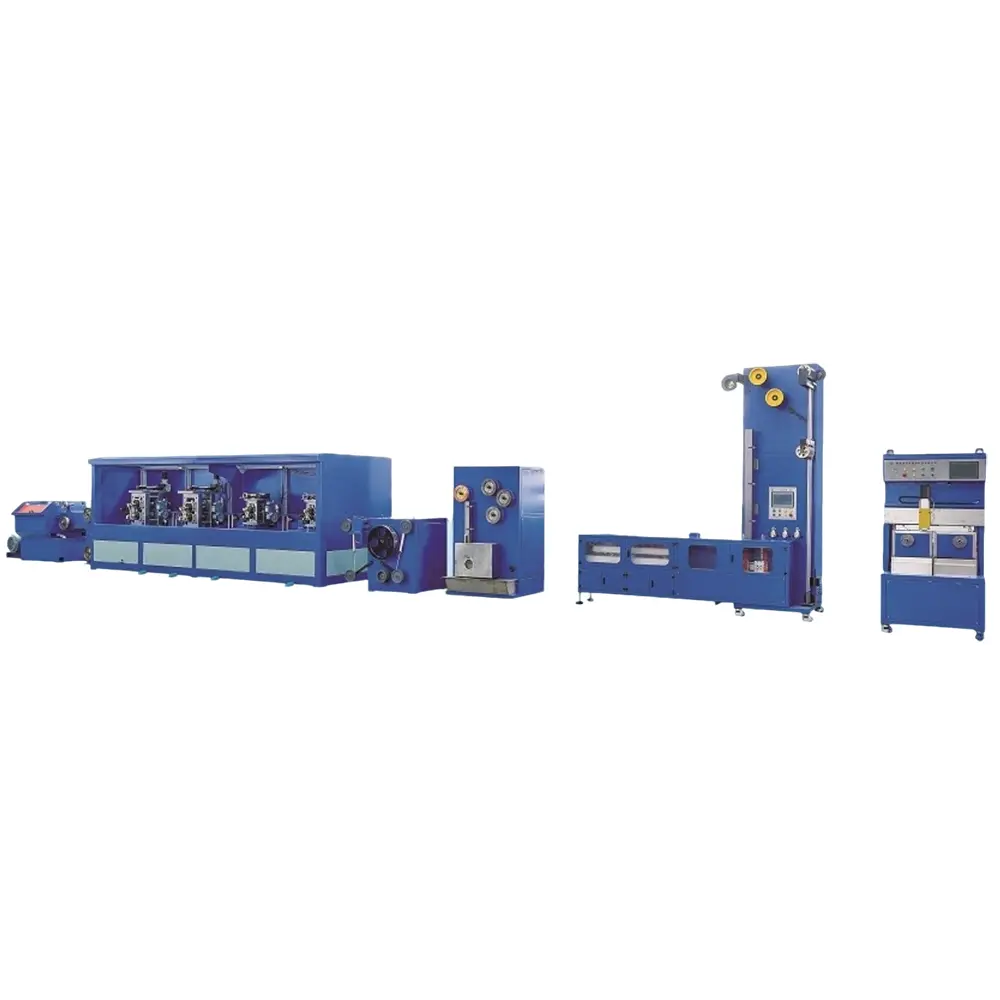
What Makes a Flat Wire Rolling Mill Different from Standard Rolling Equipment?
A Flat Wire Rolling Mill is designed specifically to convert round or rectangular material into precise flat wire with controlled mechanical properties. Compared with standard rolling machines, it offers:
-
Higher dimensional accuracy (thickness and width tolerances kept extremely tight)
-
Better surface finish due to well-polished rolls and optimized cooling
-
Continuous production capability suitable for medium-to-large-volume orders
-
Enhanced mechanical stability for processing copper, aluminum, steel, stainless steel, and alloy materials
This design ensures that the finished wire meets industry standards for conductivity, strength, elasticity, and coating suitability.
How Does a Flat Wire Rolling Mill Improve Processing Performance?
A professional Flat Wire Rolling Mill significantly enhances workflow efficiency. The key performance advantages include:
1. Stable Rolling Pressure
Hydraulic and mechanical components maintain constant rolling pressure, ensuring consistent thickness across every meter of output.
2. Precision-Controlled Speed
Variable-frequency drives and intelligent controllers maintain synchronized line speed, preventing deviations in wire shape.
3. Optimized Heat Distribution
By reducing thermal deformation, the machine ensures smooth rolling and reduces the risk of cracking or uneven textures.
4. Long-Life Roll Materials
Rollers are made from high-hardness alloy steel, delivering resistance to wear and improving long-term accuracy.
5. Efficient Setup for Multi-Material Production
Different metals can be processed with simple adjustments, making the system versatile for factories aiming to expand their product range.
Which Key Specifications Should You Consider When Choosing a Flat Wire Rolling Mill?
Below are the essential parameters commonly required for professional applications.
(Values are representative specifications offered by Jiangsu Goodroller Machinery Co., Ltd.)
Technical Parameters of the Flat Wire Rolling Mill
| Parameter | Specification |
|---|---|
| Raw Material Types | Copper, Aluminum, Stainless Steel, Carbon Steel, Alloys |
| Input Wire Diameter | 1.0 – 12 mm |
| Finished Wire Thickness | 0.05 – 5 mm |
| Finished Wire Width | 1 – 30 mm |
| Rolling Speed | 5 – 60 m/min |
| Number of Rolling Stands | 2 – 12 (customized) |
| Roll Material | High-hardness alloy tool steel |
| Control System | PLC + Touch Screen (automatic thickness control) |
| Power Supply | 380V / 50Hz / 3-phase (customizable) |
| Cooling System | Water-cooling / Emulsion cooling |
| Lubrication | Forced circulation lubrication system |
Why Does a Flat Wire Rolling Mill Play a Key Role in Modern Manufacturing?
1. Ensures High-Precision Product Output
Precision flat wire is essential for electronic connectors, solar frames, springs, transformers, medical instruments, and more. The rolling mill ensures the dimensional uniformity required for these applications.
2. Reduces Production Costs
By converting material into flat wire within a single continuous process, manufacturers reduce waste, energy consumption, and labor costs.
3. Enhances Mechanical Strength
Controlled rolling deformation improves material density, tensile strength, and stability—ideal for products requiring repeated bending or stretching.
4. Supports Large-Scale Industrial Production
Continuous and automated control enables stable operation for long working hours, improving throughput and delivery capability.
What Applications Benefit the Most From a Flat Wire Rolling Mill?
-
Electronic and electrical components (lead frames, connectors, terminals)
-
Automotive parts (sensor springs, precision contacts)
-
Solar panel frames and PV ribbon
-
Construction hardware and fasteners
-
Medical equipment and instruments
-
Optical fiber and communication accessories
In every case, the ability to maintain flatness, strength, and uniformity directly influences end-product quality.
Which Features of Jiangsu Goodroller Machinery Co., Ltd. Deliver Higher Value?
✓ Customizable Configurations
Whether you need more rolling stands, higher rolling speed, or special alloy processing capability, the system can be tailored precisely.
✓ Heavy-Duty Structure
Industrial-grade frames and bearings ensure stable operation even under long-term heavy loads.
✓ Advanced PLC Automation
Real-time monitoring adjusts pressure, speed, and thickness to ensure output quality consistency.
✓ Global Service & Technical Guidance
Technicians assist with installation, training, and maintenance to keep production lines running smoothly.
FAQ About Flat Wire Rolling Mill
Q1: What materials can be processed using a Flat Wire Rolling Mill?
A1: The Flat Wire Rolling Mill is compatible with copper, aluminum, carbon steel, stainless steel, and various metal alloys. Its adjustable pressure and speed allow precise shaping without damaging material properties.
Q2: How does a Flat Wire Rolling Mill ensure accurate dimensions?
A2: It uses synchronized drive systems, calibrated rolls, and PLC-based automatic thickness control. These features maintain uniform thickness and width across the entire length of the wire.
Q3: Is a Flat Wire Rolling Mill suitable for continuous mass production?
A3: Yes. The equipment is designed for continuous rolling with stable temperature control and durable roll materials, ideal for medium-to-large-scale production environments.
Q4: What maintenance is required to keep the Flat Wire Rolling Mill operating efficiently?
A4: Routine checks include lubrication, cooling system inspection, roll surface cleaning, and calibration of sensors. Proper maintenance extends machine lifespan and ensures consistent output quality.
Contact Us
For customized Flat Wire Rolling Mill solutions, engineering support, and pricing details, please contact Jiangsu Goodroller Machinery Co., Ltd. Our team provides complete technical assistance and equipment configurations tailored to your production needs.