
- English
- Español
- Português
- русский
- Français
- 日本語
- Deutsch
- tiếng Việt
- Italiano
- Nederlands
- ภาษาไทย
- Polski
- 한국어
- Svenska
- magyar
- Malay
- বাংলা ভাষার
- Dansk
- Suomi
- हिन्दी
- Pilipino
- Türkçe
- Gaeilge
- العربية
- Indonesia
- Norsk
- تمل
- český
- ελληνικά
- український
- Javanese
- فارسی
- தமிழ்
- తెలుగు
- नेपाली
- Burmese
- български
- ລາວ
- Latine
- Қазақша
- Euskal
- Azərbaycan
- Slovenský jazyk
- Македонски
- Lietuvos
- Eesti Keel
- Română
- Slovenski
- मराठी
- Srpski језик
- Esperanto
- Afrikaans
- Català
- שפה עברית
- Cymraeg
- Galego
- Latviešu
- icelandic
- ייִדיש
- беларускі
- Hrvatski
- Kreyòl ayisyen
- Shqiptar
- Malti
- lugha ya Kiswahili
- አማርኛ
- Bosanski
- Frysk
- ភាសាខ្មែរ
- ქართული
- ગુજરાતી
- Hausa
- Кыргыз тили
- ಕನ್ನಡ
- Corsa
- Kurdî
- മലയാളം
- Maori
- Монгол хэл
- Hmong
- IsiXhosa
- Zulu
- Yoruba
- অসমীয়া
- ଓଡିଆ
- Punjabi
- پښتو
- Chichewa
- Samoa
- Sesotho
- සිංහල
- Gàidhlig
- Cebuano
- Somali
- Тоҷикӣ
- O'zbek
- Hawaiian
- سنڌي
- Shinra
- Հայերեն
- Igbo
- Sundanese
- Lëtzebuergesch
- Malagasy

What Makes a Strip Rolling Mill Essential for Modern Metal Processing?
In the world of metal processing and manufacturing, efficiency, precision, and consistency define success. A Strip Rolling Mill plays a vital role in achieving these standards by enabling the production of high-quality metal strips with accurate thickness and superior surface finish. As an industry-leading solution provider, Jiangsu Goodroller Machinery Co., Ltd. has been committed to designing and manufacturing advanced Strip Rolling Mills that meet the evolving demands of global industries. But what exactly is a strip rolling mill, how does it work, and why is it so crucial to modern production lines? Let's explore in detail.
What Is a Strip Rolling Mill and How Does It Work?
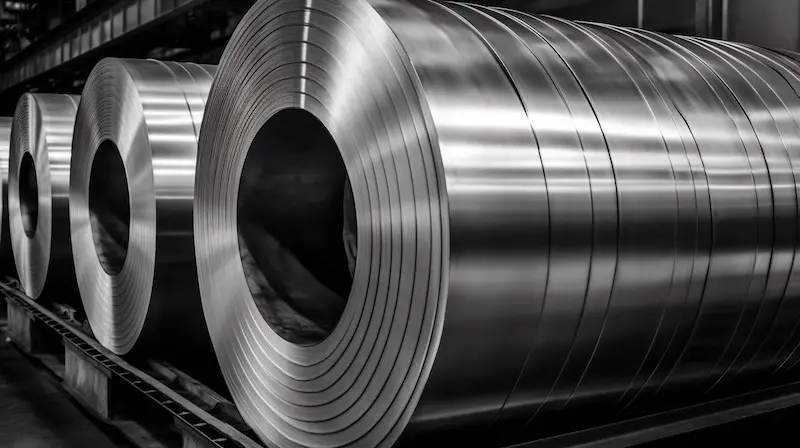
A Strip Rolling Mill is a specialized piece of equipment used to reduce the thickness of metal strips while improving their surface quality and mechanical properties. The process involves passing a metal strip—such as steel, aluminum, copper, or stainless steel—through a set of precision-engineered rollers. The pressure exerted by the rollers compresses and elongates the strip, resulting in the desired thickness and finish.
Modern rolling mills often incorporate automatic thickness control systems, temperature monitoring, and hydraulic adjustments to ensure maximum consistency and accuracy. The result is a smooth, uniform metal strip that is ready for further processing or direct use in industries such as construction, automotive, electronics, and energy.
Why Is the Strip Rolling Mill So Important in Industrial Production?
The Strip Rolling Mill is indispensable because it determines the quality, strength, and uniformity of metal products used across various sectors. Without precision rolling, manufacturers would face uneven thickness, poor flatness, and surface defects that compromise performance and safety.
Here are some key advantages of using a high-performance Strip Rolling Mill:
-
Superior dimensional accuracy – Ensures precise thickness control and consistent output.
-
Improved material properties – Enhances strength, ductility, and surface finish through controlled deformation.
-
High production efficiency – Automated systems allow for continuous, high-speed rolling operations.
-
Versatile application – Suitable for ferrous and non-ferrous metals including stainless steel, aluminum, copper, and more.
-
Reduced material waste – Optimized rolling processes minimize edge trimming and scrap losses.
What Are the Main Technical Parameters of the Strip Rolling Mill?
The design and performance of a Strip Rolling Mill depend on the specific production requirements—metal type, strip width, thickness range, and output speed. Below is a simplified table summarizing the core technical parameters of Jiangsu Goodroller Machinery Co., Ltd.'s rolling mill systems:
| Parameter | Specification Range | Description |
|---|---|---|
| Rolling Material | Stainless steel, carbon steel, aluminum, copper | Suitable for various metal strips |
| Strip Width | 300–1800 mm | Customizable width according to product type |
| Strip Thickness | 0.1–6 mm | Adjustable thickness precision up to ±0.005 mm |
| Rolling Speed | 50–800 m/min | High-speed operation for mass production |
| Roll Diameter | 200–600 mm | Designed for stability and accuracy |
| Control System | PLC + Automatic Thickness Control (AGC) | Ensures precision and uniformity |
| Power System | Hydraulic + Servo motor drive | Enhances energy efficiency and responsiveness |
| Cooling & Lubrication | Water or oil-based systems | Maintains temperature stability and extends roll life |
This data highlights the adaptability of our machines for different production scales and metal types, ensuring consistent output quality and long-term reliability.
How Does a Strip Rolling Mill Improve Production Efficiency?
Efficiency in rolling operations is not just about speed—it's about precision, durability, and automation. A Strip Rolling Mill from Jiangsu Goodroller Machinery Co., Ltd. integrates advanced technologies such as real-time monitoring, digital control systems, and automated roll gap adjustments to ensure every roll cycle delivers optimal results.
Key performance benefits include:
-
Continuous Operation: Supports long production runs with minimal downtime.
-
Automated Feedback System: Detects and corrects deviations in real-time.
-
Low Maintenance Design: Built with high-strength materials and wear-resistant components.
-
Energy Efficiency: Servo motor systems reduce power consumption while maintaining performance.
-
Operator Safety: Equipped with protective enclosures, emergency stop functions, and intelligent sensors.
By enhancing throughput and reducing waste, the Strip Rolling Mill directly contributes to cost savings and improved profitability for manufacturers.
Where Can Strip Rolling Mills Be Applied?
The versatility of Strip Rolling Mills allows them to be used across multiple industries:
-
Automotive Manufacturing: Produces precise steel and aluminum strips for body panels and chassis parts.
-
Electrical and Electronics: Supplies copper and aluminum strips for circuit boards and connectors.
-
Construction: Provides high-quality steel strips for roofing, cladding, and structural reinforcement.
-
Energy Sector: Supplies stainless steel and copper strips for solar panels and battery systems.
-
Appliance Manufacturing: Ensures smooth, uniform metal strips for refrigerators, air conditioners, and washing machines.
FAQ: Common Questions About the Strip Rolling Mill
Q1: What is the primary function of a Strip Rolling Mill?
A1: The main function of a Strip Rolling Mill is to reduce the thickness and improve the surface quality of metal strips through a series of rolling passes. It enhances mechanical strength, precision, and uniformity, which are essential for downstream manufacturing processes.
Q2: How to choose the right Strip Rolling Mill for my production line?
A2: Selection depends on your production material (steel, aluminum, copper, etc.), desired strip thickness, and output capacity. Jiangsu Goodroller Machinery Co., Ltd. provides customizable solutions to meet different industry requirements, ensuring cost-effectiveness and high performance.
Q3: What are the key maintenance tips for Strip Rolling Mills?
A3: Regular inspection of rollers, lubrication systems, and hydraulic components is essential. Ensure consistent cooling fluid quality, clean debris after every shift, and calibrate sensors periodically to maintain precision and prevent downtime.
Q4: Can the Strip Rolling Mill be integrated with automation systems?
A4: Yes. Our modern Strip Rolling Mills are designed for full integration with PLC and SCADA systems, allowing real-time monitoring, data tracking, and remote diagnostics, which significantly enhance production efficiency.
Why Choose Jiangsu Goodroller Machinery Co., Ltd.?
With decades of experience in rolling mill design and manufacturing, Jiangsu Goodroller Machinery Co., Ltd. offers cutting-edge equipment backed by strong engineering expertise and after-sales service. Each Strip Rolling Mill is tailored to customer requirements and built under strict quality control standards to guarantee long service life, consistent performance, and maximum productivity.
Our commitment extends beyond machinery—we provide technical support, installation guidance, and training to ensure that your production line operates at its best from day one.
Contact Us
For more information or to request a customized quotation for your Strip Rolling Mill, please contact Jiangsu Goodroller Machinery Co., Ltd.
📧 Email: rayna@grmrollingmill.com
🌐 Website: www.grmrollingmill.com
📞 Phone: +86-18625128413
Experience precision, power, and performance—choose Jiangsu Goodroller Machinery Co., Ltd. for your next-generation Strip Rolling Mill solution.