
- English
- Español
- Português
- русский
- Français
- 日本語
- Deutsch
- tiếng Việt
- Italiano
- Nederlands
- ภาษาไทย
- Polski
- 한국어
- Svenska
- magyar
- Malay
- বাংলা ভাষার
- Dansk
- Suomi
- हिन्दी
- Pilipino
- Türkçe
- Gaeilge
- العربية
- Indonesia
- Norsk
- تمل
- český
- ελληνικά
- український
- Javanese
- فارسی
- தமிழ்
- తెలుగు
- नेपाली
- Burmese
- български
- ລາວ
- Latine
- Қазақша
- Euskal
- Azərbaycan
- Slovenský jazyk
- Македонски
- Lietuvos
- Eesti Keel
- Română
- Slovenski
- मराठी
- Srpski језик
- Esperanto
- Afrikaans
- Català
- שפה עברית
- Cymraeg
- Galego
- Latviešu
- icelandic
- ייִדיש
- беларускі
- Hrvatski
- Kreyòl ayisyen
- Shqiptar
- Malti
- lugha ya Kiswahili
- አማርኛ
- Bosanski
- Frysk
- ភាសាខ្មែរ
- ქართული
- ગુજરાતી
- Hausa
- Кыргыз тили
- ಕನ್ನಡ
- Corsa
- Kurdî
- മലയാളം
- Maori
- Монгол хэл
- Hmong
- IsiXhosa
- Zulu
- Yoruba
- অসমীয়া
- ଓଡିଆ
- Punjabi
- پښتو
- Chichewa
- Samoa
- Sesotho
- සිංහල
- Gàidhlig
- Cebuano
- Somali
- Тоҷикӣ
- O'zbek
- Hawaiian
- سنڌي
- Shinra
- Հայերեն
- Igbo
- Sundanese
- Lëtzebuergesch
- Malagasy

How Can a Strip Rolling Mill Help You Deliver Consistent Thickness, Flatness, and Surface Quality at Scale?
Abstract
A strip rolling mill is often the “make-or-break” asset for coil processors and manufacturers who need stable thickness control, repeatable flatness, and clean surface finish—without constant downtime or scrap. Yet many buyers run into the same headaches: inconsistent gauge across coil length, shape defects that trigger customer complaints, frequent roll marks, slow changeovers, and maintenance routines that steal production time.
This article breaks down how a modern strip rolling mill addresses those pain points, what specifications actually matter when you’re comparing options, and how to map your product goals (material, thickness range, tolerance, output) to the right mill configuration. You’ll also find a practical checklist, a decision table, and an FAQ designed for real purchasing teams and plant engineers.
Contents
- Outline
- Common Buyer Pain Points
- What a Strip Rolling Mill Really Does
- Key Performance Targets That Protect Your Margin
- Choosing the Right Mill Configuration
- Integrating the Mill Into Your Line
- How to Keep Quality Stable Over Long Runs
- Maintenance That Doesn’t Kill Output
- Buyer Checklist Before You Sign
- FAQ
- Next Step
Outline
- Identify the production problems you’re trying to eliminate (scrap, claims, bottlenecks).
- Translate customer requirements into measurable rolling targets (tolerance, flatness, finish).
- Match your material and thickness range to a mill layout and automation level.
- Plan the supporting systems (tension control, coolant, filtration, roll management, recoiling).
- Lock in maintainability: fast roll change, accessible hydraulics, and predictable spares.
Common Buyer Pain Points
If you’re evaluating a strip rolling mill, you’re probably not doing it for fun—you’re doing it because something hurts. Here are the most frequent problems buyers want to solve, and what they usually cost in real operations:
- Gauge inconsistency: thickness drift across the coil leads to rework, downgraded material, or rejected lots.
- Flatness and shape defects: waves, center buckle, edge buckle, or crown mismatch cause downstream issues in stamping, slitting, welding, or forming.
- Surface marks: roll scratches, chatter marks, inclusions, or poor lubrication show up as customer complaints—especially for visible parts.
- Slow changeovers: long roll changes, setup instability, or manual tuning wastes hours each week.
- High scrap during ramp-up: the first portion of each coil becomes “setup waste” because controls and tension aren’t dialed in fast enough.
- Downtime from maintenance surprises: seals, bearings, coolant systems, or hydraulic issues that aren’t designed for quick service.
- Energy and consumables cost creep: inefficient drives, poor coolant management, and excessive roll wear quietly inflate cost per ton.
A good strip rolling mill doesn’t just roll metal—it reduces uncertainty. The best ROI usually comes from fewer customer claims, higher yield, and stable throughput that you can schedule with confidence.
What a Strip Rolling Mill Really Does
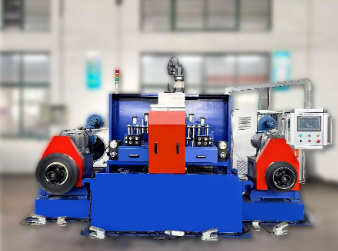
At its core, a strip rolling mill reduces thickness by passing metal strip through rotating rolls under controlled force and tension. The “controlled” part is where modern systems separate themselves from older equipment.
In real production, you’re not only changing thickness—you’re managing:
- Roll force to hit target gauge without overloading components.
- Tension to stabilize strip shape and prevent chatter or slippage.
- Flatness control to prevent shape defects that ruin downstream processing.
- Surface condition through roll quality, coolant delivery, and filtration.
- Thermal behavior because heat affects roll expansion and thickness stability over time.
That’s why buyers should think of the mill as a system: stand configuration, automation, drives, hydraulics, coolant/filtration, and coil handling all contribute to final quality and uptime.
Key Performance Targets That Protect Your Margin
When teams compare mills, they often focus on maximum rolling force or line speed. Those are important, but the real differentiators are performance targets tied to customer acceptance and internal yield.
- Thickness tolerance: How consistently can you hold gauge from head to tail, and across strip width?
- Flatness: Can you keep shape within your customer’s forming requirements without constant intervention?
- Surface finish and cleanliness: Can you maintain a stable finish without roll marks, debris streaks, or lubricant defects?
- Stability over long runs: Does performance stay steady after hours of production, or does it drift with temperature and roll wear?
- Changeover repeatability: Can you switch products and return to stable production quickly, with minimal setup scrap?
A practical way to evaluate a strip rolling mill is to ask one question internally: What will we stop losing money on once this mill is running? That framing keeps the discussion focused on outcomes, not just specs.
Choosing the Right Mill Configuration
Different mill configurations exist for a reason: your material, thickness range, width, and target finish all influence what will work best. Use the table below to align your application with typical mill choices.
| Application Goal | Typical Mill Direction | Why It Fits | Watch Outs |
|---|---|---|---|
| General thickness reduction with moderate tolerance | 4-high stand / reversing mill | Balanced capability for many steels and alloys; flexible schedules | Automation level matters for repeatability and ramp-up scrap |
| High precision gauge + flatness control | 6-high stand / advanced flatness control | Better shape control via bending and shifting strategies | Higher complexity; serviceability and training become critical |
| High throughput production with tight delivery schedules | Tandem line (multi-stand) | Continuous reduction supports higher output and consistent quality | Upfront integration effort; supporting systems must be robust |
| Surface-sensitive products (decorative, exposed parts) | Focus on roll finish + coolant/filtration + tension stability | Surface quality depends heavily on cleanliness and lubrication control | Under-sizing filtration is a common mistake that creates recurring defects |
If you’re unsure, start by pinning down your material list (steel, stainless, aluminum, copper, etc.), incoming thickness, target thickness, and your customer’s acceptance criteria. Then select the configuration that can hit those targets reliably—not just on paper.
Integrating the Mill Into Your Line
Many quality problems blamed on the mill are actually upstream or downstream issues. A strip rolling mill performs best when the surrounding line prevents tension spikes, surface contamination, and coil handling damage.
Common integration elements include:
- Pay-off and recoiler with stable tension capability.
- Entry/exit bridles to fine-tune tension and reduce slip.
- Guiding and centering to protect edges and improve shape control.
- Coolant delivery + filtration to manage heat and keep surfaces clean.
- Inspection points for quick verification of gauge/shape/finish without stopping the line.
GRM Rolling Mill typically supports buyers by mapping these subsystems to the mill’s control strategy—because stable production depends on the entire flow, not only the stand.
How to Keep Quality Stable Over Long Runs
Getting a good coil “once” is easy. The real test is holding quality across shifts, operators, and product mixes. Stability usually comes from three layers of control:
- Fast control: immediate correction of thickness deviations as conditions change (load, tension, speed).
- Shape control: strategies to reduce buckles and crown mismatch before they become rejectable.
- Contamination control: keeping coolant and strip surfaces clean to avoid repeating marks.
If your plant has been fighting recurring surface defects, pay close attention to filtration design, coolant management, and roll surface handling. Small particles can cause “mystery” streaks that look random but repeat until the source is removed.
Maintenance That Doesn’t Kill Output
A mill that meets specs but stalls production with constant maintenance is a bad deal. When you evaluate equipment, look for maintainability features that reduce downtime and improve predictability:
- Fast roll change approach: designed access points, lifting strategy, and alignment support.
- Accessible hydraulic components: valves, seals, and sensors that can be serviced without major teardown.
- Clear lubrication plan: centralized lubrication and easy monitoring reduce bearing surprises.
- Spare parts logic: standardized wear parts and a realistic recommended spare list.
- Operator-friendly diagnostics: alarms that point to causes, not just symptoms.
The best mills help your team move from “firefighting” to routine upkeep. That shift alone often unlocks higher weekly output without changing your staffing level.
Buyer Checklist Before You Sign
- Product goals: material list, width range, incoming/target thickness, tolerance, surface requirements.
- Throughput goals: expected tons/month, typical coil size, planned shifts, and ramp-up expectations.
- Quality verification: how you will measure gauge/flatness/finish, and where checks occur in the line.
- Changeover reality: product mix, roll schedules, and how fast you need to switch without scrap.
- Utilities and footprint: power, coolant supply, filtration space, and installation constraints.
- Service model: commissioning, training, documentation, and response plan for critical spares.
- Risk plan: what happens if tolerance is missed—do you have a path to correction without stopping production?
FAQ
Q: Can a strip rolling mill handle multiple materials, like stainless and aluminum?
A: Yes, but the setup strategy matters. Different materials behave differently under force and tension, and they respond differently to lubrication and roll finish. A well-matched configuration and control strategy will reduce trial-and-error during product switches.
Q: What causes thickness variation along the coil length?
A: Common causes include unstable tension, thermal drift, roll wear, inconsistent incoming coil thickness, and slow correction during speed changes. Buyers should prioritize stable tension capability and fast correction behavior to reduce scrap at the head and tail.
Q: Why do shape defects appear even when thickness is correct?
A: Thickness can be on target while flatness is off. Shape defects often come from uneven reduction across width, roll deflection, or tension imbalance. Flatness control and proper guiding are key to preventing buckles and crown-related issues.
Q: How do we reduce surface marks and roll-related scratches?
A: Start with roll management (surface finish, handling, cleanliness), then improve coolant delivery and filtration to prevent debris from re-entering the roll bite. Many “random” marks are actually repeatable contamination patterns.
Q: What should we prepare for installation and ramp-up?
A: Plan utilities, layout, operator training, and a clear acceptance plan (what success looks like in measurable terms). If you define target products and verification steps early, ramp-up becomes faster and less wasteful.
Next Step
If your current process is losing money through thickness drift, flatness complaints, recurring surface marks, or slow changeovers, a properly designed strip rolling mill can turn that chaos into repeatable output. GRM Rolling Mill supports customers from application matching to line integration, commissioning, and operator training—so the mill works in the real world, not just in a brochure.
Ready to talk through your material, thickness targets, and production goals? Contact us and tell us what you’re rolling today and what you need to roll next.